(Part 7 of 12)
Daniel 1:8 But Daniel resolved that he would not defile himself with the king’s food, or with the wine that he drank. Therefore he asked the chief of the eunuchs to allow him not to defile himself.(ESV)
There’s no fire yet. No furnace. No golden image. No command to bow. No angry king demanding an explanation. No crowd watching. Just food.
That’s where I want to begin. Because we already know the other story. Three men stand while everyone else bows. They’re brought before the king.
They refuse to compromise. The furnace is heated. They’re thrown inside. A fourth figure appears with them. They walk out unharmed.
It’s one of the most recognizable stories in the Old Testament. Which means we can know it so well that we stop noticing something.
Those men had already been making decisions long before Nebuchadnezzar built his statue.
Before there was a furnace, there was a table. And at the table, the stakes appeared considerably smaller.
Babylon had taken them from home. Daniel. Hananiah. Mishael. Azariah.
Those last three names might sound less familiar. That’s because we usually call them by the names Babylon gave them: Shadrach. Meshach. Abednego.
Even that tells us something about what was happening.
Babylon wasn’t merely relocating these young men. Nebuchadnezzar ordered Ashpenaz to select promising young Israelites and educate them in Babylonian literature and language.
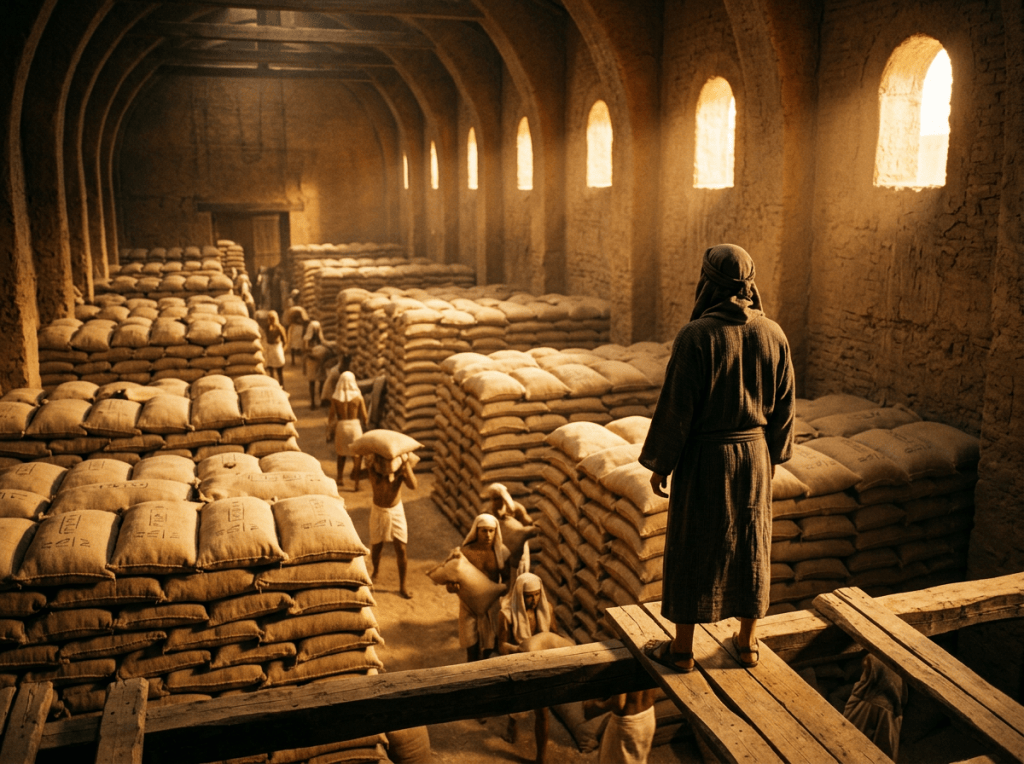
They would receive food from the king’s table. They would be trained for three years. Then they would serve the king.
This was assimilation. Take talented young people from conquered nations. Bring them into the empire. Teach them the language. Teach them the literature. Feed them from the king’s table. Give them new names. Train them to serve Babylon. And eventually, perhaps, Babylon wouldn’t feel foreign anymore.
That is where we meet them. Not in front of a furnace. At the beginning of a process designed to reshape who they are.
Some Things They Didn’t Fight
This is where the story gets interesting. They learned the language. They learned the literature. They apparently answered to their Babylonian names. They entered the king’s service. Daniel eventually held significant authority within Babylon itself.
These young men didn’t resist everything Babylon put in front of them.
Sometimes we tell faithfulness stories as though faithfulness means rejecting everything associated with the surrounding culture. Daniel doesn’t give us that picture.
They could learn Babylonian literature without becoming Babylonians in their allegiance. They could work for a pagan king without worshiping him. They could answer to names somebody else gave them without forgetting who they were. But then they reached something they couldn’t do.
Daniel resolved not to defile himself with the king’s food and wine. And Daniel didn’t make that decision in front of an audience.
There wasn’t a giant statue. There wasn’t a furnace. There wasn’t a dramatic public confrontation. There was dinner.
We Usually Prepare for the Wrong Moment
If you knew Daniel 3 was coming, how would you prepare? Maybe you’d practice arguments. Maybe you’d rehearse what you’d say to Nebuchadnezzar. Maybe you’d prepare yourself mentally for suffering. Maybe you’d talk about courage. Maybe you’d study everything Scripture says about idolatry. But Hananiah, Mishael, and Azariah didn’t know Daniel 3 was coming.
They couldn’t train specifically for the furnace. They didn’t know there would be one.
What they could do was decide who they were going to be today.
That’s a very different kind of preparation.
We tend to imagine preparation as acquiring something we’ll need later. David developed skill with a sling. Joseph developed experience administering households and resources. Esther was positioned inside the palace.
But what if the preparation isn’t about gaining something? What if it’s about establishing something?
A boundary. A conviction. A pattern of obedience. An answer to a question that hasn’t been asked yet.
Who am I going to be when obedience becomes expensive?
You don’t have to wait until it’s expensive to begin answering that.
Years pass. Daniel 2 happens. Nebuchadnezzar dreams. Daniel interprets the dream. Daniel’s promoted. At Daniel’s request, Shadrach, Meshach, and Abednego are appointed over the affairs of the province of Babylon. Things are going well.
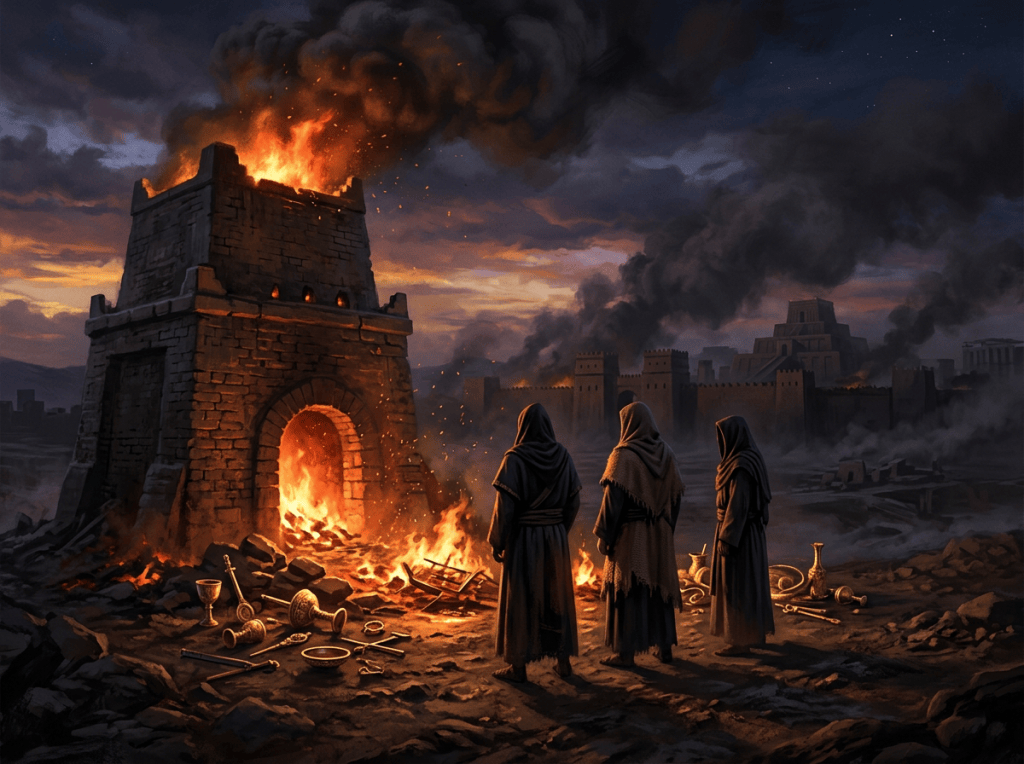
Then Nebuchadnezzar makes an image of gold. Now we’re getting closer to the story everybody remembers.
Officials are summoned. Satraps. Prefects. Governors. Counselors. Treasurers. Justices. Magistrates. Everyone important is there.
Then the herald announces the command. When the music plays, everybody bows. That’s it.
The instruction is simple. Hear the music. Fall down. Worship the image. Refuse, and you will immediately be thrown into a burning fiery furnace. Then the music begins. And the crowd goes down.
Three Men Are Still Standing
This is usually where we begin talking about courage. And certainly courage is present. But I’m not convinced those men made their decision at that moment.
I think we’re seeing the result of decisions that had already been made.
Years earlier, Babylon put something much smaller in front of them. Food. They drew a line.
Now Babylon puts something enormous in front of them. An idol. And there’s another line.
The consequences have changed dramatically. Their allegiance hasn’t.
That’s the part I think we sometimes miss. The furnace didn’t create their convictions. It revealed them.
They didn’t suddenly become faithful because Nebuchadnezzar threatened them. They’d been practicing faithfulness while the stakes looked smaller.
Then Nebuchadnezzar Gives Them Another Chance
The king is furious. But he doesn’t immediately execute them.
He asks whether the accusation is true. Then he gives them another opportunity.
Maybe there’s been a misunderstanding. Maybe they’ll reconsider.
The music will play again. Bow this time. Everything will be fine.
Then Nebuchadnezzar asks:
Daniel 3:15 Now if you are ready when you hear the sound of the horn, pipe, lyre, trigon, harp, bagpipe, and every kind of music, to fall down and worship the image that I have made, well and good. But if you do not worship, you shall immediately be cast into a burning fiery furnace. And who is the god who will deliver you out of my hands?”(ESV)
Now comes the famous answer.
Daniel 3:16 Shadrach, Meshach, and Abednego answered and said to the king, “O Nebuchadnezzar, we have no need to answer you in this matter.(ESV)
I love that sentence. They aren’t negotiating. They aren’t stalling. They don’t ask for time to pray about whether idolatry might be acceptable under unusually difficult circumstances. The decision’s already made.
Then:
Daniel 3:17 If this be so, our God whom we serve is able to deliver us from the burning fiery furnace, and he will deliver us out of your hand, O king.(ESV)
That’s usually where we like to preach. God can deliver. Absolutely. But don’t stop reading. “But if not…”
There it is. That’s the sentence that tells us what kind of faith these men actually have. But if not.
If God delivers us, we will not bow. If God does not deliver us, we will not bow.
Their obedience isn’t contingent upon the outcome. They’re not faithful because they know how the story ends. They don’t know how the story ends.
We do. They don’t.
They Didn’t Know About the Fourth Man
This is where knowing the Bible too well can hurt us.
We know somebody else is going to appear in that furnace. They don’t.
We know Nebuchadnezzar is going to look inside and become astonished. They don’t.
We know they’re going to walk out. They don’t.
We know the fire won’t even leave the smell of smoke on them. They don’t.
When they say “but if not,” they mean it. They’re prepared to die.
Not because they don’t believe God can save them. Because their faithfulness doesn’t depend upon Him doing so.
That changes the story.
This isn’t primarily three men confidently walking toward a miracle. It’s three men walking toward a furnace without requiring one.
Then They Are Thrown In
Nebuchadnezzar becomes furious. The furnace is heated seven times hotter than usual.
The men are bound. They’re thrown inside. Then the king stands up. Something is wrong.
“Did we not cast three men bound into the fire?”
His counselors answer: Yes.
Nebuchadnezzar responds:
Daniel 3:25 He answered and said, “But I see four men unbound, walking in the midst of the fire, and they are not hurt; and the appearance of the fourth is like a son of the gods.”(ESV)
And that’s extraordinary.
But notice when the fourth figure appears in the story.
After the decision. After the refusal. After “but if not.” After they’re bound. After they’re thrown in.
They didn’t refuse to bow because they could see someone waiting for them inside the furnace. They refused because they already knew who they belonged to.
Before the Fire
Maybe we’ve been asking the wrong question when we read this story.
We ask: Would I have enough faith to stand in front of the furnace?
I don’t know. Neither do you.
That’s a hypothetical version of ourselves facing circumstances we aren’t actually facing.
Maybe the better question is: What am I doing at the table?
What am I doing when the stakes are small? What compromises am I teaching myself to make? What convictions am I practicing? Where have I already decided that obedience depends upon convenience? What am I doing when nobody is threatening me?
Because enormous moments have a way of exposing decisions made in ordinary ones.
We don’t build every conviction during the crisis. Sometimes the crisis simply reveals what we’ve been building all along.
That’s what Babylon discovered. Nebuchadnezzar thought he was confronting three men with a new decision: Bow or burn.
But for Shadrach, Meshach, and Abednego, the deepest part of that decision wasn’t new at all.
Long before the instruments played, long before the crowd bowed, long before Nebuchadnezzar became angry, long before anyone heated the furnace, three young men had already started answering the only question that would eventually matter: Who do we belong to?
The fire didn’t give them their answer.
It only revealed the answer they’d already been living.




Leave a comment