(Part 8 of 12)
1 Kings 17:2–3 (2)And the word of the Lord came to him: (3)“Depart from here and turn eastward and hide yourself by the brook Cherith, which is east of the Jordan.(ESV)
Joseph got storehouses. Elijah got a brook.
That’s an important difference.
When God revealed the coming famine to Pharaoh, the response was preparation on an enormous scale. Seven years of abundance. Collect the grain. Build the reserves. Fill the storehouses. Prepare today because tomorrow will be different. By the time Egypt became hungry, food was waiting.
That’s one way God provides. It isn’t the only way.
Elijah’s story is almost the opposite. There are no warehouses. No seven-year reserve. No enormous stockpile waiting somewhere out of sight. God tells Elijah where to go next. And when Elijah gets there, there is enough.
For now.
No Rain
Elijah appears suddenly in 1 Kings 17. There’s almost no introduction.
1 Kings 17:1 Now Elijah the Tishbite, of Tishbe in Gilead, said to Ahab, “As the Lord, the God of Israel, lives, before whom I stand, there shall be neither dew nor rain these years, except by my word.”(ESV)
Then God tells Elijah to leave. Go east. Hide by the brook Cherith. Drink from the brook. God will command ravens to feed him. That’s the plan. And honestly, it’s a strange plan.
There’s a drought coming. Go live beside a brook.
Anyone can see the problem with that eventually. Brooks require water. Droughts remove water. If the drought continues long enough, the thing sustaining Elijah will eventually become another casualty of the drought. But God sends him there anyway.
Morning and Evening
Elijah obeys. The ravens come.
1 Kings 17:6 And the ravens brought him bread and meat in the morning, and bread and meat in the evening, and he drank from the brook.(ESV)
Morning. Evening. Morning. Evening. There’s a rhythm to it.
Notice what Elijah doesn’t receive. A year’s supply. A wagon of food. A map showing the next six places God will send him. An explanation of how long the brook will last.
He gets breakfast. Later, he gets supper. The next day, it happens again.
God is providing. But the provision requires Elijah to wake up tomorrow still dependent upon God. That’s uncomfortable.
We tend to prefer Joseph’s version. Show me the seven years. Show me the plan. Show me the grain. Show me the warehouse. Let me count what we have and calculate how long it will last.
There’s wisdom in planning. Joseph proves that. But sometimes God doesn’t give us a warehouse. Sometimes He gives us enough for today.
Then the Brook Dried Up
Eventually, the obvious happens.
1 Kings 17:7 And after a while the brook dried up, because there was no rain in the land.(ESV)
Imagine watching it happen. The brook doesn’t disappear instantly. The water gets lower. The flow weakens. The edges creep inward. Day after day, the source God told Elijah to depend upon becomes smaller.
There’s an interesting tension here. Elijah is exactly where God told him to be. And the brook is still drying up.
We sometimes assume that if God led us somewhere, whatever sustains us there should remain permanent. But the brook wasn’t permanent.
It was provision for a season. Its disappearance didn’t mean Elijah had misunderstood God.
It meant the next instruction was coming. “Then the word of the LORD came to him…”
There it is again. Not six months earlier. Not with the original instruction. Now.
The brook dries. Then the word comes. Go to a Widow
God tells Elijah:
1 Kings 17:9 “Arise, go to Zarephath, which belongs to Sidon, and dwell there. Behold, I have commanded a widow there to feed you.”(ESV)
Now that sounds promising. God has prepared someone. Elijah arrives at the city gate. He sees a widow gathering sticks. He asks her for water. As she goes to get it, he asks for some bread.
Then Elijah discovers what God’s prepared provision looks like.
She doesn’t have any bread. Not a loaf. Not half a loaf. Nothing.
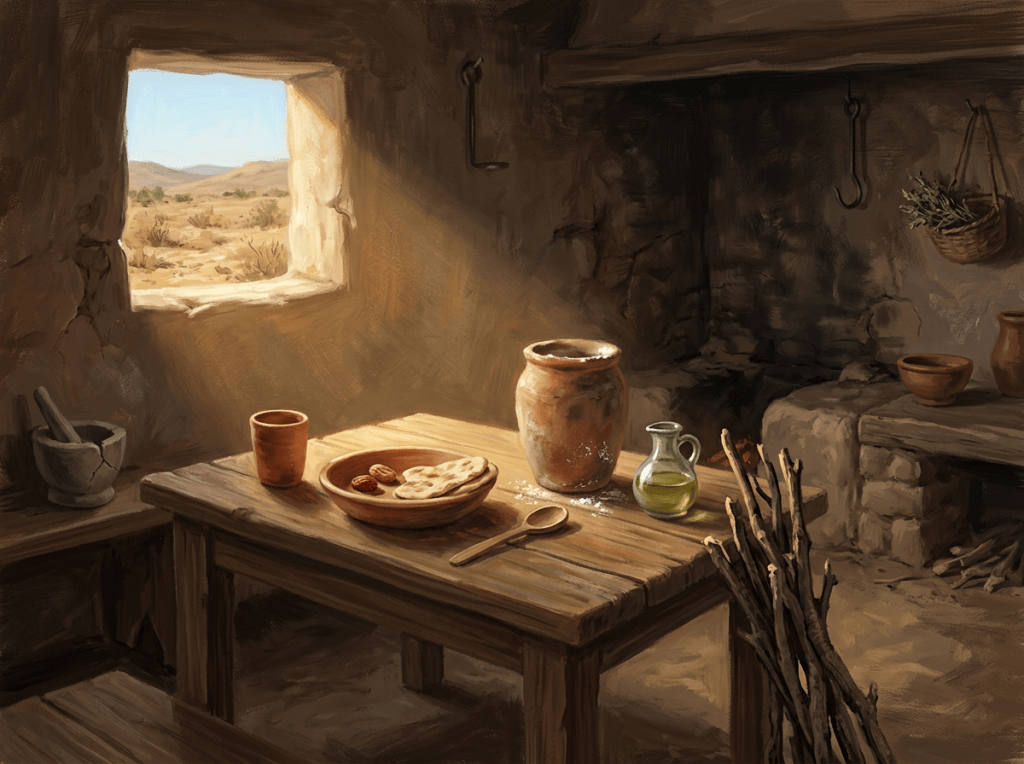
She has a little flour. A little oil. And she’s gathering sticks to prepare what she expects to be the final meal for herself and her son. Then they expect to die.
This is the person God said would feed Elijah. If I’m Elijah, I have questions.
The Provision Doesn’t Look Like Provision
This is where the story becomes radically different from Joseph. Joseph could eventually walk through enormous storehouses filled with grain.
Elijah arrives at God’s next provision and finds scarcity. The widow doesn’t look like the answer. She looks like someone who needs an answer. That’s worth sitting with.
Sometimes we have a picture in our minds of what God’s provision should look like. Enough money. Enough food. Enough certainty. Enough resources. Enough strength. Something visibly sufficient. Then God leads us somewhere that doesn’t look sufficient at all.
Elijah has been sent to a woman preparing her last meal. There’s no reserve. There’s barely a meal. Yet this is where God sent him.
First Make Me a Little Cake
Elijah tells her not to fear. Then he asks her to make him a small cake first and afterward prepare something for herself and her son. That request can sound harsh if we rip it away from what follows.
Elijah gives her a promise:
1 Kings 17:14 For thus says the Lord, the God of Israel, ‘The jar of flour shall not be spent, and the jug of oil shall not be empty, until the day that the Lord sends rain upon the earth.’”(ESV)
She goes. She does what Elijah says. Then something remarkable happens.
Not a warehouse. Not a mountain of flour. Not barrels of oil. The jar doesn’t run out. The jug doesn’t become empty.
That’s different.
If God had filled the house with sacks of flour on the first day, the widow could’ve counted them. She could’ve calculated.
We have this much. We use this much each day. We have enough for this many months.
Instead, she goes back to the jar. And there is flour. She goes back again. There is flour. She pours the oil. There is oil. Tomorrow she has to look again.
Enough Is Different From Excess
We often recognize abundance as provision more easily than sufficiency. If there’s extra, we feel secure. If there’s only enough, we feel vulnerable. But enough is still provision.
The Israelites learned something similar with manna. Collect what you need. Tomorrow, trust God again.
Elijah experiences it with ravens. Morning. Evening.
The widow experiences it with flour and oil. Meal. After meal. After meal.
The miracle isn’t that she suddenly owns a warehouse. The miracle is that empty never arrives.
That’s quieter. But when you’re living through a drought, quiet provision still feeds you.
God Prepared the Widow—But Not How We Expected
There’s another strange piece of God’s instruction: “I have commanded a widow there to feed you.”
Yet when Elijah meets her, she doesn’t appear to know anything about this arrangement. She isn’t waiting at the gate saying: Elijah! God told me you were coming.
She’s gathering sticks. She’s preparing for death.
Whatever we make of God’s statement, the scene reminds us that God’s preparation doesn’t always mean every participant understands what He’s doing.
Elijah knows God sent him. The widow knows she has almost nothing. Then their stories meet. Elijah needs food. The widow needs provision. And God’s answer involves both of them.
The person sent to provide is herself in need of provision. That’s not how we would design the system. But perhaps that’s part of the point. Neither one gets to pretend they’re self-sufficient.
Before the Drought?
There’s something unusual about the title of this message. By the time 1 Kings 17 begins, the drought is being announced.
We aren’t given seven years of preparation beforehand like Joseph. There isn’t a long visible runway.
So where’s the preparation? Maybe that’s exactly the distinction.
God didn’t prepare Elijah for the drought by giving him everything he would need before it began. He prepared the next place. Then the next. There was a brook. Until there wasn’t. There were ravens. As long as they were needed. Then there was a widow. There was flour. There was oil. And eventually, there would be rain.
The preparation was ahead of Elijah without being placed into Elijah’s hands all at once. That’s a very different kind of security.
We Want the Map
I would rather have the map. I would rather God say: Here’s what will happen over the next three years. Here’s where you’ll live. Here’s where the food will come from. Here’s when the brook will dry up. Here’s the widow you’ll meet. Here’s how the flour will last. Here’s the exact day the rain returns.
Then I could prepare. I could organize. I could calculate. I could make a spreadsheet. I could feel in control.
Elijah doesn’t get that. He gets: Go to the brook. Then: Go to Zarephath. Later: Go show yourself to Ahab.
One instruction at a time.
Maybe sometimes the preparation God is doing ahead of us isn’t information He intends to give us yet. Maybe the next step is enough.
Before We Need Tomorrow’s Provision
There’s a temptation to turn this into a promise Scripture doesn’t make. Follow God, and your pantry will never become empty. Obey, and every financial need will miraculously resolve. Trust enough, and nothing terrible will happen.
That’s not what this story guarantees. Faithful people experience hunger. Faithful people experience poverty. Faithful people suffer.
Some prayers for provision receive answers we don’t understand. The point isn’t that Christians always get the miracle of the flour jar. The point is that Elijah couldn’t judge God’s faithfulness by how much provision he could currently see.
At Cherith, he could see a brook. Then it disappeared.
At Zarephath, he could see almost nothing. Yet God hadn’t suddenly become absent when visible resources became smaller.
That’s something we need to remember. Because we often measure tomorrow’s faithfulness using today’s inventory.
The Jar
Joseph had grain stored across Egypt before the famine arrived.
Elijah had no such storehouse. He had a brook that dried up. Birds that came twice a day. A widow who thought she was preparing her final meal. A jar that should have become empty. A jug that should have run dry. And instructions that arrived when it was time to move.
Joseph could see the provision accumulating. Elijah had to keep discovering it.
Both stories show God ahead of the need. But only one of them lets the person hold the future in a warehouse.
Sometimes God prepares before the crisis by filling the storehouse. Sometimes He doesn’t. Sometimes the brook has enough water for today. Sometimes the raven brings one more meal. Sometimes you reach into the jar again. And there’s still flour.
Maybe you don’t need to see everything God has prepared for tomorrow. Maybe today’s question is simply whether you’ll go where He tells you to go today.
Because before Elijah knew where the next meal would come from, God already knew where He was sending him next.




Leave a Reply