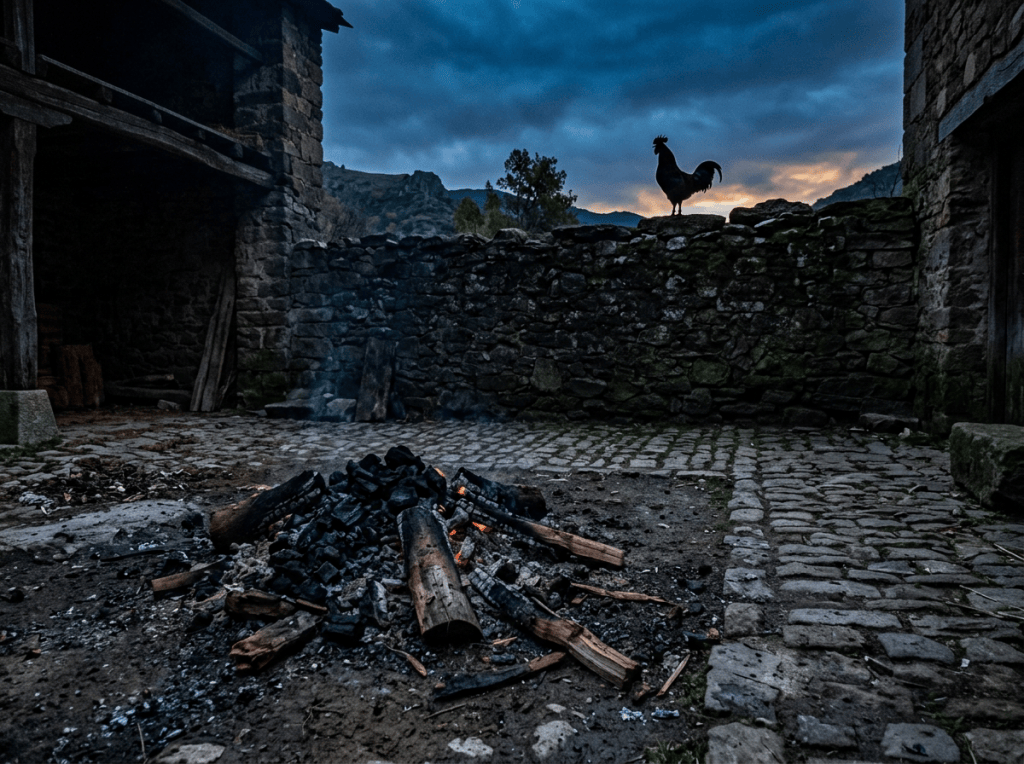
(Part 6 of 12)
Luke 22:31–32 (31)“Simon, Simon, behold, Satan demanded to have you, that he might sift you like wheat, (32)but I have prayed for you that your faith may not fail. And when you have turned again, strengthen your brothers.”
Peter doesn’t believe Jesus. That’s probably the simplest way to begin this story. Jesus tells him what’s coming. Peter tells Jesus He’s wrong. Not in those exact words, of course.
Peter says:
Luke 22:33 Peter said to him, “Lord, I am ready to go with you both to prison and to death.”
And I think Peter means it. That’s important.
This isn’t a coward pretending to be courageous. This is Peter. The man who stepped out of a boat onto the water. The man who confessed Jesus as the Christ. The man who drew a sword when soldiers came to arrest Him.
Whatever else we say about Peter, the man wasn’t generally known for standing quietly in the back of the room. When Peter says he’s willing to die with Jesus, I believe Peter thinks he’s telling the truth.
Then Jesus says:
Luke 22:34 Jesus said, “I tell you, Peter, the rooster will not crow this day, until you deny three times that you know me.”
Peter can’t imagine himself becoming the man Jesus just described. A few hours later, he’ll meet him.
There are failures we can see coming. We know we’re playing with something dangerous. We know we’re making compromises. We know we’re getting closer to a line we shouldn’t cross. We know where the road leads.
Then there are failures that expose something about us we genuinely didn’t know was there.
Peter is about to experience one of those. He thinks he knows Peter. Jesus knows Peter better.
That’s frightening. But it’s also where the hope in this story begins. Because Jesus knows exactly what Peter is about to do.
And Jesus has already prayed for him.
Not afterward. Before.
Before the courtyard. Before the questions. Before the denials. Before the rooster. Before Peter walks away weeping.
“I have prayed for you.”
The failure hasn’t happened yet, and grace is already waiting on the other side of it.
The night moves quickly. Jesus is arrested. The disciples scatter. Peter follows at a distance. A fire is burning in the courtyard. People are sitting around it. Peter sits among them. Then someone looks at him.
Luke 22:56 Then a servant girl, seeing him as he sat in the light and looking closely at him, said, “This man also was with him.”
Peter denies it. “Woman, I do not know him.”
There it is. The first denial.
Not long afterward, someone else recognizes him. “You also are one of them.” Peter answers: “Man, I am not.”
Then about an hour passes. Another person insists that Peter was with Jesus. Peter responds: “Man, I do not know what you are talking about.”
And while he’s still speaking, the rooster crows. Then Luke gives us one devastating detail.
Luke 22:61 And the Lord turned and looked at Peter. And Peter remembered the saying of the Lord, how he had said to him, “Before the rooster crows today, you will deny me three times.”
Jesus is there. Peter sees Him. Jesus sees Peter. And suddenly Peter remembers.
He remembers the conversation. He remembers the warning. He remembers his confidence. He remembers telling Jesus he was ready for prison. Ready for death. He remembers who he thought he was. Then he discovers who he was capable of becoming.
Luke 22:62 And he went out and wept bitterly.
That’s where we usually sit with Peter. And understandably so.
It’s a brutal moment. But if we stop there, we miss something Jesus said before any of this happened.
Jesus didn’t say: “If you turn again.”
He said: “When you have turned again.”
Before Peter fell, Jesus was already speaking about Peter getting back up. Before Peter denied Him, Jesus was already talking about what Peter would do afterward. Before Peter’s failure became part of his past, Jesus was already speaking about Peter’s future.
“Strengthen your brothers.”
Think about that. Peter hasn’t failed yet. And Jesus is already giving restored Peter something to do.
We often imagine failure as the point where God discovers something disappointing about us. As though God watches us fall and says: I didn’t know you were capable of that.
Peter’s story destroys that idea. Jesus knew.
That doesn’t excuse Peter. It doesn’t make the denial insignificant.
Jesus doesn’t tell Peter: Don’t worry about it. It isn’t a big deal.
It is a big deal. Peter is going to weep bitterly over it. But Peter’s failure doesn’t reveal information Jesus didn’t already possess.
Jesus knew the weakness. Jesus knew the pressure that was coming. Jesus knew Peter would fall. And Jesus loved Peter before, during, and after knowing all of it.
There’s something deeply uncomfortable about being completely known.
We spend enormous amounts of energy managing what other people know about us. We show strengths. We hide weaknesses. We explain mistakes. We defend motives. We carefully control which pieces of ourselves other people are allowed to see.
You can’t do that with God. There’s no future version of you that will surprise Him. No weakness He’s going to discover later. No failure that makes Him suddenly revise His understanding of who you are.
He already knows.
Peter is about to learn something terrible about Peter. Jesus already knows it. And Jesus is already talking about restoration.
But there’s another part of Jesus’ warning that we shouldn’t skip.
“Satan demanded to have you, that he might sift you like wheat…”
Something is coming for Peter. Peter doesn’t see it.
He sees dinner. He sees Jesus. He sees the other disciples. He sees himself as loyal and courageous.
Jesus sees the pressure coming. And Jesus prepares Peter for it.
Not by preventing every painful moment. Not by removing Peter from the courtyard. Not even by preventing Peter’s failure.
We sometimes assume God’s preparation should mean we won’t fall. Peter was warned directly by Jesus Christ and still fell. Preparation didn’t eliminate human weakness.
The warning gave Peter something he would remember afterward. The prayer covered a night Peter hadn’t lived yet. The words “when you have turned again” planted hope before Peter knew he would desperately need hope.
Jesus prepared something on the other side of Peter’s worst night.
And then comes John 21. Another fire. Another morning. Another conversation.
Peter has denied Jesus three times. Now the risen Jesus asks him three times: “Do you love me?”
There’s been endless discussion about every detail of that exchange. But don’t miss the obvious movement.
Jesus is talking to Peter. Peter is still there. Jesus is still calling him. And after Peter answers, Jesus keeps giving him responsibility.
“Feed my lambs.” “Tend my sheep.” “Feed my sheep.”
Remember what Jesus said before the failure? “When you have turned again, strengthen your brothers.”
Now we’re on the other side. Peter fell. Peter returned. And Peter still has work to do. The failure was real.
So was the restoration.
That changes how we think about preparation.
Sometimes God prepares us for the giant. Sometimes He prepares provision before the famine. Sometimes He places Esther in the palace before the decree. But sometimes the thing coming isn’t something outside of us.
Sometimes the danger is us. Our pride. Our fear. Our weakness. Our confidence in ourselves.
Peter didn’t need a sling. He didn’t need a storehouse. He didn’t need access to a king. He needed to know that when he discovered something ugly about himself, Jesus had already seen it. He needed words he wouldn’t understand until later.
“I have prayed for you.” “When you have turned again…” “Strengthen your brothers.”
Jesus put those words into Peter’s story before Peter knew why he would need them.
Maybe that’s where this one needs to land. There are things about ourselves we haven’t discovered yet. That isn’t pleasant to admit.
We like to think our future challenges will reveal how strong our faith has become.
Some will. Others may expose weaknesses we currently believe we don’t have.
Peter would’ve sworn he wasn’t going to deny Jesus. He did more than swear it. He argued with Jesus about it.
Then the rooster crowed.
Maybe one day we’ll hear our own rooster. A moment when the person we thought we were collides with the person our choices just revealed.
If that happens, remember Peter. Not because failure doesn’t matter. It does.
Not because grace makes repentance unnecessary. It doesn’t.
Remember Peter because his failure wasn’t the first thing Jesus saw. Jesus saw beyond it.
Before Peter knew how badly he could fail, Jesus knew. Before Peter knew he would need restoration, Jesus spoke of his return. Before Peter knew his brothers would someday need the strength of a humbled Peter, Jesus gave him the assignment.
Peter thought the rooster announced the end of his story. Jesus had already spoken about the next chapter.
Before Peter ever fell, Christ had already made room for him to stand again.





Leave a comment