(Part 1 of 10)
Jonah 4:11 And should not I pity Nineveh, that great city, in which there are more than 120,000 persons who do not know their right hand from their left, and also much cattle?”(ESV)
Most stories end. The conflict is resolved. The lesson is learned. The character makes a decision. We may wonder what happened years later, but the story itself reaches a place where we can comfortably close the book.
Jonah does not.
We know the famous parts of his story. God tells Jonah to go to Nineveh. Jonah runs the other direction. A storm comes. Jonah’s thrown overboard. A great fish swallows him. Jonah prays. The fish spits him onto dry land. God tells Jonah to go to Nineveh again. This time, Jonah goes. He preaches judgment, Nineveh repents, and God spares the city. If we stopped there, Jonah would have a clean ending. The rebellious prophet finally obeyed. The wicked city repented. God showed mercy. Roll the credits.
Except Jonah’s furious.
Jonah 4:1 But it displeased Jonah exceedingly, and he was angry.(ESV)
That changes the entire ending. Jonah did what God told him to do, but his heart hadn’t caught up with his obedience. He wanted Nineveh destroyed.
Jonah even tells God that this is why he ran in the first place. He knew what God was like. He knew God was gracious, merciful, slow to anger, and abounding in steadfast love. Jonah wasn’t afraid that his preaching would fail. He was afraid that it would work.
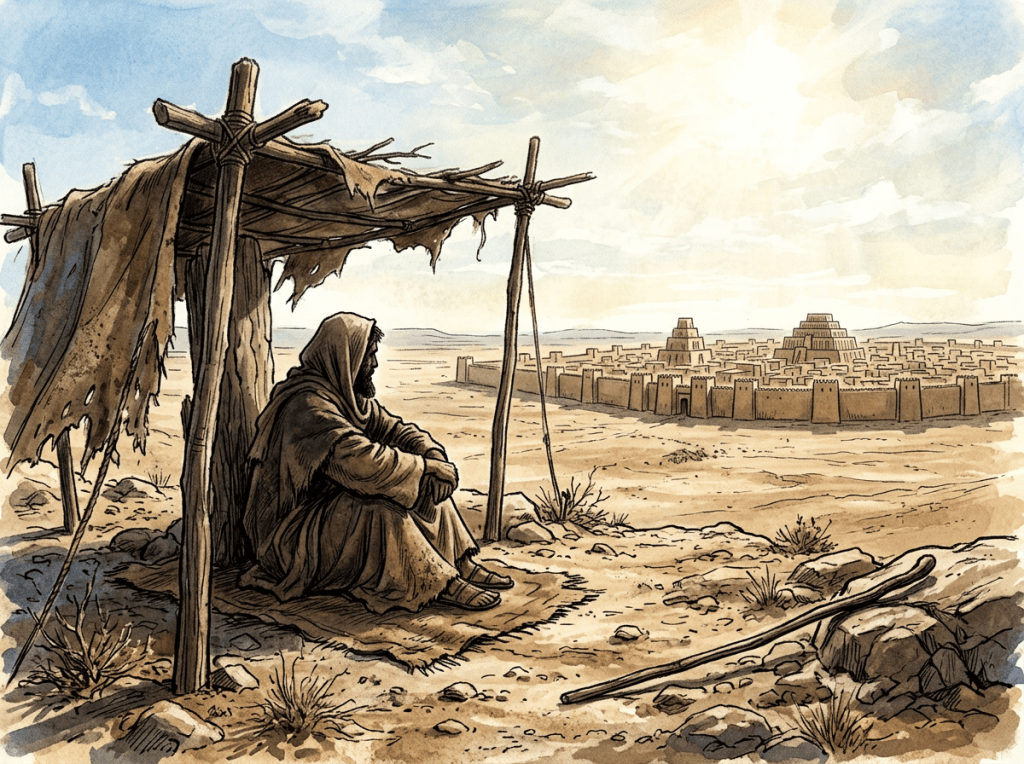
So God begins dealing with Jonah. Jonah leaves the city and sits outside, waiting to see what will happen. God appoints a plant to give him shade, and Jonah’s exceedingly glad because of it.
Then God appoints a worm. The plant dies. The sun beats down. Jonah becomes miserable and says that he would rather die. God asks him whether he has any right to be angry about the plant.
Jonah answers:
Jonah 4:9 But God said to Jonah, “Do you do well to be angry for the plant?” And he said, “Yes, I do well to be angry, angry enough to die.”(ESV)
And then God makes the comparison. Jonah cares deeply about a plant he didn’t create, didn’t cultivate, and didn’t keep alive. Should God not care about an entire city filled with human beings?
That’s where we expect Jonah to finally understand. This is where we expect the prophet to fall to his knees. This is where we expect him to confess that his anger was wrong. This is where we expect Jonah to finally see Nineveh the way God sees Nineveh. But that verse never comes.
God asks the question. Jonah never answers. The book ends.
That isn’t the kind of ending we’re accustomed to.
It almost feels like a page is missing. Maybe Jonah repented. Maybe he finally understood. Maybe he returned home still bitter. Maybe the lesson took years to sink in.
The Bible doesn’t tell us. And we have to resist the temptation to finish the story for it.
We can imagine possibilities, but imagination isn’t Scripture. The last recorded word belongs to God. That matters. Because once Jonah stops answering, someone else has to. Us.
God’s question is no longer sitting only in front of an angry prophet outside Nineveh. It’s sitting in front of the reader. Do we believe God has the right to show mercy to people we think deserve judgment?
That question becomes uncomfortable very quickly. It’s easy to celebrate mercy when we’re the ones receiving it. We love the God who forgives our failures. We love the God who gives another chance after we run. We love the God who hears us when we’re sinking. We love the God who rescues us from consequences we created ourselves.
Jonah certainly benefited from that God. Jonah ran from God. God pursued him. Jonah disobeyed. God gave him another assignment. Jonah deserved judgment. God showed him mercy. But then God showed that same mercy to Nineveh.
Suddenly Jonah had a problem with grace. That’s the trap.
We can become very comfortable receiving mercy while becoming extremely selective about who else should receive it. There are people we want God to forgive. There are people we want God to change. And if we’re not careful, there are people we would rather watch burn.
Jonah forces us to confront that. Nineveh wasn’t merely a group of people Jonah found irritating. They represented a brutal enemy. His hatred didn’t appear out of nowhere. But God’s compassion wasn’t dependent upon Jonah deciding that Nineveh deserved it.
That’s precisely the problem Jonah had to confront. And Scripture never tells us whether he did.
Maybe that’s why the missing ending works so well. If Jonah had answered correctly, we could admire his growth. If Jonah had answered incorrectly, we could condemn his bitterness. Instead, God leaves the question hanging in the air.
And we can’t hide behind Jonah’s answer because he never gives us one. We have to give our own. Who is your Nineveh?
Who are the people you believe God should judge but secretly hope He never restores?
Who would make you uncomfortable if they walked into church genuinely repentant?
Whose salvation would force you to confront something ugly inside yourself?
God’s question to Jonah still stands. “Should not I pity Nineveh?”
The Bible doesn’t tell us what Jonah finally said. Maybe it doesn’t need to. Because thousands of years later, God is still waiting for the reader to answer.
The book ends. The question does not.



Leave a Reply