(Part 3 of 7)
Isaiah 6:5 And I said: “Woe is me! For I am lost; for I am a man of unclean lips, and I dwell in the midst of a people of unclean lips; for my eyes have seen the King, the Lord of hosts!”(ESV)
Isaiah sees the Lord. And he falls apart.
The throne is high and lifted up. The seraphim cry, “Holy, holy, holy.” The foundations shake. The temple fills with smoke.
Isaiah is standing in the presence of overwhelming holiness. And what does he notice about himself?
His lips.
“I am a man of unclean lips.”
That should make us pause.
Of everything Isaiah could’ve confessed, his mouth comes immediately into view.
He doesn’t say, “I’ve made a few mistakes.”
He doesn’t say, “Nobody’s perfect.”
He doesn’t compare himself favorably with someone worse.
He sees the holiness of God and suddenly understands the uncleanness of what comes from him.
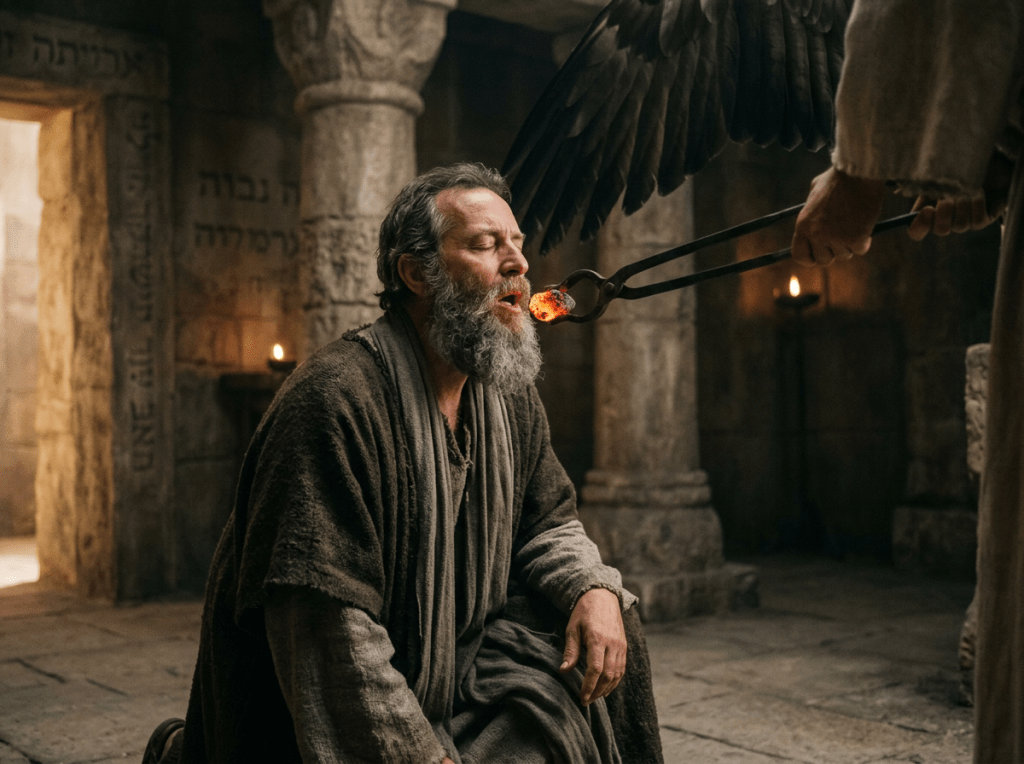
Then one of the seraphim takes a burning coal from the altar and touches Isaiah’s mouth.
The place Isaiah identified as unclean is the place God cleanses.
That scene is dramatic enough that most people naturally slow down.
Fire.
Holiness.
Confession.
Cleansing.
A prophet undone before God.
We understand that this matters.
Then Jesus says:
Matthew 12:36 I tell you, on the day of judgment people will give account for every careless word they speak,(ESV)
And somehow we keep reading.
Every careless word.
Pause there.
Jesus doesn’t say only the deliberately cruel words.
Not merely lies. Not merely blasphemy. Not merely carefully planned slander.
Careless words.
Words spoken because we were irritated.
Words spoken because we wanted a laugh.
Words spoken because we wanted to win.
Words spoken because we wanted someone else to lose.
Words spoken because we didn’t stop long enough to consider what they might do.
Words spoken and forgotten almost immediately.
Jesus says they matter. That’s uncomfortable.
We often treat speech as one of the lighter areas of sin.
We say things like:
“I was just joking.”
“I was angry.”
“I didn’t mean it like that.”
“They know how I am.”
“I was just being honest.”
“It slipped out.”
Sometimes those explanations are true.
They don’t make the words weightless.
Carelessness doesn’t mean harmlessness.
A careless match can still burn a house. A careless turn of the wheel can still cause a wreck. A careless word can still wound someone.
James describes the tongue as a small fire capable of setting a great forest ablaze.
Proverbs says death and life are in the power of the tongue.
Jesus says our words reveal what fills the heart.
Scripture repeatedly treats speech as something far more serious than we often do.
Isaiah understood that immediately when he saw the Lord.
We often don’t.
Maybe that’s because Isaiah’s scene feels extraordinary.
Of course a prophet standing before the throne of God would tremble.
Of course he would suddenly become aware of his impurity.
Of course his lips would feel unclean in the presence of perfect holiness.
But Matthew 12 removes our ability to leave that realization inside Isaiah’s vision.
Jesus brings it into ordinary conversation.
Your words matter before God.
Not only the sermons. Not only the prayers. Not only the things you carefully prepare.
The careless ones too.
That means holiness reaches into conversations nobody remembers.
Into arguments.
Into jokes.
Into gossip.
Into text messages.
Into comments.
Into the sentence muttered under your breath.
Into the words spoken at home where nobody else hears.
Into the things said about someone who isn’t in the room.
Into the things we dismiss because they seemed small at the time.
Isaiah said: “I am a man of unclean lips.”
Perhaps we’re too quick to think that sounds overly dramatic. Maybe Isaiah simply understood something we’ve learned to ignore. The closer he came to the holiness of God, the less trivial his words appeared.
That’s worth considering.
We usually judge our words by intention. God also sees their source.
Jesus says that out of the abundance of the heart the mouth speaks.
The tongue doesn’t merely create problems. Sometimes it reveals them.
Bitterness eventually speaks.
Pride speaks.
Envy speaks.
Fear speaks.
Contempt speaks.
Love speaks too.
So does patience.
So does mercy.
So does wisdom.
Our words aren’t perfect measurements of the heart, but they often expose more than we intended.
That may be why Isaiah went directly to his lips. He’d seen the King. The excuses suddenly sounded very small.
We pause when the coal touches Isaiah’s mouth.
We should.
But perhaps we should pause just as long when Jesus tells us that careless words will be remembered before God.
Because one day there will be no such thing as: “It was only words.”
God heard them.
The person receiving them may still remember them. And Jesus said they matter.
So before speaking today, pause.
Before sending it, pause.
Before repeating it, pause.
Before turning someone into the joke, pause.
Before using honesty as permission for cruelty, pause.
Before saying something you know you’ll later defend with, “I didn’t mean anything by it,” pause.
Isaiah saw the Lord and became aware of his lips.
Maybe we don’t need a shaking temple to learn the same lesson.
Jesus already told us.
Every careless word.
Read that again.
Then pause.








Leave a comment