Proverbs 13:20 Whoever walks with the wise becomes wise, but the companion of fools will suffer harm.(ESV)
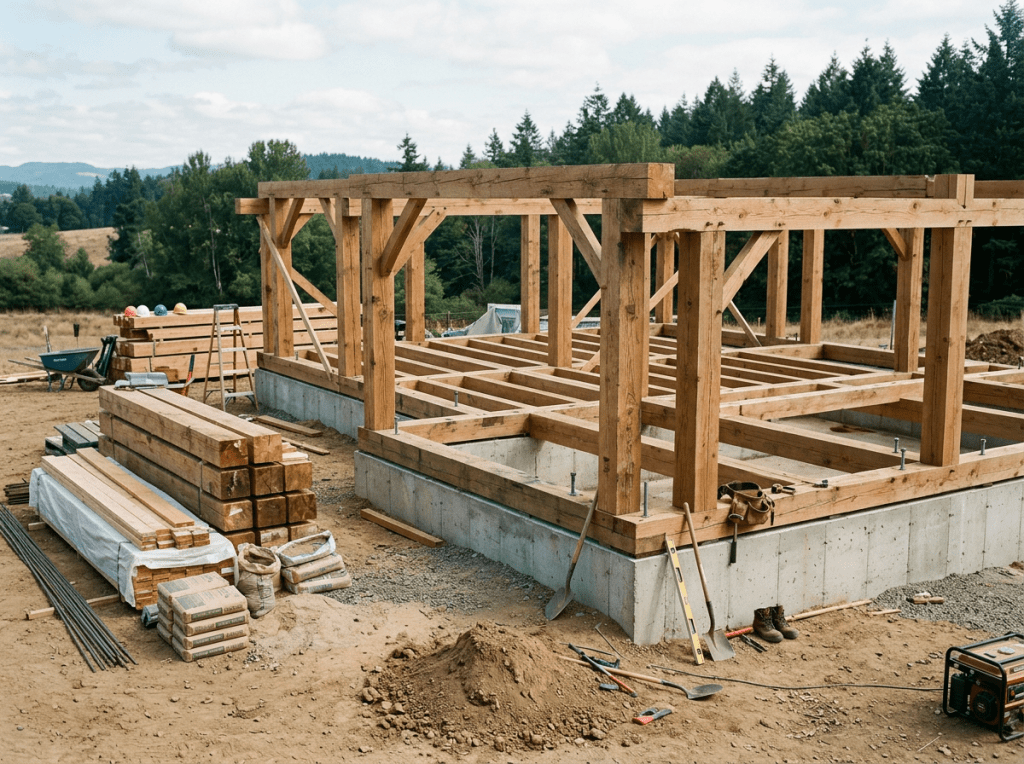
If you were building a house, you would probably spend some time thinking about the materials.
You would want lumber strong enough to carry the weight placed on it. You would want shingles capable of keeping rain out. You would want windows that let light in without letting the weather follow it. You would want doors where people can enter and walls where they can’t.
You probably wouldn’t build the foundation out of drywall. That doesn’t make drywall bad. It simply means drywall was never meant to hold up the house.
The same thing is true of people.
We tend to think about relationships primarily in terms of whether someone is a good person or a bad person. We ask whether we like them, whether we enjoy spending time with them, whether we trust them, or whether they’ve treated us well. Those questions matter.
But there’s another question we don’t ask nearly enough: What am I building with this person?
The people around us don’t merely occupy space in our lives. Over time, they become part of the environment in which we live.
Their words become voices we hear when making decisions.
Their habits begin to seem normal.
Their expectations influence our own.
Their values can slowly become assumptions we stop examining.
Their courage can strengthen ours.
Their fear can reinforce ours.
Their wisdom can steady us.
Their foolishness can become expensive.
That’s part of what makes the warning in Proverbs so practical. “Whoever walks with the wise becomes wise.” It doesn’t say that wisdom is transferred instantly simply because you stood next to a wise person. It describes walking with them.
Time.
Proximity.
Conversation.
Observation.
Influence.
The same is true on the other side. “The companion of fools will suffer harm.” The danger isn’t merely that the fool may personally hurt you. Foolishness creates consequences. Stay close enough to it for long enough, and eventually some of those consequences can become yours.
We understand this almost instinctively when building something physical.
If a board is rotten, we don’t put it into the wall simply because we feel sorry for the board.
If a piece of glass is beautiful, we still don’t use it where a support beam belongs.
If a material is excellent for one purpose, we don’t assume that it’s excellent for every purpose.
Yet we frequently abandon that kind of discernment when dealing with people.
Someone makes us laugh, so we give them influence.
Someone has known us for twenty years, so we assume they deserve access to every part of our lives.
Someone loves us, so we assume their advice must be wise.
Someone is family, so we stop asking what their presence is actually producing.
Someone has been good to us, so we give them structural importance they may never have been equipped to carry.
None of that necessarily means the person is bad. That may be the most important part to understand.
A window isn’t defective because it can’t hold up the roof. The problem begins when the builder refuses to recognize what the material is capable of doing.
Paul wrote that “bad company ruins good morals.” The warning is easy to read as a command to avoid obviously terrible people, but the principle reaches deeper than that.
The people we repeatedly walk beside help shape the world we consider normal.
Spend enough time around bitterness, and bitterness begins to sound reasonable.
Spend enough time around dishonesty, and little lies stop feeling serious.
Spend enough time around people who constantly complain, and gratitude begins to feel naive.
But the opposite is also true.
Walk with people who tell the truth when lying would be easier, and truth becomes more normal.
Walk with people who remain faithful when leaving would be easier, and faithfulness becomes more imaginable.
Walk with people who admit when they are wrong, forgive when they are hurt, work when nobody is watching, and refuse to abandon their principles when those principles become expensive, and something happens to the standards inside your own life.
The materials around you matter.
That doesn’t mean we should only associate with perfect people. If that were the requirement, every one of us would eventually be standing alone.
Jesus certainly didn’t avoid broken people. Neither should we.
But loving someone and building your life with them aren’t necessarily the same thing.
You can help someone without allowing their thinking to shape yours. You can care deeply for someone without making them a source of counsel. You can forgive someone without pretending their character has already become trustworthy. And you can recognize tremendous value in a person while still understanding that they may not belong in every part of the structure you’re building.
That requires more than asking whether someone is good or bad. It requires looking at what happens around them.
What do they produce?
What do they reinforce?
What becomes easier when you spend time with them?
What becomes harder?
Are you becoming more patient, honest, courageous, disciplined, generous, and faithful?
Or are things that once bothered your conscience slowly becoming ordinary?
We spend enormous amounts of time asking what we want our lives to become.
We pray about where we’re going.
We make plans.
We set goals.
We ask God for wisdom about careers, marriages, families, ministries, finances, and futures.
But somewhere in all of that planning, we should also look around at the materials already lying around the construction site. Because whether we intended it or not, we’re already building with them.
Some relationships were chosen.
Some were inherited.
Some appeared unexpectedly.
Some have been with us for most of our lives.
But longevity doesn’t automatically determine placement, and familiarity doesn’t automatically make something structurally sound.
So before asking what kind of life you hope to build, spend some time looking at what you’re already building with.
Look at the people whose voices carry weight.
Look at the people whose behavior has become normal to you.
Look at the people you seek when you’re confused, angry, tempted, afraid, successful, or hurting.
Then ask a harder question than whether they’re good people.
What is their presence helping to build in you?








Leave a comment