(Part 10 of 16)
John 12:9–11 (9)When the large crowd of the Jews learned that Jesus was there, they came, not only on account of him but also to see Lazarus, whom he had raised from the dead. (10)So the chief priests made plans to put Lazarus to death as well, (11)because on account of him many of the Jews were going away and believing in Jesus.(ESV)
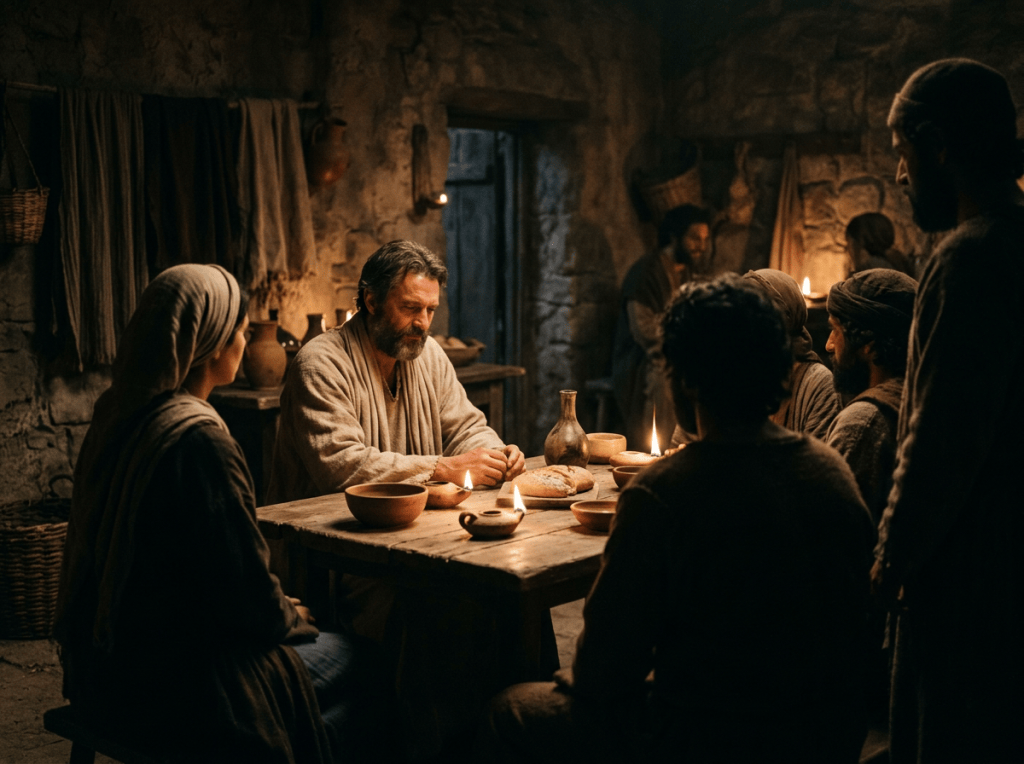
Lazarus was sitting at the table. That’s an ordinary thing to do. People gather around tables every day. They share meals, exchange stories, enjoy one another’s company, and carry on with the familiar rhythms of life. But there was nothing ordinary about Lazarus sitting at that table.
Not long before, his sisters had buried him. He’d been in the tomb for four days. His family had mourned him. The people around them had accepted that his life was over. Then Jesus arrived.
He stood before the tomb and called Lazarus out. And Lazarus came.
The man who had been buried was alive again. It was an extraordinary miracle. But now, in John 12, Lazarus wasn’t standing outside a tomb. He was reclining at a table. And the religious authorities wanted him dead. Again.
The Man Everyone Wanted to See
John tells us that a large crowd learned Jesus was in Bethany and came to see Him. But they weren’t interested in Jesus alone. They also wanted to see Lazarus.
The man Jesus had raised from the dead had become an attraction in his own right. That isn’t difficult to understand.
Imagine hearing that someone you knew had died, been buried, and then returned to life. You’d have questions. You’d want to see for yourself. You’d want to know whether the story was true.
Lazarus was living evidence that something extraordinary had happened. And the people were responding.
John tells us that many Jews were going away and believing in Jesus because of Lazarus. Notice what Scripture doesn’t say. It doesn’t tell us that Lazarus was delivering sermons. It doesn’t record him performing miracles. It doesn’t describe him organizing a ministry or gathering disciples. It doesn’t even record a speech from him.
He was simply there. Alive. His presence was enough to make people reconsider what they believed about Jesus.
Sometimes the most compelling testimony isn’t an argument someone makes. It’s a reality other people can’t easily explain away.
The Problem With Undeniable Evidence
The religious authorities had already been troubled by Jesus. His teaching challenged their understanding. His influence threatened their position. His miracles attracted attention. And the raising of Lazarus had intensified the situation.
John 11 tells us that some who witnessed the miracle believed in Jesus. Others went to the Pharisees and reported what had happened. The chief priests and Pharisees gathered a council. Their concern wasn’t merely theological. They worried about what would happen if everyone believed in Jesus. They feared Roman intervention and the loss of their place and nation.
Their response was to begin planning Jesus’ death. Then Lazarus became a problem too. Why? Because people were believing in Jesus on account of him.
The man whose life had been restored was now evidence supporting the very person the authorities wanted to eliminate. And rather than reconsider their position, they planned to remove the evidence.
That’s a disturbing progression. They weren’t simply refusing to believe the testimony. They were considering destroying the person whose existence made that testimony difficult to ignore.
When preserving a position becomes more important than discovering the truth, even evidence can begin to look like an enemy.
When Truth Becomes Inconvenient
There’s a difference between questioning a claim and refusing to consider evidence. Questions aren’t inherently hostile to faith. Careful examination can protect us from deception. Scripture itself warns believers to test what they hear. But the religious leaders in John’s account were confronting something that challenged more than their understanding.
It challenged their authority. Their influence. Their expectations. Their control over the religious life of the people. And that created a conflict.
They could examine the evidence and reconsider their conclusions. Or they could protect their conclusions by resisting the evidence. John records that they chose the latter.
That problem isn’t limited to religious leaders in ancient Judea. People can become attached to an interpretation, a tradition, a position, or an institution so strongly that contradictory evidence feels threatening.
Sometimes the desire to be right becomes stronger than the desire to know what’s right. Sometimes admitting a mistake seems more dangerous than continuing to defend it. Sometimes protecting a reputation becomes more important than acknowledging what’s happened. And sometimes the people who reveal uncomfortable truths become the targets of resentment.
We should be careful not to assume that everyone who disagrees with us is guilty of this. Disagreement isn’t proof of dishonesty. Skepticism isn’t automatically rebellion. And our own conclusions aren’t immune to error. But Lazarus’s story presents a particular warning.
A person can become so committed to defending what they believe that they begin opposing the very truth they claim to serve.
The Witness Who Didn’t Need a Platform
Lazarus wasn’t one of the Twelve. Scripture doesn’t identify him as a public teacher. He wasn’t standing in the temple debating religious authorities. He wasn’t organizing opposition to the chief priests. He was a man Jesus had raised from the dead. And his continued existence was influencing people. That makes his story unusual.
We often think of testimony primarily as something spoken. We imagine standing before an audience, explaining what God’s done, and persuading people through our words. And spoken testimony certainly matters. But Lazarus demonstrates that the evidence of God’s work isn’t always confined to what a person says.
Sometimes it’s visible in what’s happened. Sometimes it’s evident in a changed life. Sometimes it’s found in the presence of someone who, by every ordinary expectation, shouldn’t be standing where they are.
That doesn’t mean every extraordinary experience proves a particular theological conclusion. Nor does it mean that a changed life eliminates the need for careful teaching. But in Lazarus’s case, the connection was direct.
Jesus had called him from the tomb. Lazarus was alive. And people were believing in Jesus because of it.
The authorities understood that connection well enough to recognize Lazarus as a threat. They couldn’t simply ignore him.
The Cost of Being Evidence
Here’s where Lazarus’s story becomes particularly uncomfortable. He hadn’t chosen to become a public controversy. He hadn’t asked Jesus to make him famous. He hadn’t arranged for crowds to gather around him.
He’d been dead. Jesus raised him. And now other people were making decisions about him because of what Jesus had done.
Some wanted to see him. Some believed in Jesus because of him. And some wanted him removed.
Lazarus’s circumstances had changed dramatically. But he didn’t control how others responded to that change.
There’s a lesson here that reaches beyond the miracle itself. Sometimes people become associated with a truth they didn’t set out to represent publicly. Someone survives circumstances that others believed would destroy them. Someone changes in ways that challenge assumptions people have held for years. Someone tells the truth about an event that others would rather forget. Someone’s life becomes evidence that a long-defended explanation was incomplete or wrong. And the reaction isn’t always celebration.
Sometimes the existence of contrary evidence creates discomfort. Sometimes it produces anger. Sometimes it exposes how much a person or institution has invested in maintaining a particular narrative. But the response of others doesn’t determine whether the evidence is real.
Lazarus didn’t become less alive because the chief priests wished he weren’t.
Their opposition couldn’t reverse the miracle. Their plans couldn’t change what Jesus had already done. The truth of Lazarus’s restoration didn’t depend on their willingness to acknowledge it.
The Silence of Lazarus
There’s something else remarkable about this account. Lazarus never speaks in the recorded narrative. His sisters speak. Jesus speaks. The crowds respond. The religious authorities deliberate. But Lazarus’s own words aren’t preserved.
We don’t know what he thought about the crowds. We don’t know whether he understood the danger. We don’t know whether he was afraid. We don’t know how he processed the experience of returning to life. And we don’t know what happened to him after the events John records.
Those unanswered questions are fascinating. But they aren’t invitations to invent a biography.
Scripture has chosen to preserve the fact of Lazarus’s restoration and its consequences without giving us his private reflections. And perhaps that silence is worth respecting. Because the significance of his story doesn’t depend on our ability to imagine his emotions. It rests on what Jesus did.
Lazarus was dead. Jesus raised him. And his restored life became a reason for others to believe. That’s enough to make the account extraordinary.
When the Evidence Remains
The chief priests planned to kill Lazarus. John tells us that plainly. But he doesn’t tell us that they succeeded.
We shouldn’t confuse an intention with a completed action. Nor should we assume that Lazarus lived without further danger simply because Scripture doesn’t record what happened next.
The account ends without resolving that particular threat. But the central event had already reached its conclusion.
Lazarus had been raised. He’d returned to ordinary life. And his presence among the living had consequences.
That’s the part that belongs to this series. The miracle ended. The life it restored continued. And that continued life became part of a much larger conflict surrounding Jesus.
Lazarus wasn’t merely a man who’d received a blessing. He’d become a witness to something that challenged the assumptions and authority of powerful people. And the testimony existed whether or not he stood up to deliver it.
The Man Who Wouldn’t Stay Dead
Lazarus sat at the table. People came to see him. Many believed in Jesus because of him. And the chief priests planned to kill him. It’s a remarkable sequence.
The man who’d been restored to life was now facing hostility because his restoration pointed people toward Christ. But the most important part of the story isn’t the hostility. It’s the reason for it.
Lazarus’s existence testified to the power of Jesus. He didn’t have to manufacture that testimony. He didn’t have to exaggerate it. He didn’t have to make himself the center of the story. He simply had to be the man Jesus had raised. And that was enough to make people ask questions.
Perhaps there’s something worth examining in our own lives.
Are we willing to acknowledge truth when it challenges what we’ve always believed?
Are we willing to reconsider a position when the evidence no longer supports it?
Are we more interested in protecting our conclusions than discovering whether they’re correct?
And when God’s work becomes visible in someone’s life, do we recognize it?
Or do we become uncomfortable because it doesn’t fit the explanation we’ve already decided to defend?
Lazarus didn’t need the approval of the religious authorities to be alive. Their agreement wasn’t what made the miracle real. And their opposition couldn’t change what had happened outside the tomb.
Truth doesn’t become false because acknowledging it would cost us something.
The man who’d been buried was sitting at the table. And no amount of resentment could make that ordinary meal an ordinary thing.





Leave a Reply