
(Part 2 of 2)
⚓ Floatie: A New Field, the Same Hands
Luke 6:43-45 (43)“For no good tree bears bad fruit, nor again does a bad tree bear good fruit, (44)for each tree is known by its own fruit. For figs are not gathered from thornbushes, nor are grapes picked from a bramble bush. (45)The good person out of the good treasure of his heart produces good, and the evil person out of his evil treasure produces evil, for out of the abundance of the heart his mouth speaks.(ESV)
There’s a familiar saying that warns us that the grass isn’t always greener on the other side.
That warning is true, but it doesn’t go far enough.
The grass is never greener simply because we crossed a fence.
A new marriage may feel more exciting. A new job may feel more promising. A new church may seem healthier. A new town may offer better opportunities. A new friendship may feel easier. A new beginning may appear to contain everything that was missing before.
For a while, the grass may genuinely look greener.
The ground is different. The people are different. The problems haven’t had time to emerge. No one knows our history well enough to recognize our patterns. Nothing has yet been neglected long enough to show the damage.
Novelty can look a lot like transformation when we haven’t waited long enough to see the difference.
Then familiar pressures begin to appear.
Someone disappoints us.
The job becomes demanding.
The friendship requires sacrifice.
The marriage reaches conflict.
The church contains imperfect people.
The new town doesn’t heal the loneliness we carried into it.
Slowly, the new grass begins to look like the grass we left behind.
We may conclude that we chose the wrong field again.
But there’s another possibility we’re often unwilling to consider.
We brought the same gardener with us.
✒️ Forge: Habituation Is the Bane of Free Will
Human beings possess the ability to choose, but we don’t approach every decision as though it were completely new.
We build habits.
We develop familiar responses. We learn what brings immediate relief, what protects our pride, what avoids discomfort, what earns approval, and what allows us to escape responsibility.
Eventually, those responses become so practiced that they begin operating before conscious thought has time to catch them.
Hurt produces anger.
Fear produces avoidance.
Shame produces concealment.
Disappointment produces withdrawal.
Criticism produces defensiveness.
Loneliness produces the old source of comfort.
Conflict produces the threat to leave.
The response feels natural because it’s been repeated.
That doesn’t mean no other choice exists. It means the familiar choice has become cheaper.
Every decision carries a cost.
Choosing something different requires more thought, more effort, more uncertainty, and more discomfort than repeating what we already know how to do. The old response has been practiced until it runs almost automatically. The new response must be built while we’re already under pressure.
Anger is often cheaper than vulnerability.
Blame is cheaper than repentance.
Withdrawal is cheaper than reconciliation.
Indulgence is cheaper than restraint.
Leaving is cheaper than rebuilding.
At least, that’s how the calculation appears in the moment.
The immediate cost of change is visible. The future cost of repetition is hidden.
So we repeat what we know.
Then we call the result inevitable.
Habituation becomes the bane of free will, not because it removes our ability to choose, but because it persuades us that we’ve already chosen before the decision ever arrives.
We begin treating our patterns as identity.
“That’s just how I am.”
“I’ve always had a temper.”
“I don’t trust people.”
“I shut down when things become difficult.”
“I can’t help it.”
“I was raised this way.”
Those statements may explain how the pattern was formed, but they don’t determine what must happen next.
Explanation isn’t absolution.
The past may explain why a particular choice feels natural. It doesn’t remove our responsibility for continuing to make it.
⚒️ Anvil: Hurt People Do Not Only Hurt
People often say, “Hurt people hurt people.”
There’s truth in that statement.
A person who has been betrayed may become suspicious. Someone who has been abandoned may leave before they can be left. A person raised beneath constant criticism may learn to attack others before their own weakness can be exposed. Someone who has known chaos may feel strangely uncomfortable when life becomes peaceful.
Pain teaches.
The problem is that pain isn’t always a truthful teacher.
Pain may teach us that everyone is dangerous.
Pain may teach us that love must be controlled.
Pain may teach us that vulnerability is weakness.
Pain may teach us that the only way to survive is to strike first.
Pain may teach us to poison the field before anyone else has the opportunity to take it from us.
Then we carry those lessons into every new place.
We punish new people for what old people did.
We respond to present circumstances with defenses built for former threats.
We enter a healthy relationship expecting betrayal, then create the distance that makes intimacy impossible. We enter a new workplace expecting rejection, then behave in ways that isolate us. We enter a church searching for hypocrisy, then interpret every mistake as proof that we were right.
The field may be new, but the seed is old.
The tragedy is that hurt people don’t have to hurt people.
They can heal.
They can interrupt the pattern.
They can recognize that the response which once protected them is now destroying what they claim to desire.
But healing requires more than changing locations.
A person can leave an abusive marriage and still carry the wounds into every future relationship. Leaving may have been necessary. Remaining may have been dangerous. The field truly may have been poisoned by someone else.
But escape isn’t the same thing as restoration.
The person may be safe while still being wounded.
They may be free while still being controlled by what happened.
They may have crossed the fence while continuing to cultivate the same fear, anger, suspicion, and self-protection planted in the old field.
This isn’t blame.
It’s the recognition that we can leave what harmed us without allowing what harmed us to follow us forever.
🔥 Ember: The Cost of Becoming Different
The person seeking greener grass usually believes the primary problem is location.
If the marriage changed, they would be happy.
If the employer changed, they would succeed.
If the church changed, they would grow.
If the neighborhood changed, they would thrive.
If the people around them changed, they would become the person they always believed themselves capable of becoming.
Sometimes the environment truly is destructive. Sometimes leaving is wise, necessary, and long overdue.
But even when the field must change, the gardener must still be examined.
Otherwise, the lesson learned from every failure becomes: “When the grass turns brown, move again.”
That lesson leaves a path of destruction.
The person never learns to identify what they planted, what they neglected, what they poisoned, or what they refused to remove. They only learn how to escape before the full harvest appears.
They leave marriages wounded.
They leave friendships confused.
They leave churches divided.
They leave businesses damaged.
They leave children wondering why they weren’t worth the work.
They keep moving because moving offers immediate relief.
Changing themselves costs more.
Real change requires admitting that our hands contributed to what grew.
It requires confronting the possibility that the common thread running through every failed field is the person standing in the middle of it.
It requires choosing the expensive option.
Apologizing when pride wants to defend.
Listening when anger wants to speak.
Remaining present when fear wants to flee.
Refusing the appetite when indulgence promises relief.
Telling the truth when concealment seems safer.
Seeking help when independence has become an idol.
The expensive option costs more now because it creates something different later.
The cheap option feels easier now because it sends the bill into the future.
Every repeated decision is teaching us how to make the next one.
When we surrender to anger, anger becomes easier.
When we practice avoidance, avoidance becomes natural.
When we blame others, responsibility becomes increasingly foreign.
But the same principle works in the opposite direction.
When we practice patience, patience becomes more available.
When we tell the truth, honesty becomes less frightening.
When we remain through discomfort, endurance grows.
When we choose forgiveness, resentment loses some of its authority.
The first different choice may feel unnatural.
The second may still feel forced.
The hundredth may begin to feel like character.
Free will makes change possible.
Repeated choices make change visible.
Habituation may be the bane of free will, but intentional habituation can also become one of its greatest victories.
🌿 Covenant Triumph: The Gardener Must Be Changed
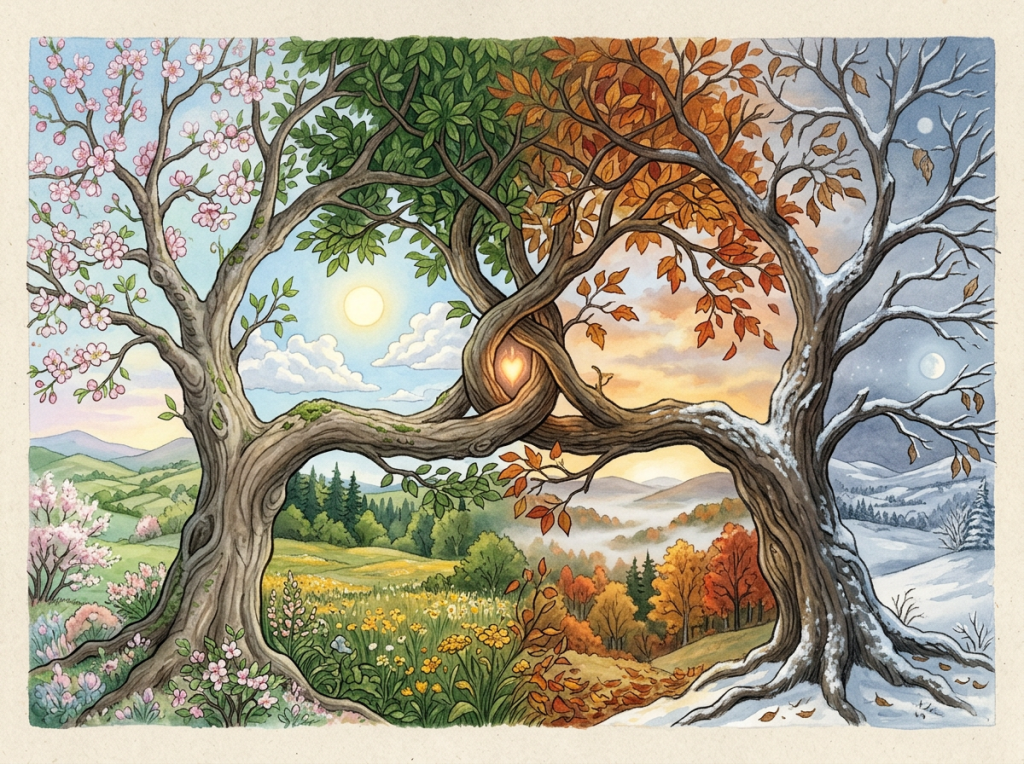
Jesus taught that fruit reveals the condition of the tree.
Luke 6:43-45 (43)“For no good tree bears bad fruit, nor again does a bad tree bear good fruit, (44)for each tree is known by its own fruit. For figs are not gathered from thornbushes, nor are grapes picked from a bramble bush. (45)The good person out of the good treasure of his heart produces good, and the evil person out of his evil treasure produces evil, for out of the abundance of the heart his mouth speaks.(ESV)
He wasn’t speaking about a single isolated mistake. He was describing what consistently comes from within.
The mouth eventually reveals the heart.
The actions eventually reveal what’s been stored.
The fruit eventually reveals what’s been cultivated.
We often want to repair the fruit without touching the root.
We want to stop saying hurtful things without confronting the contempt that produces them.
We want to stop leaving without confronting our fear of commitment.
We want to stop using without confronting the pain we’re trying to silence.
We want better relationships without becoming more truthful, patient, humble, dependable, and forgiving.
We want green grass while continuing to pour poison into the soil.
A new field can’t solve an unchanged heart.
The environment may delay the result. New people may tolerate the behavior longer. Fresh opportunities may conceal the damage for a season.
But eventually, what’s been stored within us will come out.
The problem isn’t only what happened to us.
The problem is what we’ve allowed what happened to us to become inside us.
That’s why transformation requires more than relocation.
Romans 12:2 Do not be conformed to this world, but be transformed by the renewal of your mind, that by testing you may discern what is the will of God, what is good and acceptable and perfect.(ESV)
Paul doesn’t tell believers merely to avoid one bad setting and enter a better one. He speaks of transformation through the renewal of the mind.
The pattern itself must change.
The internal measure used to evaluate every decision must be renewed. The familiar pathway must be challenged. The cost we assign to obedience, repentance, patience, and sacrifice must be recalculated.
We must learn that the pain of changing is often less costly than the pain of remaining the same.
We must recognize the moment when the old pattern begins running.
We must pause long enough to ask:
“Why does this response feel inevitable?”
“What am I trying to protect?”
“What immediate relief am I purchasing?”
“What future cost am I refusing to consider?”
“Am I choosing this because it’s right, or because it’s familiar?”
That pause creates space for the will to become active.
It’s the moment when a person stops being carried by the pattern and begins choosing what will happen next.
The grass is never greener simply because it grows somewhere else.
If we cross the fence with the same bitterness, the same selfishness, the same dishonesty, the same irresponsibility, the same fear, and the same refusal to change, we’ll eventually reproduce what we begged to escape.
The new grass may remain green for a while.
Then our habits will begin tending it.
We’ll fertilize what should’ve been removed.
We’ll neglect what needed attention.
We’ll poison what could’ve grown.
We’ll blame the field for producing exactly what we planted.
Until we change what comes out of our hearts, we will never permanently change the grass beneath our feet.
But when the heart changes, something remarkable happens.
We may discover that the ground we were desperate to leave was capable of growing something beautiful.
The marriage may not have needed a replacement. It may have needed repentance.
The friendship may not have needed abandonment. It may have needed honesty.
The calling may not have needed a new location. It may have needed endurance.
The life may not have needed to be discarded. It may have needed to be tended.
This doesn’t mean every field must be preserved. Some places are dangerous. Some relationships are abusive. Some systems are corrupt. Some soil truly cannot support what we’re called to grow.
There are times when God leads people out.
But wherever He leads us, we still arrive carrying ourselves.
A different field can provide better soil.
It can’t create a better gardener.
That work must happen within us.
The grass we envy may be green because someone chose to tend it differently.
The grass we stand upon may be brown because of what we’ve repeatedly poured into it.
The good news is that the condition of the field doesn’t have to remain permanent.
We can stop poisoning it.
We can pull what should never have been allowed to grow.
We can plant something new.
We can water what’s good.
We can choose differently, then choose differently again.
Eventually, the repeated decision becomes a new pattern.
The new pattern produces new fruit.
The new fruit reveals a changed heart.
Then we may finally understand that we never needed to spend our lives searching for greener grass.
We needed to become faithful gardeners.
Because when what comes from the heart is changed, the grass beneath our feet can become greener than anything we once envied from across the fence.


 Walking With Christ
Leave a comment