(Part 1 of 2)
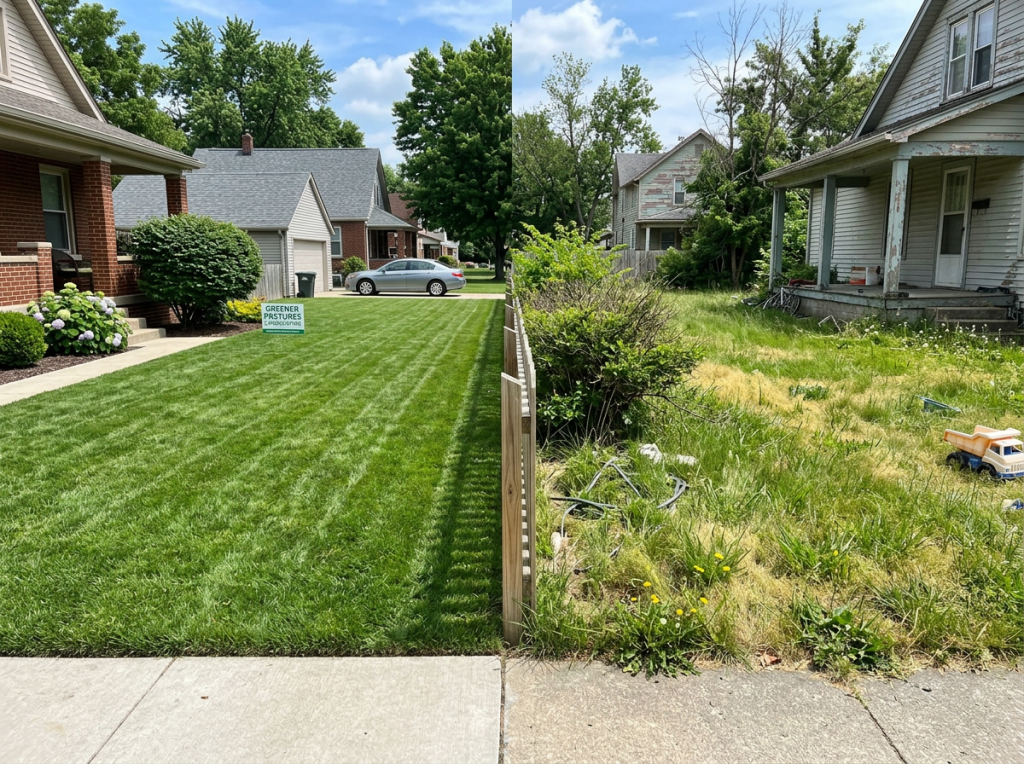
⚓ Floatie: Looking Across the Fence
Galatians 6:4-5 (4)But let each one test his own work, and then his reason to boast will be in himself alone and not in his neighbor. (5)For each will have to bear his own load.(ESV)
My wife and I have been married for more than twenty-one years, but we’ve never taken what I would consider a real vacation.
We once spent a weekend in Branson with our kids. We stayed two nights in a condo, which was a new experience for us, but Branson is less than an hour from house. We’ve already been to Branson hundreds of times. It was enjoyable, and I’m grateful for the memory, but it wasn’t the grand adventure I’ve sometimes imagined taking.
Meanwhile, I have friends who regularly post pictures from their latest journeys.
I see them standing in Yellowstone, looking over the Grand Canyon, visiting Mount Rushmore, relaxing in Hawaii, or exploring some other beautiful place I’ve always dreamed of seeing. I see mountains, waterfalls, forests, beaches, and sunsets. I see experiences that appear almost too magnificent to be real.
I see the picture, and I have to admit that I sometimes become jealous.
I wonder why they’ve been able to go while we’ve stayed home. I wonder what it would be like to stand where they’re standing. I begin looking across the fence at what appears to be greener grass.
Then someone looks across the fence at me.
My wife and I have several friends who’ve told us that they wish they had a relationship like ours.
They see us acting like children around each other. They see the inside jokes, the laughter, the strange language we’ve developed over more than two decades together, and the way each of us seems incomplete when the other is absent.
My wife is my best friend. She is the first person I want to tell when anything happens. She’s the person I turn to for advice, emotional support, moral correction, comfort, and peace.
She is my resting place.
People see that relationship, and they become jealous of what we have.
What we usually tell them is that they’re looking at the relationship as it exists now without seeing what it took to build it.
They didn’t see the sleepless nights. They didn’t hear the fights. They didn’t experience the broken trust that had to be rebuilt, sometimes more than once. They didn’t live through the years of lacking, sacrifice, grief, fear, immaturity, bad attitudes, and pain.
They didn’t see the literal blood, sweat, and tears poured into the foundation.
They don’t know every fire we walked through, who struck the match, or who carried the gasoline. They see what survived the fire without seeing the scars left behind by it.
We didn’t simply discover the relationship they now admire. It was built, broken, repaired, tested, protected, and chosen again and again.
Then I return to the pictures of my friends standing on distant mountains, and I’m forced to look into a mirror.
✒️ Forge: The Picture Never Shows the Climb
The photograph shows the destination.
It doesn’t show the preparation.
It doesn’t show the money that had to be saved, the plans that had to be made, the work schedules that had to be rearranged, or the other purchases that had to be delayed.
It doesn’t show the hours spent driving or flying. It doesn’t show the miles of walking, the steep climb, the sore muscles, the blisters, the bug bites, the bad weather, the campfire meals, or the nights spent sleeping somewhere far less comfortable than home.
It doesn’t show the children arguing in the back seat or the frustration when the carefully prepared plan fell apart.
It only shows the moment when everyone finally stood in the right place, faced the right direction, smiled, and captured the picture.
I’d separated the glorious moment from the journey required to reach it.
That’s exactly what other people do when they look at my marriage.
They see the picture without seeing the climb.
They see the laughter without hearing the arguments that taught us how to communicate. They see the trust without seeing how many decisions were required to restore it. They see the peace without seeing the wars we had to survive before we learned that we weren’t each other’s enemy.
They see the harvest without seeing the planting.
I was asking other people to respect the cost behind what they envied in me while ignoring the cost behind what I envied in them.
That realization hurt.
It’s easy to believe that someone else simply received the life we wanted. It’s harder to admit that their present position may have been built through years of decisions we never saw.
Their grass didn’t necessarily begin greener.
Someone tended it.
⚒️ Anvil: Comparison Crops the Image
Comparison rarely compares complete lives.
It crops the image.
We compare their destination with our current location. We compare their harvest with our planting season. We compare their visible strength with our private weakness. We compare the thing they chose to cultivate with the thing we wish we had cultivated while ignoring everything we chose instead.
The same years my friends spent preparing for certain adventures weren’t empty years in my life.
My wife and I were building a family. We were surviving difficult seasons. We were raising children, repairing damage, paying bills, helping others, learning how to live together, and discovering how to remain when leaving might have seemed easier.
That doesn’t mean traveling would have been impossible, or that every choice we made was correct. There may have been opportunities we missed because of fear, poor planning, misplaced priorities, or the belief that there would always be more time later.
Honesty requires examining those possibilities.
But comparison doesn’t usually produce that kind of honest evaluation.
Comparison doesn’t ask, “What should I begin doing differently?”
It whispers, “Your life isn’t as good as theirs.”
It doesn’t inspire us to plant. It teaches us to resent someone else’s harvest.
Paul’s instruction in Galatians isn’t to measure our lives against the visible accomplishments of another person. He tells each person to examine their own work and carry their own responsibility.
Galatians 6:4-5 (4)But let each one test his own work, and then his reason to boast will be in himself alone and not in his neighbor. (5)For each will have to bear his own load.(ESV)
That doesn’t forbid learning from others. It forbids using another person’s life as the scale by which we determine the worth of our own.
The proper question is not simply: “Why do they have what I don’t?”
The better questions are:
“What did they cultivate?”
“What have I been cultivating?”
“What did their choices cost?”
“What have my choices produced?”
“What would I need to begin doing differently if I truly want a different result?”
Those questions turn jealousy into examination.
🔥 Ember: Every Harvest Has a History
A friend recently posted a picture of his eighteen-month sobriety coin. I’m so happy for him. I’m proud of him.
The coin is small enough to fit in his hand, but it represents something far larger than itself.
People can congratulate him for reaching eighteen months. They can recognize that the accomplishment matters. But no one who merely sees the coin can fully understand what it weighs.
The coin doesn’t show every craving he refused.
It doesn’t show every night he wanted the quick solution and chose the lasting one instead. It doesn’t show the invitations he may have declined, the friendships that had to change, the places he could no longer safely visit, or the private moments when no one would have known if he surrendered.
The coin marks eighteen months, but the victory was built one decision at a time.
The coin didn’t produce the sobriety.
It testifies to the decisions that produced it.
The same is true of nearly everything worth admiring.
A strong marriage represents thousands of decisions that no one applauded.
A successful business represents years of work hidden behind the opening-day celebration.
A healthy body represents meals, movement, restraint, discipline, setbacks, and new beginnings that never appeared in the final photograph.
Spiritual maturity represents prayers prayed when nothing seemed to happen, temptations resisted when no one was watching, correction received when pride wanted to fight back, and obedience practiced long before it became natural.
Paul later returns to the principle of sowing and reaping.
Galatians 6:7-9 (7)Do not be deceived: God is not mocked, for whatever one sows, that will he also reap. (8)For the one who sows to his own flesh will from the flesh reap corruption, but the one who sows to the Spirit will from the Spirit reap eternal life. (9)And let us not grow weary of doing good, for in due season we will reap, if we do not give up.(ESV)
In context, he isn’t offering a formula for obtaining everything we desire. He’s warning that what we sow matters because our actions produce a harvest. Faithfulness may require patience because the harvest doesn’t always appear when we expect it.
We can’t plant resentment and expect peace.
We can’t cultivate dishonesty and expect trust.
We can’t repeatedly choose distance and expect intimacy.
We can’t feed every appetite and expect self-control.
We can’t neglect the field and then blame the soil because nothing good grew there.
Every harvest has a history.
🌿 Covenant Triumph: What Have You Been Growing?
The grass is never greener simply because it belongs to someone else.
It may appear greener from where we stand. It may genuinely be healthier, fuller, and more beautiful than what’s currently growing beneath our feet.
But it didn’t become green because it was on the other side of the fence.
Something was poured into it.
Someone planted, watered, fertilized, protected, trimmed, repaired, and waited. Someone removed weeds before they consumed everything around them. Someone continued tending the ground when the work was tiring and the results were slow.
The question isn’t whether their grass looks green.
The question is what made it green.
Then we must have the courage to turn our eyes away from their field and examine our own.
What have we been planting?
What have we been watering?
What have we been poisoning?
What blessing have we failed to recognize because we were staring at something someone else possesses?
What desire has our jealousy exposed that may require us to begin making different choices?
Perhaps my friends’ travel pictures aren’t proof that my life has been empty.
Perhaps they reveal a desire that my wife and I should finally begin cultivating together.
Contentment doesn’t require us to stop planting new things. Gratitude doesn’t mean pretending we have no unfulfilled desires. We can appreciate the field we’ve spent years tending while still deciding that it’s time to plant something new within it.
The answer isn’t to resent someone else’s field.
It’s to recognize what grew there, understand what has grown here, and faithfully decide what we will cultivate next.
The picture never shows the climb.
The harvest never shows all the sowing.
And the green grass never tells us everything that was required to make it green.
Tomorrow, we will confront the harder truth.
Wherever we go, we bring the gardener with us.


 Walking With Christ
Leave a comment