(Part 5 of 10)
Acts 8:24 And Simon answered, “Pray for me to the Lord, that nothing of what you have said may come upon me.”(ESV)
There’s a difference between wanting to be forgiven for what we’ve done and wanting to be protected from what we’ve done. Sometimes those desires exist together. Sometimes they don’t. And sometimes it’s difficult to tell the difference.
In Acts 8, we’re introduced to a man named Simon. Simon had made quite a name for himself in Samaria. He practiced magic, amazed the people, and presented himself as someone great.
The people believed him. They attributed divine power to him. He had their attention. He had their admiration. He had influence. Then Philip arrived.
Philip preached the good news of the kingdom of God and the name of Jesus Christ. The people believed and were baptized. Among those people was Simon.
Luke tells us that Simon himself believed, was baptized, and continued with Philip. That’s an important detail.
Scripture doesn’t introduce Simon as someone who infiltrated the church with the intention of exploiting it. It doesn’t tell us that he pretended to believe. It tells us that he believed. And now the man who’d spent years amazing others found himself amazed.
He was watching Philip perform signs and miracles. Something greater than what Simon had previously known was happening in front of him.
When the apostles in Jerusalem heard that Samaria had received the word of God, they sent Peter and John. They prayed for the believers and laid their hands on them, and the believers received the Holy Spirit.
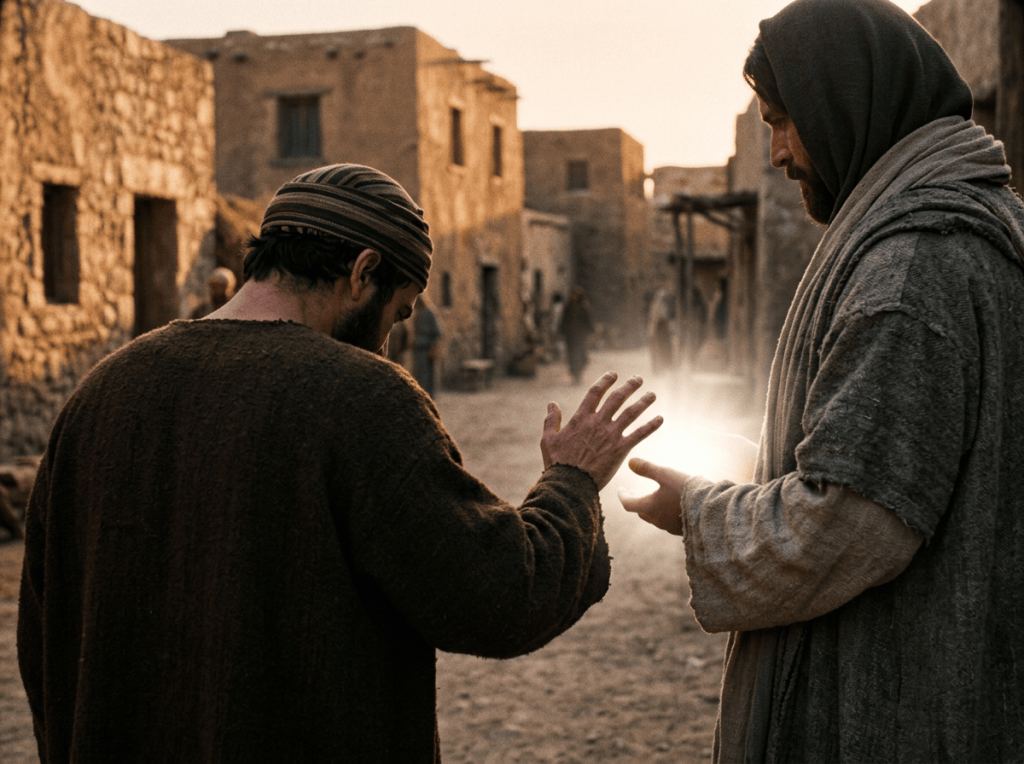
Simon saw this. And something inside him surfaced. He offered the apostles money in exchange for the ability to do what they were doing.
Consider exactly what Simon requested. He wasn’t simply asking to receive the Holy Spirit. He wanted the ability to lay his hands on other people so that they would receive the Holy Spirit. He wanted to be the person through whom it happened. And he was willing to pay for that position.
Peter’s response was immediate and severe. He rebuked Simon for thinking that the gift of God could be purchased. He told Simon that his heart wasn’t right before God and commanded him to repent and pray for forgiveness.
Peter wasn’t negotiating a price. He wasn’t explaining that Simon needed more training. He wasn’t telling Simon to wait until he’d been a Christian a little longer. He was addressing something inside Simon that needed to change.
Simon had encountered something new, but he was attempting to approach it using an old way of thinking. There was something he wanted. There were people who possessed it. He offered them money to obtain it. That’s how transactions work. But the Holy Spirit isn’t a commodity.
The gifts of God aren’t merchandise. The authority of God isn’t something we purchase, possess, and exercise independently of Him.
Simon was trying to fit something divine into a system he understood. And Peter confronted him.
That’s where the story becomes particularly interesting. Simon asks Peter to pray for him so that the things Peter has warned him about won’t happen to him. And then Luke moves on.
That’s it. We never hear Simon’s repentance. We never hear Simon’s confession. We never hear Peter’s response to Simon’s request. We never see whether Simon’s heart changes. The apostles continue preaching, and the narrative leaves Simon behind.
Did Simon repent? The Bible doesn’t tell us.
His request for prayer may have been the beginning of genuine repentance. He may have recognized the seriousness of what he’d done and humbly sought help. It’s also possible that he was primarily concerned about the consequences Peter had described. Those are two very different possibilities.
Scripture doesn’t give us enough information to conclusively choose between them. But it does give us enough information to examine ourselves. Because there’s something striking about the difference between Peter’s instruction and Simon’s recorded response.
Peter addresses the condition of Simon’s heart. Simon addresses what might happen to him.
Peter tells him to repent. Simon asks for protection from the consequences.
Those aren’t necessarily incompatible responses. But they aren’t necessarily the same response either. And that’s where we need to be careful.
Fear of consequences can lead to repentance. It can also lead to nothing more than an attempt to escape consequences.
Paul makes a distinction between godly grief and worldly grief in 2 Corinthians 7:10. One produces repentance. The other doesn’t produce the same result. The presence of sorrow doesn’t automatically establish the presence of repentance.
We can regret getting caught without regretting what we did. We can regret hurting someone because of what their pain now costs us. We can regret losing someone’s trust without recognizing why we were unworthy of it. We can apologize because we want the relationship restored without being willing to address the behavior that damaged it. We can ask God to remove the consequences of our actions while quietly hoping He’ll leave the desires that produced those actions untouched.
We want the problem gone. We don’t necessarily want to change. And sometimes we confuse the two. But there’s another dimension to Simon’s story that deserves our attention.
Before Philip arrived, Simon had been somebody important. People paid attention to him. People were amazed by him. People associated him with great power.
After Philip arrived, Simon became the one watching someone else. Now he sees the apostles doing something extraordinary, and he wants the ability to do it himself.
We don’t know everything that motivated Simon. But we can recognize the danger of bringing our old ambitions into our new relationship with Christ.
A man who wanted recognition before coming to Christ can begin seeking recognition through ministry. A man who wanted authority can begin seeking authority through the church. A man who wanted wealth can begin looking for ways to acquire wealth through religion. A man who wanted people to follow him can begin using the name of Jesus to build a following.
The vocabulary changes. The environment changes. The methods change. But the underlying desire may remain exactly where it was. And that should concern us.
Christianity isn’t supposed to be a new means of accomplishing our old purposes. Following Christ means that even our purposes are subject to His authority.
Sometimes the thing that needs to be surrendered isn’t the ability we possess. It’s the reason we want to possess it.
Why do we want the gift?
Why do we want the position?
Why do we want the influence?
Why do we want people to listen to us?
Would we still want God to accomplish the same thing if He chose to accomplish it through someone else? That’s a particularly uncomfortable question.
Would we rejoice just as much if the prayer were answered, the person were healed, the message were received, or the ministry flourished, but nobody knew we had anything to do with it?
Do we want God’s work to be done?
Or do we want to be the one doing God’s work?
Those desires can coexist. But when the second becomes more important than the first, something’s gone wrong.
Peter recognized that something was wrong with Simon’s heart. And Peter didn’t simply tell Simon to go away. He told him to repent.
There was still a response available to Simon. The rebuke was severe, but it was accompanied by an instruction that pointed Simon toward forgiveness.
Correction isn’t necessarily rejection. Sometimes correction is the very thing that gives us an opportunity to confront what we haven’t been willing to see. The question is what we do with that opportunity. And that’s the part of Simon’s story we’re missing.
Later Christian writers tell stories about Simon that extend well beyond the account in Acts. But those accounts aren’t Scripture, and they don’t give us permission to insert a missing verse into Luke’s narrative. We’re left with a man who has encountered the gospel, been baptized, witnessed extraordinary things, revealed a serious problem within his heart, and received a command to repent.
We know what Peter told him to do. We know what Simon asked Peter to do. We don’t know what Simon ultimately did. And perhaps we don’t need to know in order to recognize ourselves somewhere in that unfinished conversation.
What happens when God confronts something in us that we thought we’d left behind?
What happens when following Christ requires us to surrender the very thing we hoped Christianity would help us obtain?
What happens when we’re forced to choose between protecting ourselves from the consequences of our desires and surrendering the desires themselves?
Are we asking God to change our circumstances?
Or are we asking God to change us?
Simon asked for prayer. Peter had called for repentance.
Scripture ends Simon’s story before telling us whether one led to the other. We don’t get to finish his story. But we haven’t finished ours either. And the next time we’re confronted with something that isn’t right within us, we’ll have an opportunity to provide the answer that Simon’s story never gives us.
Do we want God to take away the consequences?
Or do we want Him to take away the thing that keeps creating them?






Leave a Reply