(Part 3 of 10)
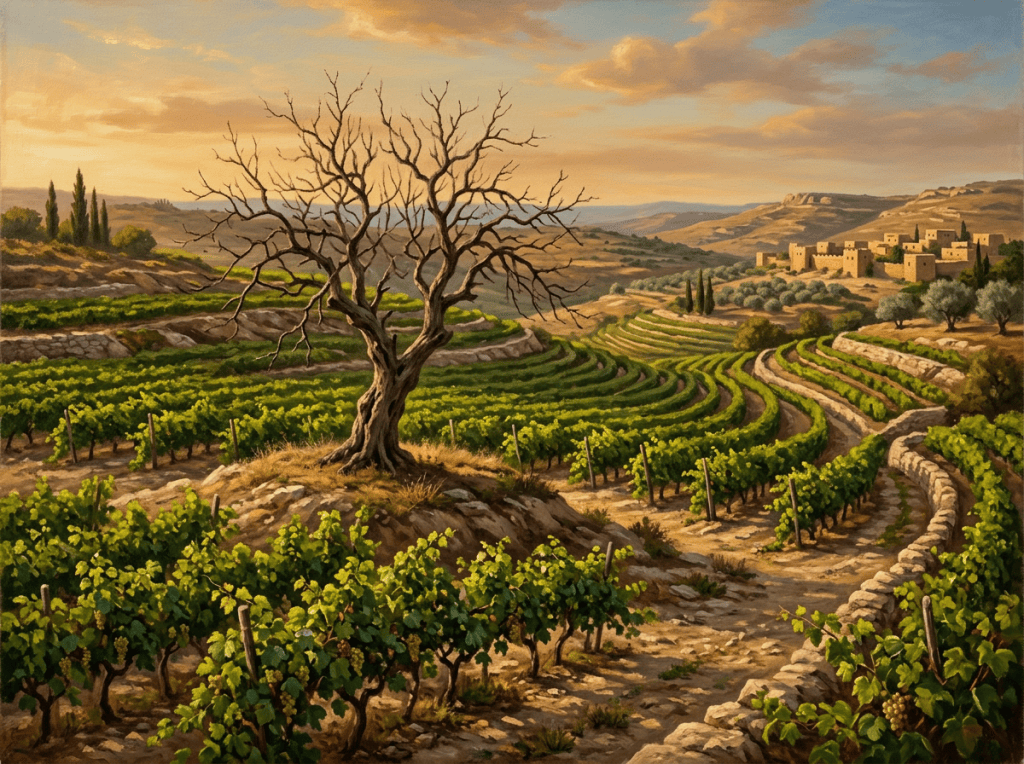
Luke 13:7 And he said to the vinedresser, ‘Look, for three years now I have come seeking fruit on this fig tree, and I find none. Cut it down. Why should it use up the ground?’(ESV)
Some stories end before the decision’s made. Others end before we find out whether the decision worked.
Jesus tells a short parable about a fig tree. A man has a fig tree planted in his vineyard. He comes looking for fruit. There’s none. He comes again. Still nothing. Three years pass. Nothing.
Eventually, the owner has had enough. “Cut it down.” It’s occupying good soil. It’s consuming resources. It’s been given time. It’s been given opportunity. And it’s produced nothing.
The judgment seems reasonable. Then the vinedresser intervenes. “Sir, let it alone this year also, until I dig around it and put on manure. Then if it should bear fruit next year, well and good; but if not, you can cut it down.” And then Jesus stops.
We never find out what happened to the tree.
Did it produce fruit?
Was it cut down?
Did the extra attention make a difference?
Did another year accomplish what the previous three had not?
The Bible doesn’t tell us. There’s no follow-up verse. No one returns the next season to inspect the branches. The story ends with the tree still standing. But only temporarily.
That may be what makes this parable so uncomfortable. The tree’s received mercy. But mercy hasn’t removed the expectation.
It’s received more time. But more time isn’t the same thing as an endless amount of time.
The owner doesn’t say, “Fine. Let it remain forever.” The vinedresser doesn’t argue that fruit no longer matters. Nobody changes the purpose of the tree.
The request is simple. Give it one more year. I will work the soil. I will fertilize it. I will give it another opportunity. Then we will see.
There’s grace in that. But there’s also urgency.
We sometimes think of grace only as the removal of consequences. This parable presents another side of grace.
Sometimes grace looks like more time. Another opportunity. Another warning. Another season. Another chance to become what we were supposed to become.
The tree had already been given time. That matters. This isn’t a tree that was planted yesterday and condemned because it wasn’t mature by morning.
The owner had waited. He’d returned repeatedly. He’d looked for fruit repeatedly. The lack of fruit wasn’t a momentary failure. It had become a pattern.
That’s why the extra year matters so much. The vinedresser isn’t pretending that nothing is wrong. He agrees that something has to change. He simply asks for more time to work. That distinction matters.
Patience doesn’t mean that the problem is imaginary. Grace doesn’t mean that fruit is optional. Mercy doesn’t mean that nothing is expected.
Sometimes mercy means judgment hasn’t happened yet. And that creates responsibility.
The tree doesn’t know that it’s been given another year. That’s one of the interesting parts of the story. The tree simply keeps standing.
From the outside, nothing has changed. Yesterday it was standing in the vineyard. Today it’s standing in the vineyard. Tomorrow it will probably still be standing in the vineyard.
Someone looking at the tree might assume everything is fine. But there’s been a conversation about it. A decision has almost been made. The only reason the tree is still there is because someone asked for more time. That creates an uncomfortable possibility.
Continued existence isn’t always evidence of approval. Sometimes it’s evidence of patience.
We can mistake delay for acceptance. We can mistake God’s patience for God’s indifference. We can assume that because consequences haven’t come, they never will. Because the tree is still standing, we assume the owner must be satisfied with it. But the parable tells us otherwise.
The tree is standing because mercy interrupted judgment. For now.
That phrase matters. For now.
There are seasons in life when God gives us time to respond. Time to repent. Time to change. Time to reconcile. Time to stop doing what we know is destroying us. Time to begin doing what we already know we should be doing. Time to bear fruit. And because another morning comes, it’s easy to assume that another morning always will.
The fig tree warns us against treating patience as permission. But there’s another side to the story.
The vinedresser doesn’t merely ask for more time. He intends to work. “I will dig around it.” “I will put on manure.”
The extra year isn’t passive. Something is going to happen during it. The soil will be disturbed. The ground around the roots will be broken up. Nutrients will be added. The tree is being given what it needs to produce what’s been missing.
Sometimes grace is gentle. Sometimes grace digs around the roots. Sometimes the very thing that feels disruptive may be part of the work intended to produce fruit.
We often pray for God to change our circumstances. Sometimes God changes the soil.
We ask for comfort. He begins digging.
We ask for relief. He exposes roots.
We ask for another chance. He gives us one, but the second chance comes with cultivation.
The goal was never simply to keep the tree alive. The goal was fruit. That’s easy to forget.
The vinedresser doesn’t say, “Look, the tree is still green.” He doesn’t say, “At least it has leaves.” He doesn’t argue that the tree is attractive. He doesn’t defend its location in the vineyard.
The issue is fruit. That was the purpose. And purpose eventually creates accountability. But Jesus never tells us what happened.
That’s the strange part. We want the next verse. A year later, the owner returns. There are figs everywhere. The tree was saved. Or perhaps: A year later, the owner returns. Still nothing. The axe falls.
Either ending would satisfy our desire for closure. Jesus gives us neither. The tree remains somewhere between mercy and judgment.
Still standing. Still being worked. Still expected to produce fruit. And perhaps that’s exactly where the listener is supposed to find himself.
The point may not be to discover what happened to the tree. The point may be to realize that the inspection hasn’t happened yet.
There’s still time. That’s hopeful. But “there is still time” is very different from “there will always be time.”
The unfinished ending refuses to let us turn this into someone else’s story. If Jesus had told us the tree finally produced fruit, we could celebrate the tree. If Jesus had told us it was eventually cut down, we could mourn the tree.
Instead, He leaves it standing. And we have to look at our own branches.
What has God been patiently waiting to see in us?
Where have we mistaken delay for approval?
Where has He been digging around roots we would rather leave undisturbed?
Where has another year been given that we have treated like an unlimited supply of tomorrows?
Grace has given the tree time. Grace has given the tree care. Grace has given the tree another opportunity. But grace hasn’t changed what the tree was planted to do.
The story ends before the next inspection. We never learn whether the tree bore fruit.
Maybe that’s because the question was never really about the tree. There’s still time. What will we do with it?



Leave a Reply