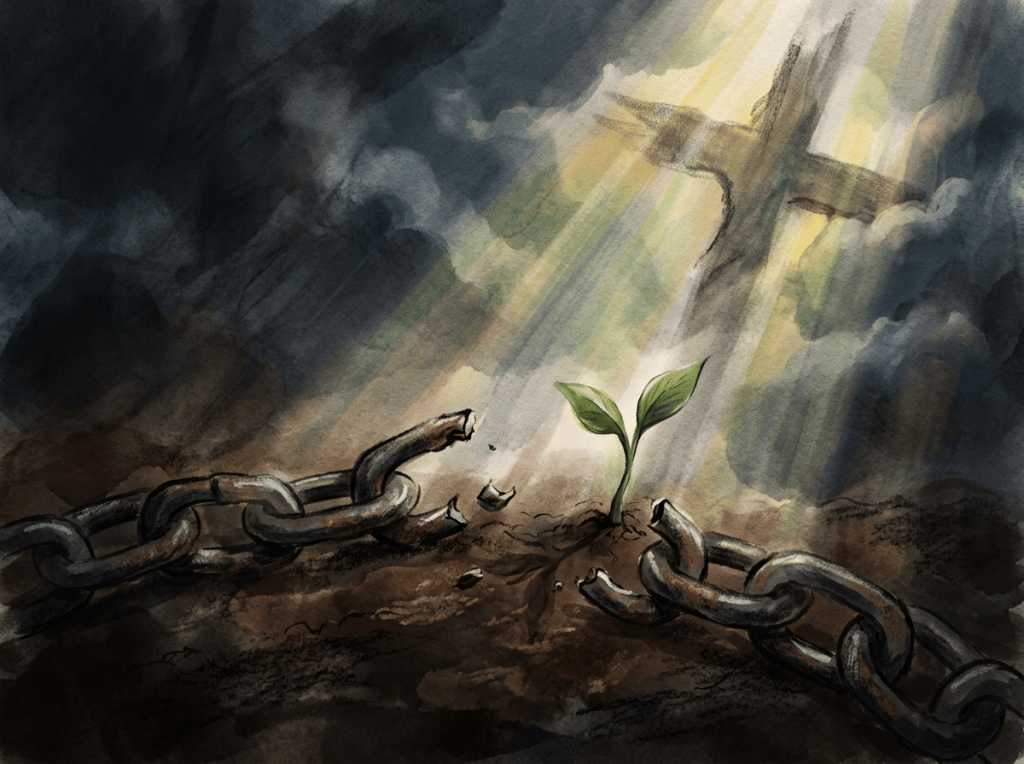
2 Corinthians 7:10 For godly grief produces a repentance that leads to salvation without regret, whereas worldly grief produces death.(ESV)
For more than twenty years, I carried guilt over something I believed I’d done. Not something I’d been accused of doing. Not something someone else had demanded I answer for. Something I’d accused myself of.
I’d spoken words in a moment of fear that I desperately wished I could take back. When tragedy followed, I connected those words to what happened. I believed I’d somehow contributed to an outcome that would haunt me for years.
I didn’t need anyone to condemn me. I’d already done that myself. And because I believed the accusation was justified, I never seriously considered whether the guilt I carried was telling me the truth.
I mistook the persistence of the feeling for evidence of the offense. It took more than two decades for me to begin recognizing the difference.
Feeling guilty and being guilty aren’t the same thing.
When Guilt Becomes Its Own Evidence
Guilt can be an appropriate response to wrongdoing. When we lie, betray someone’s trust, act selfishly, or deliberately hurt another person, guilt may alert us to the need for repentance. But guilt isn’t infallible.
It’s possible to feel guilty for something we didn’t cause. It’s possible to accept responsibility for circumstances beyond our control. It’s even possible to feel guilty because we survived something that someone else didn’t. And when those feelings persist long enough, they can become extraordinarily convincing.
We begin reasoning backward. If I feel this guilty, surely I must’ve done something terrible. If I still feel guilty after all these years, perhaps God hasn’t forgiven me. If the memory continues to hurt, perhaps I haven’t repented enough.
Notice what happens. The feeling becomes the evidence. We stop examining whether we’ve actually committed the offense and begin treating the intensity of our suffering as proof that we deserve it. But emotional intensity doesn’t establish moral responsibility.
A person can feel overwhelming guilt without being responsible for the event they’re grieving. And a person can be genuinely guilty while feeling almost nothing.
Our emotions can alert us to something that needs examination. They can’t replace the examination itself.
The Difference Between Conviction and Condemnation
Christians sometimes use the words guilt, conviction, and condemnation as though they mean the same thing. They don’t.
Conviction confronts us with truth about sin and calls us toward repentance. Condemnation pronounces judgment.
Guilt can describe either an actual state of wrongdoing or the feeling that accompanies our belief that we’ve done something wrong. Those distinctions matter.
Consider the difference between these statements:
- “I lied, and I need to confess.”
- “I made a terrible mistake, and I need to make things right.”
- “Something terrible happened, and I must be responsible.”
- “I’ve suffered for years, so God must still be angry with me.”
The first two identify specific actions that can be examined. The latter two make claims about responsibility and God’s judgment that may not be supported by the evidence. Yet we often treat them all as expressions of spiritual conviction. That’s dangerous.
Because if we mistake an unsupported accusation for the voice of God, we may spend years trying to repent of something we never did. And if we mistake every uncomfortable feeling for condemnation, we may fail to recognize the genuine conviction that calls us to change.
The answer isn’t to dismiss guilt. It’s to examine it.
Two Kinds of Grief
Paul makes an important distinction in 2 Corinthians 7:10. He describes godly grief that produces repentance leading to salvation without regret, and worldly grief that produces death. The context matters.
Paul is addressing a congregation that’d been confronted over actual wrongdoing. Their sorrow wasn’t valuable simply because it hurt. It mattered because of what that sorrow produced.
The following verse describes earnestness, eagerness to clear themselves, indignation, fear, longing, zeal, and a desire to see justice done.
Their grief led them to respond. It wasn’t merely an emotional experience. And that raises an important question.
What is the guilt we’re carrying actually producing?
Is it directing us toward confession, repentance, restitution, and changed behavior? Or is it repeatedly dragging us back into a past we can’t alter, accusing us without identifying anything we can truthfully repent of?
Those aren’t necessarily the same experience.
We should be careful here. Lingering guilt doesn’t automatically mean someone lacks faith or has failed to repent. Trauma, grief, and deeply established beliefs can persist even when a person understands the truth intellectually. But neither should we assume that the persistence of guilt makes its accusation legitimate.
Sometimes the most faithful response to guilt is repentance. Sometimes it’s accepting forgiveness. And sometimes it’s refusing to continue accusing ourselves of something we never caused.
When We Become Our Own Accusers
There’s a peculiar cruelty in the way we sometimes judge ourselves. We may extend grace to someone else who has experienced a tragedy. We may remind them that they couldn’t have known what would happen. We may explain that they didn’t control the circumstances. We may even become frustrated when they refuse to accept that they weren’t responsible.
Then we turn around and deny ourselves the same consideration. Why?
Sometimes it’s because we know our own thoughts. We remember the selfish motives, ugly emotions, and frightening possibilities that passed through our minds. We know the things we never said aloud. And when something terrible happens, we may search those private thoughts for an explanation.
I know something about that. There were words I’d spoken that I believed revealed something terrible about me. I regretted them deeply. But I made an additional leap.
I decided that because the words were wrong, they must somehow have contributed to what happened afterward. I confused responsibility for my words with responsibility for an outcome.
Those are two separate questions. I could acknowledge that I’d spoken out of fear. I could examine whether those words reflected something in my heart that needed correction. I could repent of anything genuinely sinful in what I’d said or intended. But none of those things established that I’d caused the tragedy that followed.
We can be responsible for our actions without being responsible for everything that happens after them.
That distinction doesn’t excuse wrongdoing. It places responsibility where it actually belongs.
When the Accusation Sounds Like God
One of the most dangerous things we can do is attach God’s authority to an accusation He hasn’t made. We experience suffering. We remember something we’ve done. We connect the two. And then we begin believing that God must’ve arranged the suffering as punishment.
Perhaps we never say those words aloud. Perhaps we simply carry the suspicion. But the suspicion changes how we understand God.
We begin approaching Him as though He’s waiting for us to suffer enough to satisfy a debt. We interpret His silence as confirmation of His anger. We treat our inability to forgive ourselves as evidence that He hasn’t forgiven us either. Yet Scripture repeatedly challenges the assumption that suffering can be traced directly to a particular personal sin.
In John 9, the disciples encounter a man born blind and ask whether his condition resulted from his sin or his parents’ sin. Jesus rejects their proposed explanation. In Job, the friends repeatedly insist that suffering must be explained by wrongdoing. Their confident conclusions don’t withstand God’s judgment. Neither passage teaches that our decisions never have consequences. They teach us something more careful.
We aren’t authorized to invent explanations for suffering and then attribute those explanations to God.
An accusation doesn’t become divine conviction simply because we’ve attached God’s name to it.
And we should be especially cautious when the accusation is one we’ve constructed against ourselves.
No Condemnation
Romans 8:1 There is therefore now no condemnation for those who are in Christ Jesus.(ESV)
Paul doesn’t say there are no consequences. He doesn’t say Christians never sin. He doesn’t say repentance is unnecessary. And he certainly doesn’t say that every painful memory will disappear when we come to faith.
He says there’s no condemnation for those who are in Christ Jesus. That statement rests on the saving work of Christ, not on our ability to feel forgiven. The distinction is essential.
If I’ve actually sinned, I need to acknowledge it. If I’ve harmed someone, I should seek to make things right where possible. If I’ve been confronted with truth, I should respond to it. But I can’t improve upon Christ’s work by condemning myself indefinitely. And if the accusation itself is false, continuing to carry it isn’t an act of repentance. It’s continuing to believe something untrue.
There’s no spiritual virtue in insisting that we deserve blame for something we didn’t do. Humility doesn’t require false confession. Faithfulness doesn’t require endless self-punishment. And repentance doesn’t require us to accept responsibility for circumstances that were never ours to control.
When the Truth Arrives Years Later
Recently, I began examining information that challenged the conclusion I’d carried for more than twenty years. I discovered that circumstances I’d blamed myself for had already been set in motion before the words I’d spoken. That didn’t erase my regret. It didn’t make the loss less significant. It didn’t suddenly remove every emotion attached to the memory. But it did force me to confront something.
I’d spent years carrying guilt for an outcome I had no evidence of causing. I’d treated my own accusation as though it were an established fact. And I’d allowed that accusation to influence how I understood both myself and God.
The realization was painful in a different way. Not because I was discovering a new offense, but because I was recognizing how long I’d lived under an unsupported one.
I can’t recover those years. But I can stop adding to them.
I can acknowledge what I actually did without accepting responsibility for what I didn’t do. I can regret my words without believing they possessed power over events they didn’t cause. And I can recognize that the truth remains the truth even when my emotions haven’t fully caught up with it.
What Are You Carrying?
Perhaps you’ve been holding onto guilt for something that happened years ago. Perhaps you’ve apologized repeatedly. Perhaps you’ve asked God for forgiveness more times than you can remember. Perhaps you’ve tried to make amends for something that can’t be undone. Or perhaps, like me, you’ve never seriously examined whether you were responsible for the thing you’ve been condemning yourself over.
I’m not suggesting that you dismiss your conscience. I’m suggesting that you examine the accusation.
What actually happened?
What did you do?
What was within your control?
What evidence connects your actions to the outcome?
And most importantly, what does Scripture actually say about the responsibility and condemnation you’ve assigned to yourself?
If you’ve sinned, repent. If you’ve harmed someone, seek reconciliation where it’s possible and appropriate. If you’ve been forgiven, don’t mistake continued emotional pain for proof that forgiveness was withheld. And if you’ve accepted blame for something you never caused, consider whether it’s time to stop calling that burden conviction. Because guilt isn’t always conviction.
Sometimes it’s grief searching for an explanation. Sometimes it’s fear searching for someone to blame. Sometimes it’s a wounded conscience struggling to distinguish regret from responsibility. And sometimes the person we’ve been accusing for years is someone God never accused in the first place.
The question isn’t how long you’ve carried the guilt. The question is whether the accusation is true.
And if it isn’t, how much longer are you willing to live as though it is?






Leave a Reply