(Part 7 of 16)
Joshua 6:22–25 (22)But to the two men who had spied out the land, Joshua said, “Go into the prostitute’s house and bring out from there the woman and all who belong to her, as you swore to her.” (23)So the young men who had been spies went in and brought out Rahab and her father and mother and brothers and all who belonged to her. And they brought all her relatives and put them outside the camp of Israel. (24)And they burned the city with fire, and everything in it. Only the silver and gold, and the vessels of bronze and of iron, they put into the treasury of the house of the Lord. (25)But Rahab the prostitute and her father’s household and all who belonged to her, Joshua saved alive. And she has lived in Israel to this day, because she hid the messengers whom Joshua sent to spy out Jericho.
The walls fell. The city was taken. And the place Rahab had called home was gone.
For the people of Israel, the fall of Jericho was a remarkable victory. It was the first great conquest after crossing the Jordan River, a demonstration that the God who’d brought them out of Egypt was faithful to bring them into the land He had promised. But for Rahab, the story looked different.
She’d lived inside those walls. She’d known the streets. She’d belonged to the city that was now being destroyed. And although she and her family had been spared, the world they’d known was no longer waiting for them.
Rahab had survived. But surviving was only the beginning.
The Woman Behind the Scarlet Cord
When the Israelite spies entered Jericho, Rahab received them into her home. She hid them from the king’s men. She helped them escape. And she asked them to show mercy to her family when Israel came against the city. But her actions weren’t merely an attempt to secure a favorable outcome.
Rahab explained why she believed Israel would prevail. She’d heard what the Lord had done. She knew about the crossing of the Red Sea. She knew about Israel’s victories over the Amorite kings. And she recognized something that the rulers of Jericho had refused to acknowledge.
The God of Israel wasn’t merely another territorial deity competing for influence. He was God in heaven above and on earth beneath. That confession matters.
Rahab didn’t simply believe that Israel had a stronger army. She believed that Israel’s God was the Lord. And she acted on that belief.
Hebrews 11:31 remembers her faith. James 2:25 points to her actions as evidence that faith isn’t merely an empty profession.
Rahab’s faith had consequences. She chose to help the spies, knowing that doing so placed her in opposition to the authorities of her own city. She entrusted her future to the God whose people were approaching. And she received a promise.
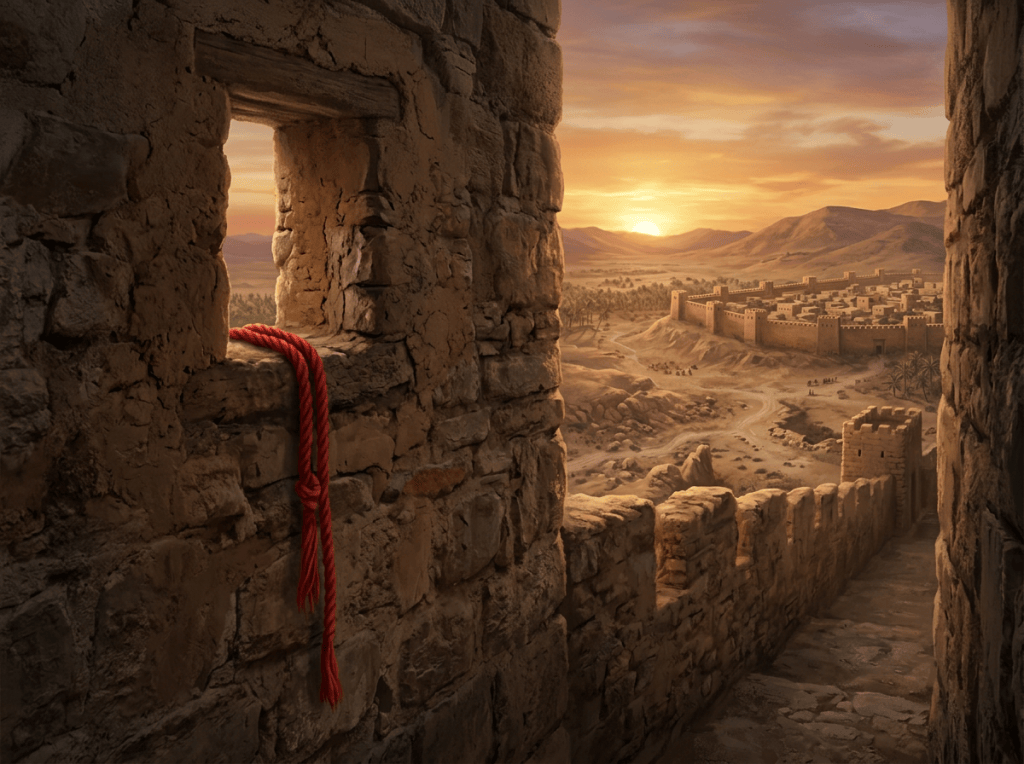
When Israel came against Jericho, she and those gathered with her would be spared. The scarlet cord in her window marked the place where that promise would be honored. Then the day arrived.
When Deliverance Means Leaving
We often imagine rescue as the restoration of everything we once had. The danger passes. The crisis ends. The threat disappears. And life returns to normal. But Rahab’s deliverance didn’t work that way.
When Jericho fell, there was no normal life to return to. The city had been devoted to destruction. The walls had fallen. The people of Israel had entered. And Rahab’s former home was part of a world that wouldn’t be restored.
Joshua instructed the spies to bring Rahab and her household out. They did. And Scripture tells us that they initially placed them outside the camp of Israel. That’s a detail worth noticing.
Rahab had been brought out of Jericho. But she wasn’t yet described as dwelling among Israel. There was a transition.
She’d been delivered from the city. She still had to find her place among a different people.
Sometimes God brings us out of something without immediately placing us into everything that comes next.
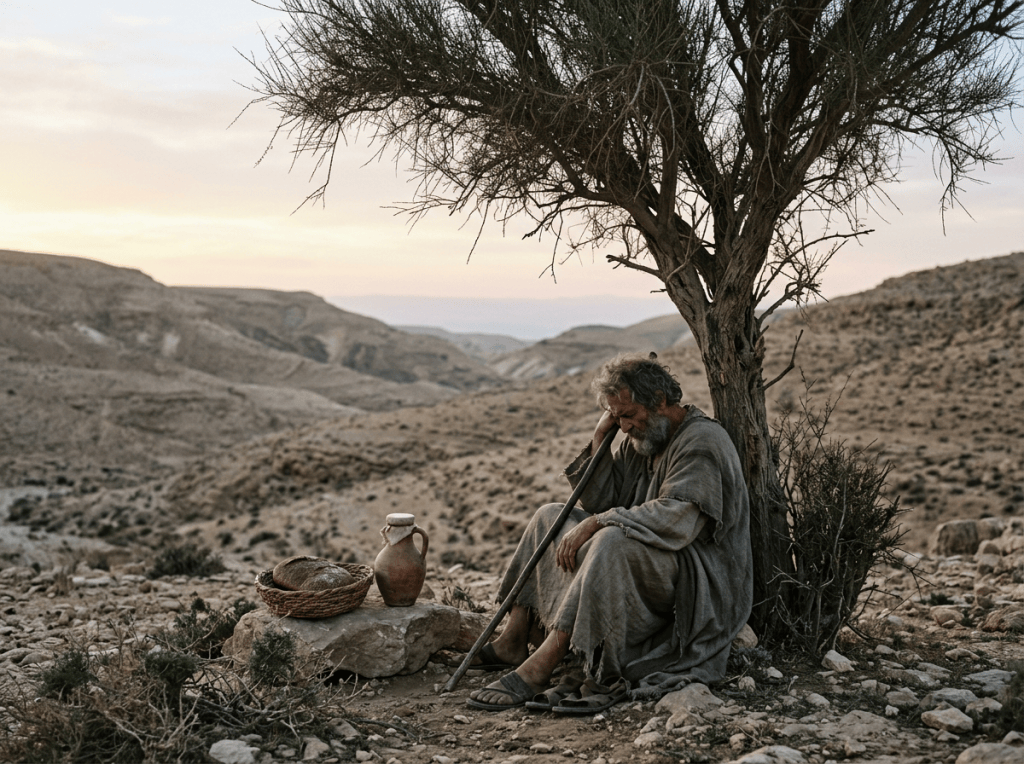
That space between the old life and the new one can be uncomfortable. The past is no longer available. The future isn’t yet familiar. And the things that once gave life its structure may no longer exist.
The Loss That Comes With Rescue
There’s a temptation to treat every loss associated with deliverance as something we should immediately celebrate. If God has brought us through the crisis, surely everything that disappeared along the way was worth losing. And in Rahab’s case, her preservation was an extraordinary mercy. But that doesn’t mean we should pretend the destruction of her city carried no human cost.
Jericho had been her home. Her history was there. Her familiar surroundings were there. Whatever relationships and routines she had outside the household that was spared belonged to a world that had now ended.
Scripture doesn’t tell us how Rahab emotionally processed those losses. We shouldn’t invent grief, regret, or relief and assign them to her as though Joshua recorded them. But we can recognize that deliverance and loss aren’t mutually exclusive.
A person may escape a destructive environment and still mourn the relationships left behind. Someone may leave a harmful situation and still miss the familiarity of the life they knew. A family may survive a disaster and still grieve the loss of their home. Someone may begin a new life in Christ and discover that old friendships, habits, and social circles no longer fit the direction they’re going. The fact that leaving was necessary doesn’t mean every part of leaving was easy.
A right decision can still carry a real cost.
And recognizing that cost doesn’t diminish the goodness of what God has done.
The Difference Between a Place and a Home
A house is a structure. A city is a location. But home is something more complicated.
Home is where we know how things work. It’s where the familiar sounds belong. It’s where we recognize the people around us. It’s where we understand the expectations, customs, and rhythms of daily life.
Home can be a place of comfort. It can also be a place of pain. And sometimes the place we know best isn’t the place where we should remain.
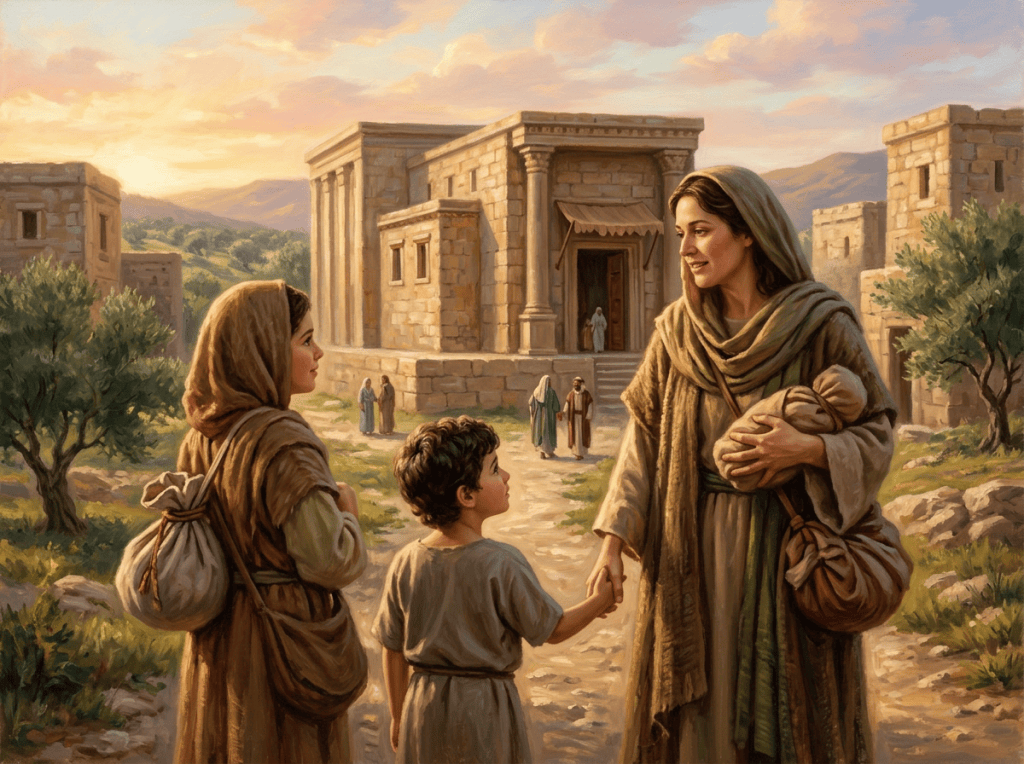
Rahab had lived in Jericho. Now she would live among Israel. That meant more than changing her address. She was moving from one people to another. From one religious and cultural environment into another. From a city that had resisted the Lord into a community called to worship Him. The transition was profound. But Rahab had already demonstrated the faith that made such a transition possible.
Before the walls fell, she’d confessed the Lord’s authority. Before Israel entered the city, she’d placed her trust in Him. Her outward circumstances were now catching up with the allegiance she’d already declared.
Sometimes the first step toward a new home happens long before we physically leave the old one.
The People Who Remember Where You Came From
There’s another challenge in Rahab’s story. She wasn’t an Israelite by birth. She came from Jericho. And Scripture doesn’t conceal her past.
In Joshua, she is identified as Rahab the prostitute. In Hebrews, her former occupation remains part of the account. In James, it is mentioned again.
That history was real. But it wasn’t the final word about her place among God’s people.
Joshua 6:25 tells us that Rahab dwelt in Israel. The woman who had once lived within the walls of Jericho now lived among the people who’d conquered it. That is a remarkable transition. And it raises a question about the way we receive people whose histories differ from our own.
Do we recognize what God is doing in their lives? Or do we continue defining them entirely by where they came from?
Do we welcome those who have turned toward God? Or do we make their former lives an obstacle they can never fully overcome?
Rahab’s past wasn’t erased from Scripture. But neither was she excluded from the people of God because of it.
The very books that remember her former occupation also remember her faith.
God’s people should never confuse acknowledging someone’s history with refusing to recognize their present faithfulness.
There’s a difference between remembering where someone came from and insisting that they still belong there.
Belonging Is More Than Being Allowed to Stay
Rahab’s story becomes even more remarkable when we consider what Scripture says about her afterward. Matthew’s genealogy of Jesus includes Rahab among the ancestors of Christ. The genealogy names Rahab as the mother of Boaz. The woman who’d once lived in Jericho became part of the family line through which the Messiah would come.
We should be careful not to fill in the details Scripture leaves unrecorded. Joshua doesn’t describe Rahab’s marriage. It doesn’t tell us about her adjustment to Israelite society. It doesn’t record the conversations she had with her new neighbors. And Matthew doesn’t explain how the years between Jericho and the generations that followed unfolded. But the biblical record establishes something extraordinary. Rahab wasn’t merely a survivor who remained permanently on the margins of Israel’s story.
She became part of its history. Her faith was remembered. Her name was preserved. And her place in the genealogy of Christ demonstrates that her origin in Jericho didn’t prevent her from belonging within God’s redemptive purposes. That matters. Because there’s a difference between being tolerated and being welcomed. There’s a difference between being permitted to remain and being recognized as part of a people. There’s a difference between escaping an old identity and discovering that you truly have a place in the new life before you.
Rahab’s story points toward something greater than mere survival.
The woman who lost her city wasn’t left without a place in God’s unfolding story.
When the Old World Is Gone
Not every change in life allows us to go backward. Sometimes the old circumstances can be restored. Sometimes relationships can be repaired. Sometimes the things we’ve lost can be recovered. But sometimes the world we knew is simply gone.
A death changes the shape of a family. A disaster changes the place we call home. A betrayal changes the relationships we once trusted. A major transition changes the routines that once defined our days. And sometimes a decision to follow God changes the direction of our lives so completely that returning to the old way of living is no longer an option we should pursue.
Those moments can leave us asking a difficult question.
Where do I belong now?
Not where did I belong. Not where do I wish I could return. But where do I belong now?
Rahab’s story doesn’t give us a step-by-step guide to rebuilding a life after everything familiar disappears. It gives us something more foundational.
She placed her faith in the Lord before she knew what her future would look like. She acted on that faith. She was delivered. And she became part of a people whose story was far larger than the city she had left behind.
She didn’t need to know every detail of the future before trusting the God who held it.
When Home Doesn’t Exist Anymore
Rahab watched the world she’d known come to an end. She and her family were spared. The promise made by the spies was honored. And the woman who’d once lived inside Jericho’s walls began a new life among Israel.
We don’t know everything that happened afterward. But we know enough to see that her deliverance wasn’t merely about escaping destruction. It was also about entering a future she couldn’t have fully imagined.
That’s where this story reaches into our own lives.
Sometimes God preserves us through circumstances that permanently change the world around us. Sometimes He leads us away from places that once felt like home. Sometimes the future He opens looks nothing like the past we expected to keep. And sometimes the hardest part of deliverance is accepting that we can’t rebuild our lives by returning to something that no longer exists. But the absence of the old home doesn’t mean the absence of a future. The loss of familiar surroundings doesn’t mean we’ve lost our place in God’s care. And the fact that we don’t yet know where we belong doesn’t mean God has forgotten us.
Rahab had a scarlet cord in her window. She had a promise to trust. She had a family to gather. And she had a God whose authority she’d already confessed.
When the walls fell, those things mattered far more than the city that surrounded her.
Sometimes faith means trusting God to bring you through the destruction. Sometimes it means trusting Him enough to build a life on the other side.
Rahab survived Jericho. But she didn’t spend the rest of her story belonging to its ruins.
She found her place among the people of God. And generations later, her name appeared in the family line of Jesus Christ.
The city was gone. Her story wasn’t.




Leave a Reply