(Part 6 of 7)
John 19:30 When Jesus had received the sour wine, he said, “It is finished,” and he bowed his head and gave up his spirit.(ESV)
There are few sentences in Scripture heavier than this one. “It is finished.”
Jesus is dying. The cross has reached its terrible conclusion. The suffering is nearly complete. The work He came to accomplish has reached its fulfillment.
Then He says it. “It is finished.” And He dies.
We pause there. We should.
Those words aren’t the cry of a man who simply has nothing left.
Jesus does not say: “I am finished.”
He says: “It is finished.”
Something has been accomplished. Something has reached completion.
The cross isn’t an accident that ended Jesus’ ministry.
It’s central to it.
The Lamb has been offered. The sacrifice has been made. Sin has been answered.
The work of redemption has been accomplished in a way no human effort could ever reproduce.
Christians understand that this matters.
We build theology around it. We sing about it. We preach it. We look at the cross and understand that salvation isn’t something we earn by becoming impressive enough for God.
Christ did what we couldn’t do.
Finished. That word brings enormous relief.
Then Paul writes this:
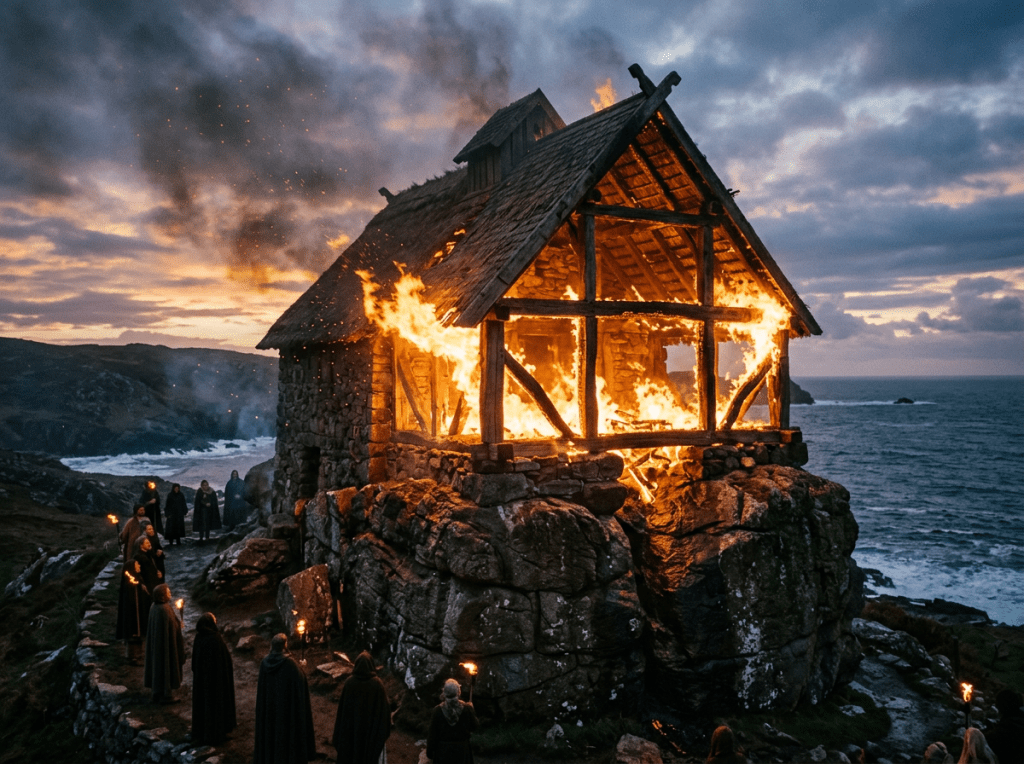
1 Corinthians 3:13–15 (13)each one’s work will become manifest, for the Day will disclose it, because it will be revealed by fire, and the fire will test what sort of work each one has done. (14)If the work that anyone has built on the foundation survives, he will receive a reward. (15)If anyone’s work is burned up, he will suffer loss, though he himself will be saved, but only as through fire.(ESV)
And we often keep reading.
Pause.
Christ’s work is finished. Ours is still being built.
Those truths don’t compete with each other. That distinction is important.
Paul isn’t teaching that our works complete what Jesus failed to accomplish. He’s teaching nearly the opposite.
A few verses earlier, Paul says that no one can lay a foundation other than Jesus Christ.
The foundation is already there. The question is what we build on it.
Gold. Silver. Precious stones.
Wood. Hay. Straw.
Different materials. Different value. Different durability.
Then comes the fire. The fire doesn’t ask whether something looked impressive.
It tests what it actually was. That should make us all uncomfortable.
We like visible results. We like things we can count.
Attendance. Money. Followers. Projects. Buildings. Books. Programs. Positions. Recognition. Growth. Success.
None of those things is automatically wrong. But none of them automatically tells us whether something will survive the fire.
A large thing can burn. A quiet thing can endure.
A work praised by people may prove hollow before God. A work almost nobody noticed may prove precious.
Paul says the Day will reveal it. That means there are things about our work we don’t yet know.
We may think we built well. We may be wrong.
We may think something was wasted. We may be wrong about that too.
The fire reveals. That’s different from public opinion.
Public opinion asks:
Did people like it?
Did it work?
Did it grow?
Did anyone notice?
Did it make a difference we could see?
The fire asks something deeper.
What was it made of?
Why was it built?
Whose glory did it seek?
Was it faithful?
Was it obedient?
Was it built on Christ?
Did it survive?
That changes the way we have think about Christian work. It should also change the way we think about ordinary life.
Because not everything we build has a church sign attached to it.
We build marriages.
We build families.
We build reputations.
We build careers.
We build friendships.
We build ministries.
We build habits.
We build businesses.
We build communities.
We build patterns that other people may inherit long after we’re gone.
And one day, Paul says, the work will be tested.
Some of it survives. Some of it doesn’t.
Then comes one of the strangest lines in the passage.
“If anyone’s work is burned up, he will suffer loss, though he himself will be saved, but only as through fire.”
Saved. But with loss.
That should make us pause.
Because it means the question is not only: “Am I saved?”
That’s the most important question, but Paul doesn’t let it be the only one.
There is also: “What am I doing with the life salvation gave me?”
Grace doesn’t make stewardship irrelevant.
The finished work of Christ doesn’t turn the rest of our lives into meaningless waiting.
We aren’t earning salvation. We’re building because we’ve been given a foundation.
That’s a very different thing.
The cross removes boasting. The fire removes pretending.
At the cross, we can’t say: “I saved myself.”
At the fire, we can’t say: “Everything I built must’ve mattered because I called it Christian.”
Both confront pride.
Christ’s work is perfect. Ours must be tested.
That means motive matters quite a bit.
Faithfulness matters. Obedience matters. Love matters. Truth matters. How we treated people matters. What we did with responsibility matters. What we built matters.
Not because we’re trying to make Jesus’ work sufficient. Because it already is.
“It is finished.” That’s the foundation.
Now look at what you’re building on it.
That may be why these passages belong together.
We pause at John 19:30 because something enormous has been completed. We should pause at 1 Corinthians 3 because something enormous is still being evaluated.
Jesus finished His work. You’re still doing yours.
What is it made of?
How much of what consumes your time would survive if applause disappeared?
How much of what you’re building depends on being seen?
How much is obedience?
How much is ego?
How much is love?
How much is fear?
How much is actually built on Christ?
Those questions aren’t meant to create panic. They’re meant to create better builders.
If something is wood, there’s still time to stop building with wood.
If something is straw, there’s still time to choose better material.
If pride has entered the structure, it can be confronted.
If the foundation has been forgotten, we can look down again.
Jesus Christ. Finished. Complete. Sufficient.
Then build accordingly.
Because one day, the fire won’t ask how busy we were. It will reveal what we built.
“It is finished.”
Pause there.
Then read Paul again.
“Each one’s work will become manifest.”
Pause there too.
One tells us what Christ has completed. The other asks what we’re doing because He did.
And eventually, the fire will answer.







Leave a comment