(Part 1 of 2)
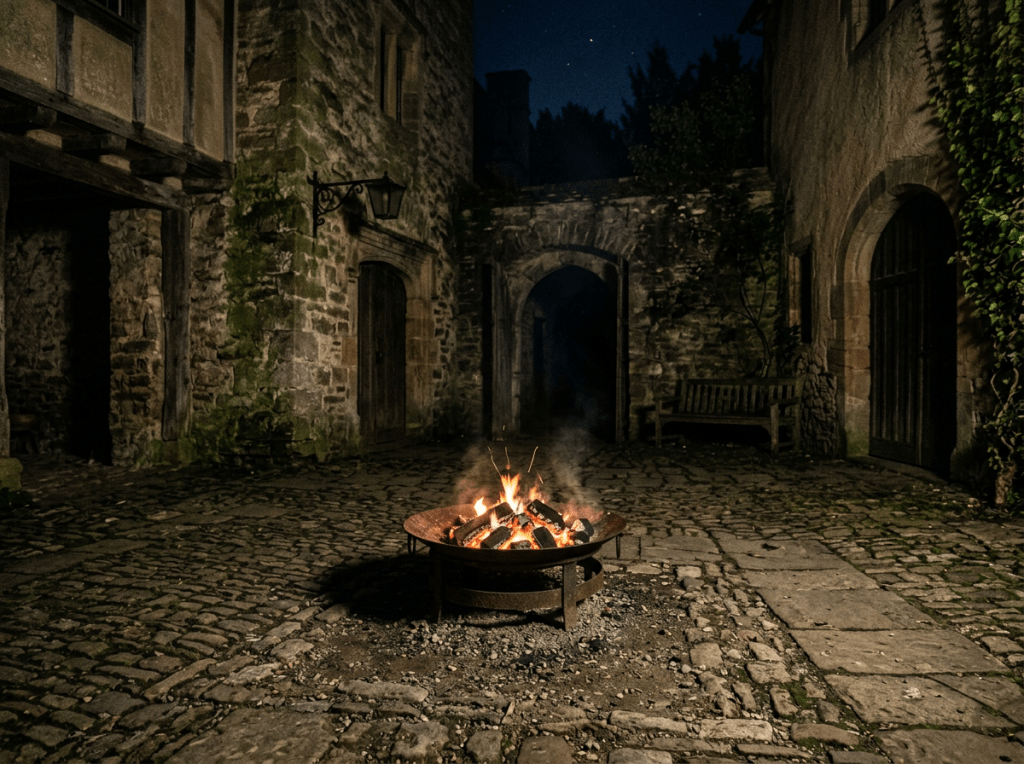
John 18:18 Now the servants and officers had made a charcoal fire, because it was cold, and they were standing and warming themselves. Peter also was with them, standing and warming himself.(ESV)
Peter had been certain.
He was certain that he would follow Jesus anywhere. He was certain that even if everyone else abandoned Him, he would remain. He was certain that he was ready for prison. He was certain that he was ready to die.
Jesus was equally certain. Peter would deny Him.
Before the night was over, Peter would deny three times that he even knew the Man he’d promised to die beside.
There’s something worth remembering about Peter’s name. When Jesus first met Simon, He gave him another name: Cephas, translated Peter—Rock. Scripture doesn’t give us a rigid rule saying that Jesus called him Simon when he failed and Peter when he succeeded. We shouldn’t manufacture one. But there’s enough of a pattern to notice when Jesus chooses one name instead of the other.
In Gethsemane, Mark tells us that Jesus found Peter sleeping, but Jesus addressed him: “Simon, are you asleep?”
Before the denial, Luke records Jesus saying: “Simon, Simon, behold, Satan demanded to have you, that he might sift you like wheat.”
Jesus knew Peter. Jesus also knew Simon.
The Rock was about to discover how easily he could crumble.
Peter hadn’t entered the courtyard intending to deny Christ. In fact, he’d already demonstrated remarkable courage. When the soldiers came for Jesus, Peter drew a sword and struck the servant of the high priest. He was apparently willing to fight a crowd of armed men.
Then Jesus stopped him.
Everything Peter thought was about to happen changed. Jesus allowed Himself to be arrested. Peter followed. He entered the courtyard of the high priest.
And John records a seemingly insignificant detail.
It was cold.
The servants and officers had made a fire, and Peter stood among them warming himself.
John didn’t use the ordinary Greek word for fire.
He called it an ἀνθρακιά — anthrakia.
A charcoal fire. A bed of burning coals.
That word occurs only twice in the entire New Testament.
Both times are in John’s Gospel. Both times Peter is standing nearby.
That should make us pay attention.
At the first charcoal fire, Peter stood among the enemies of Jesus.
John’s wording is painfully simple: Peter was standing with them.
He wanted their warmth while trying not to be identified with Jesus.
Then came the question. “You also are not one of this man’s disciples, are you?”
Peter answered: “I am not.”
The same Peter who’d said that he would die beside Jesus now denied that he was even one of His disciples.
The pressure continued. Again Peter denied Him.
Then someone recognized him more specifically. A relative of the man whose ear Peter had cut off had seen him in the garden.
Again Peter denied Him. Then the rooster crowed.
Other Gospel writers give us pieces of this night that John doesn’t. Luke tells us that Jesus turned and looked at Peter. Matthew tells us Peter went outside and wept bitterly.
We aren’t told what Jesus’ expression looked like. We don’t need to invent it.
Peter knew.
Jesus had been right about Peter when Peter had been wrong about himself.
That may have been one of the most painful discoveries of Peter’s life.
Peter had believed his devotion was strong enough. He believed courage was enough. He believed determination was enough. He believed that because he sincerely meant, “I will never deny You,” he therefore couldn’t deny Him.
Then Simon met Simon.
The Rock discovered that the name Jesus had given him didn’t mean that human weakness had disappeared.
There’s an uncomfortable lesson there.
We can sincerely love Christ and still drastically overestimate ourselves.
We can mean every word when we say what we will never do.
We can stand confidently before the trial comes and discover something very different about ourselves once we’re standing inside it.
Peter didn’t lie when he told Jesus he was willing to die for Him. Peter was wrong.
There’s a difference.
His failure revealed something Peter needed to know about Peter.
But here’s where John’s tiny detail becomes important.
The Gospel could simply have said there was a fire.
Instead, John remembered the kind of fire.
Anthrakia.
Charcoal.
Why?
John doesn’t explain.
Maybe, standing there decades later as he wrote the account, he simply remembered it vividly. Maybe the smell remained in his memory. Maybe the sight of glowing coals never left him.
We can’t know.
What we can know is that John chose a very specific word, and he would use that word only one more time.
Peter leaves this part of the story broken. But Jesus had already told him that this would not be the end.
Before Peter ever denied Him, Jesus had said: “When you have turned again, strengthen your brothers.”
Not if.
When.
Jesus knew the failure before Peter failed. Jesus also knew what existed on the other side of it.
Peter could only see the night. Jesus could already see morning.
Peter could only remember the fire where he’d denied his Lord. John had one more charcoal fire to show us.
And this time, Peter wouldn’t be standing with the enemies of Jesus.
This time, Jesus Himself would be waiting beside it.






Leave a Reply