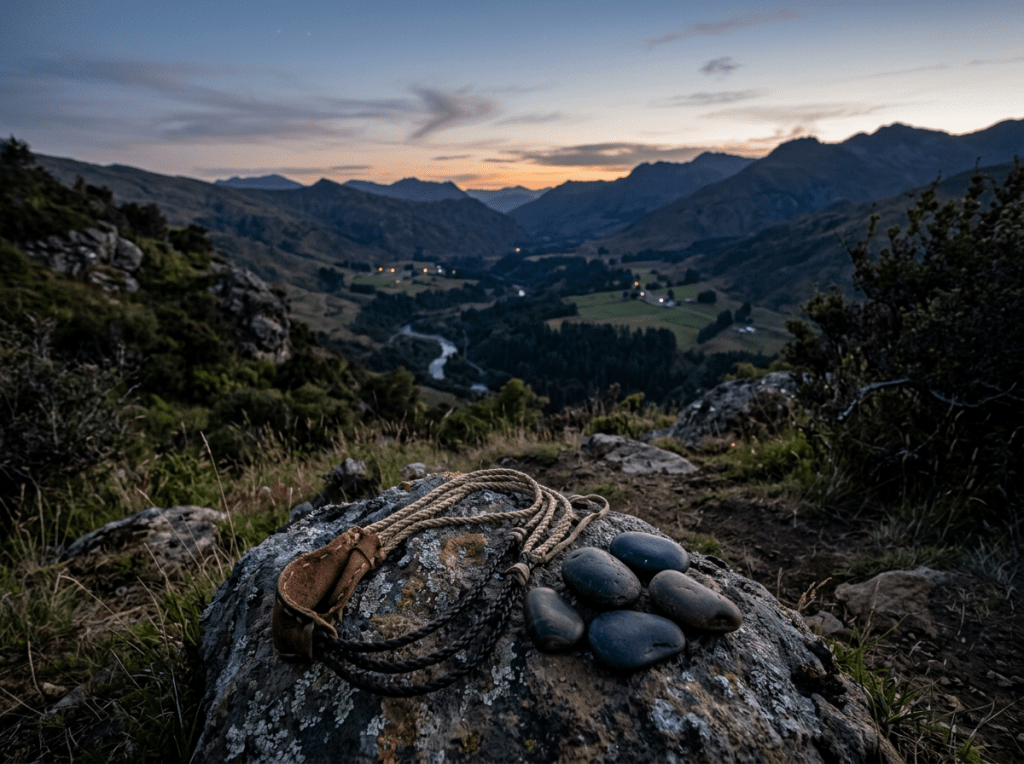
1 Samuel 17:45-47 (45)Then David said to the Philistine, “You come to me with a sword and with a spear and with a javelin, but I come to you in the name of the Lord of hosts, the God of the armies of Israel, whom you have defied. (46)This day the Lord will deliver you into my hand, and I will strike you down and cut off your head. And I will give the dead bodies of the host of the Philistines this day to the birds of the air and to the wild beasts of the earth, that all the earth may know that there is a God in Israel, (47)and that all this assembly may know that the Lord saves not with sword and spear. For the battle is the Lord’s, and he will give you into our hand.”(ESV)
The valley doesn’t always create what appears there.
Sometimes, it reveals what was already being formed long before the pressure arrived.
David’s confidence in the Valley of Elah didn’t begin when he stepped toward Goliath. It had been shaped in obscurity, while tending sheep, facing danger, and learning to depend on God when no one was watching.
The battle exposed what had already taken root.
The same is often true of us.
Pressure can reveal patience—or the lack of it. Conflict can uncover humility, fear, pride, resentment, courage, or trust. A difficult season may bring reactions to the surface that surprise us, but those reactions rarely appeared from nowhere.
The valley removes some of our ability to hide.
On the mountain, faith may feel strong because the view is clear. In the valley, we discover whether we can still trust God when the outcome is uncertain and the threat feels larger than we are.
That discovery can be painful.
We may learn that our confidence was tied more closely to favorable circumstances than we realized. We may find wounds that were never healed, habits that were never surrendered, or fears that were only quiet because they hadn’t yet been challenged.
But exposure isn’t the same as condemnation.
God can reveal weakness so it can be addressed. He can uncover what’s unstable before we build more of our lives upon it. The valley may show us where growth is still needed, but it can also reveal the quiet work God has already accomplished within us.
We may discover that we’re stronger than we thought—not because we’re sufficient, but because God has been preparing us in places we considered ordinary.
The valley reveals what we carried into it.
What it reveals shouldn’t be ignored. It should be brought honestly before God, whether it’s faith that needs strengthening or faithfulness that should be recognized with gratitude.
Tomorrow, we will consider why even the clearest mountaintop experience was never meant to become a permanent place of escape.

 Walking With Christ
Leave a comment