(Part 4 of 9)
Ruth 2:8–9 (8)Then Boaz said to Ruth, “Now, listen, my daughter, do not go to glean in another field or leave this one, but keep close to my young women. (9)Let your eyes be on the field that they are reaping, and go after them. Have I not charged the young men not to touch you? And when you are thirsty, go to the vessels and drink what the young men have drawn.”(ESV)
We remember Ruth as the woman who refused to abandon Naomi. We remember her declaration that Naomi’s people would become her people and Naomi’s God would become her God. We remember Boaz, the honorable man who eventually married Ruth. And we remember that their family became part of the lineage leading to King David and, ultimately, Jesus Christ.
It’s a beautiful story of loyalty, redemption, and God’s providence. But somewhere between Ruth’s decision to remain with Naomi and her marriage to Boaz, there was a much less romantic reality.
Two widows needed to eat. And one of them had to go find food.
A Beautiful Story With an Uncomfortable Beginning
Ruth and Naomi returned to Bethlehem carrying considerable grief. Naomi had lost her husband and both sons. Ruth had lost her husband and left behind her homeland. Neither woman had the security that a husband or adult son commonly provided within their society.
They were vulnerable. They had limited resources. And Ruth was a Moabite living among Israelites.
We sometimes rush past those details because we know how the story ends. We know Boaz will become important. We know the family will be restored through marriage and the birth of a son. But none of that had happened yet.
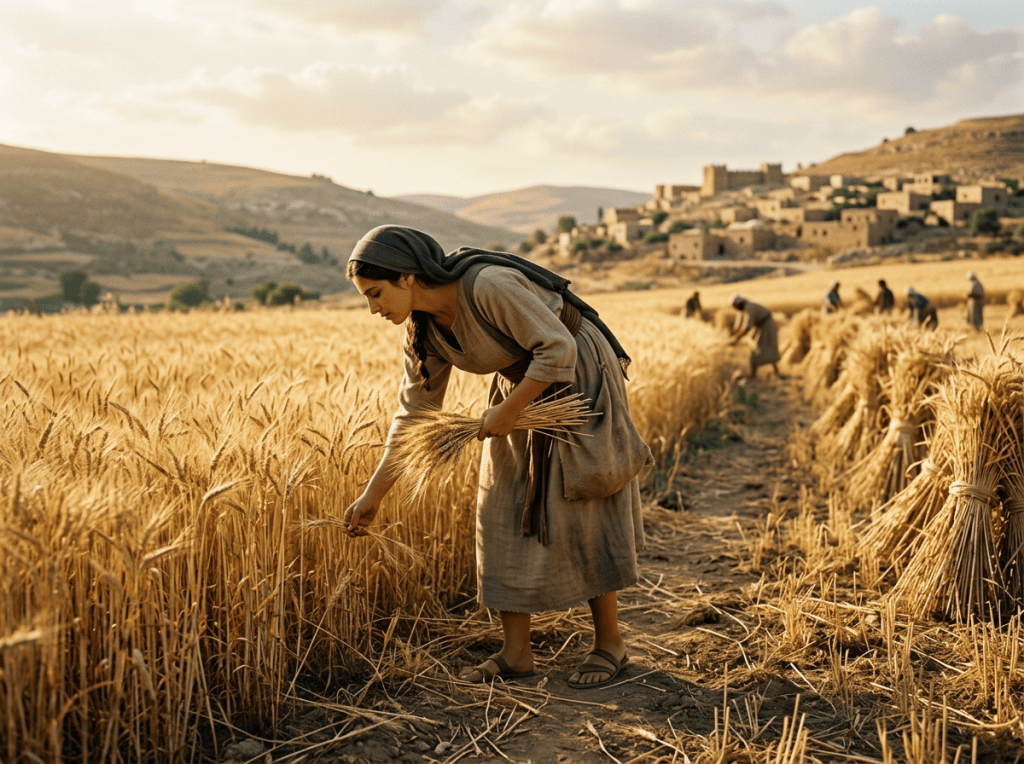
Ruth and Naomi needed food. So Ruth went out to glean.
The Law Already Made Provision
Gleaning wasn’t simply an act of charity invented by generous landowners. God had already commanded Israel to leave portions of the harvest available for the poor and the foreigner.
Leviticus 19:9–10 instructed landowners not to harvest every corner of their fields or gather every fallen grape. Deuteronomy 24:19 similarly commanded that forgotten sheaves be left for the foreigner, the fatherless, and the widow.
The provision was built into the Law. God had established a responsibility toward people who lacked the resources to provide for themselves. That’s an important distinction that people often miss.
Ruth wasn’t merely hoping someone would feel generous enough to give her something. She was seeking to make use of a provision God had commanded His people to maintain. But having a legal provision and being safe while using it aren’t necessarily the same thing.
The Danger in the Field
When Boaz encountered Ruth, he told her to remain in his fields with his young women. He also told her that he’d instructed the young men not to touch her.
Why would that instruction matter?
Because Ruth’s vulnerability extended beyond her need for food. She was a foreign widow working among people she didn’t know. She had no guarantee that everyone she encountered would treat her with kindness or respect.
Boaz recognized that her safety mattered. Later, Naomi encouraged Ruth to remain with Boaz’s workers because she could be assaulted in another field.
The danger wasn’t merely hypothetical. The women understood that working in an unfamiliar field could expose Ruth to mistreatment.
We often remember Boaz because he eventually married Ruth. But before any marriage was arranged, he took steps to protect her. And he did so in an environment where he had authority.
More Than Permission
Boaz didn’t simply allow Ruth to glean. He instructed her to remain with his workers. He provided access to water. He invited her to eat with the harvesters. He directed his young men to allow her to glean even among the sheaves and to leave additional grain for her.
These were practical decisions. They affected Ruth’s safety. They affected her dignity. They affected how much food she could bring home. And they affected the way other workers were expected to treat her.
Boaz had the authority to influence the environment in which Ruth was working. He used that authority to make her circumstances better. There’s a lesson here that goes beyond generosity.
When we have authority over an environment, we have responsibility for how people are treated within it.
It isn’t enough to personally refrain from mistreating someone while ignoring mistreatment by those under our direction. Boaz didn’t merely promise that he would treat Ruth well. He gave instructions to his workers. His concern became part of how the field operated.
The Difference Between Charity and Dignity
There’s another detail worth noticing. Ruth worked. She wasn’t simply sitting beside the road waiting for someone to hand her food. She went into the field, followed the harvesters, and gathered what she could.
Boaz’s foreman reported that she had worked diligently, taking only a short rest. Her circumstances were difficult, but she was actively working to provide for herself and Naomi. Boaz’s kindness didn’t remove her opportunity to contribute. It made that opportunity safer and more productive.
That matters because we sometimes treat helping people as though the only question is how much we’re willing to give them. But sometimes the more important question is whether we’re making it possible for them to provide for themselves.
Are we creating opportunities?
Are we removing unnecessary obstacles?
Are we treating people with dignity?
Are we using our resources and authority to make it possible for someone else to work without fear?
Boaz did more than give Ruth food. He helped create conditions in which she could work, remain safe, and bring food home.
Ruth Wasn’t Just Waiting to Be Rescued
It’s also important that we don’t reduce Ruth to a helpless woman whose story becomes meaningful only when Boaz enters it. Ruth made difficult decisions before she ever met him. She chose to remain with Naomi. She left her homeland. She entered a foreign community. She took the initiative to find food. She worked to support both herself and her mother-in-law.
Her loyalty wasn’t merely something she said. It became something she did. And while Boaz deserves recognition for his conduct, Ruth deserves recognition for hers.
The story isn’t simply about a generous man helping a helpless woman. It’s about two people acting with faithfulness and integrity in very different circumstances.
One had resources and authority. The other had determination and a willingness to work.
Both had responsibilities. And both acted upon them.
What Happens in Our Fields?
Most of us don’t own fields filled with harvesters. But many of us have some measure of influence over the environments other people must navigate.
We manage workplaces. We lead ministries. We raise families. We organize activities. We supervise employees. We make decisions that affect whether other people feel safe, respected, and able to contribute. And sometimes we encounter people who are vulnerable because of circumstances beyond their control.
The question isn’t merely whether we’re willing to be kind to them. It’s whether we’re willing to examine the environments we help create.
Do people have to endure mistreatment to receive the help they need?
Are they treated as burdens?
Are they expected to surrender their dignity in exchange for assistance?
Are we content to personally behave well while ignoring what others are doing under our authority?
Boaz could have been polite to Ruth and done nothing more. Instead, he took responsibility for how she would be treated in his field. That’s a much more demanding example.
Before the Wedding
We know how Ruth’s story ends. We know about the marriage. We know about Obed. We know about David. We know about the genealogy that eventually leads to Jesus. But Ruth didn’t enter that field looking for a place in the genealogy of Christ.
She was trying to feed her family. And Boaz didn’t need to know that Ruth would eventually become his wife before he treated her with dignity.
That’s the part of the story I don’t want us to overlook.
Before the wedding, there was a field. Before the family legacy, there was a hungry widow. Before the famous ending, there were ordinary decisions about how vulnerable people should be treated. And those decisions mattered on their own.
Boaz’s kindness wasn’t important only because he eventually married Ruth.
It was important because Ruth was a person worthy of dignity and protection before she ever became his wife. We shouldn’t have to know how someone’s story ends before we recognize our responsibility toward them.
Sometimes the most important part of the story isn’t what someone eventually becomes. It’s how we treat them while they’re standing in our field.




Leave a Reply