(Part 2 of 8)
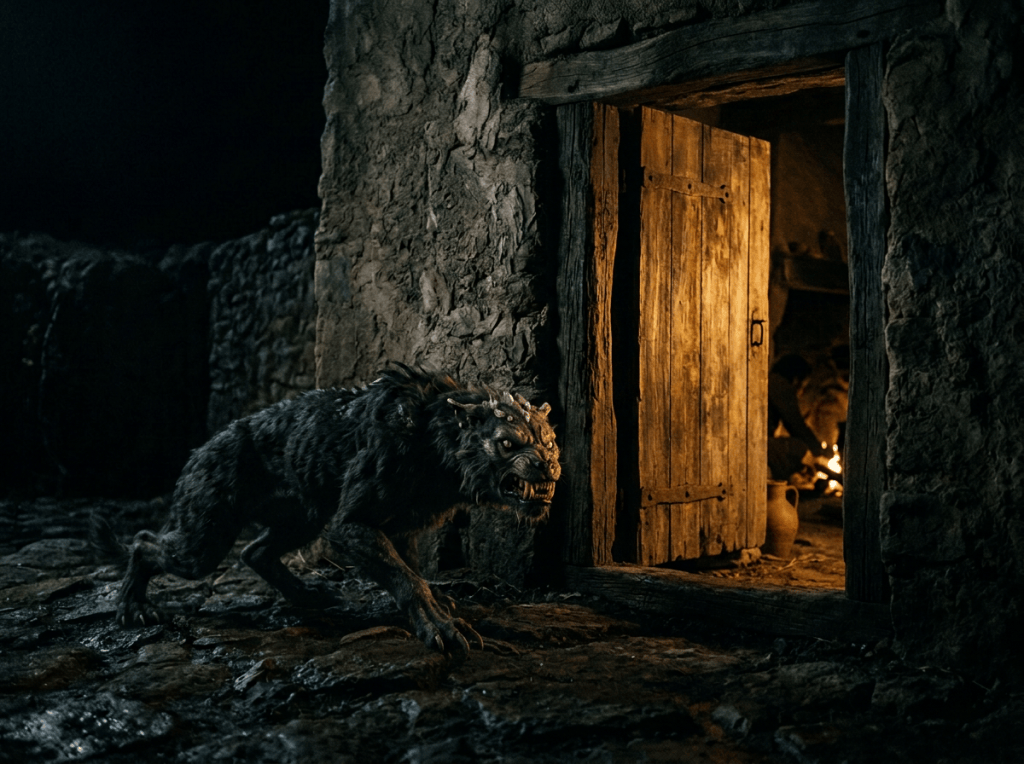
Genesis 4:7 If you do well, will you not be accepted? And if you do not do well, sin is crouching at the door. Its desire is for you, and you must rule over it.”(ESV)
We know what happens next. Cain kills Abel. That knowledge can make Genesis 4 feel almost inevitable.
Cain becomes angry. God warns him. Cain ignores the warning. Abel dies.
We know the story so well that it’s easy to move from the rejected offering to the murder as though one simply leads naturally into the other. But there’s a moment between them.
God speaks. And what He says should make us stop. “Sin is crouching at the door.”
That isn’t gentle imagery. Something is waiting. Something wants entrance. Something desires Cain. And God warns him before the blood ever reaches the ground.
Most of us pause at the murder.
A brother killing a brother is horrifying. Abel’s blood crying out from the ground is haunting. Cain asking, “Am I my brother’s keeper?” is cold enough that we can feel the rebellion in it. But the murder isn’t where the story becomes dangerous.
It’s already dangerous here. At the door. Before Cain raises his hand. Before Abel enters the field. Before the crime has a victim. Before anyone except God can see where Cain’s heart is going.
Sin is crouching. Pause there.
The picture is almost animal. A predator doesn’t crouch because it’s lost interest. It crouches because it’s waiting.
Watching. Ready.
The movement hasn’t happened yet. But the intention is already there.
God tells Cain that sin desires him. That should change the way we think about temptation.
We often treat sin as though it’s passive. Something we might choose if we’re careless. Something sitting harmlessly nearby until we decide whether to interact with it.
Genesis gives us a much more aggressive picture.
Sin wants mastery. It wants movement. It wants agreement. It wants the door opened.
Cain’s angry. That anger is very real.
God doesn’t tell him that nothing happened. Cain’s offering wasn’t regarded as Abel’s was.
Cain feels the difference. His face falls. But the warning is not merely: “Stop being angry.”
God presses deeper.
What are you going to do with what’s happening inside you?
That question matters because emotion and action aren’t the same thing.
Cain hasn’t killed anyone yet. There’s still distance between anger and murder. There’s still room for repentance, room to listen, and room to turn. There’s still a door.
God warns him while the door is still closed.
We often prefer to deal with sin much later.
After the words are spoken.
After the affair.
After the lie.
After the money is gone.
After the addiction has taken hold.
After the relationship is damaged.
After bitterness has become personality.
After resentment has been rehearsed for years.
After the field.
Then we ask: How did this happen?
Genesis 4 gives us an uncomfortable answer. Sometimes it happened because there was a door. And something crouched there for a long time.
A thought we kept feeding.
A grievance we kept rehearsing.
A desire we kept entertaining.
A resentment we kept defending.
A fantasy we kept revisiting.
A compromise we kept calling small.
A warning we kept postponing.
Sin rarely needs us to become monsters all at once. It often only needs us to keep opening the door a little farther.
That’s why the warning comes before the murder.
God isn’t merely interested in stopping Cain’s hand. He’s confronting the heart that will eventually move the hand.
Jesus does the same thing later. He speaks about anger before murder. Lust before adultery. The heart before the visible act.
That isn’t God making sin impossibly broad. It’s God refusing to wait until destruction becomes visible before calling something dangerous.
We tend to congratulate ourselves because we haven’t reached the field. “I would never do that.”
Maybe not. But what’s crouching at the door?
That’s the harder question.
What are you feeding that you assume you can always control later?
What bitterness are you allowing because you’ve not acted on it yet?
What temptation have you kept close because technically nothing has happened?
What thought pattern have you protected because nobody else can see it?
What resentment do you keep rehearsing because it feels justified?
What compromise are you calling harmless because it hasn’t produced consequences yet?
Cain could have said the same thing. Abel was still alive. Nothing had happened.
Yet.
That word is the pivot point.
We often measure danger by visible consequence. God measures it earlier. He sees direction. He sees desire. He sees what is crouching. And He warns.
That warning is mercy.
God could have waited. He could have allowed Cain to walk into the field without saying anything. He didn’t.
He confronted Cain while there was still time to choose differently. “If you do well, will you not be accepted?”
There’s still a way forward. Cain isn’t trapped.
He isn’t told that rejection is permanent.
He isn’t told that his anger has already determined his future.
He’s warned. Do what’s right. Rule over what’s trying to rule you.
That’s important because temptation often tells us the opposite.
“You can’t help this.”
“This is just who you are.”
“You’re already too far gone.”
“You might as well continue.”
“You deserve this.”
“You need this.”
“You’ve already thought about it, so what difference does acting on it make?”
Those are lies designed to open doors.
God tells Cain the truth. The danger is real. The desire is real. But so is responsibility. “You must rule over it.”
Cain doesn’t. That’s the tragedy.
Not merely that he murders Abel.
The tragedy is that he was warned before he did. There was a moment when the blood wasn’t yet on the ground. There was a moment when Abel was still alive. There was a moment when Cain could’ve answered God instead of carrying his anger into the field.
That moment is easy to pass because we know what happens next. But maybe that’s exactly why we need to stop there.
Most disasters don’t begin when everyone notices them. They begin much earlier.
At doors. In thoughts. In private agreements. In tolerated anger. In small permissions. In things we keep telling ourselves we can deal with later.
So before asking what sin has already done, ask a different question.
What’s crouching?
Where?
What keeps returning?
What have you allowed to stay near the entrance because you believe you still control it?
What warning have you heard more than once?
And what happens if you keep walking toward the field?
The blood on the ground makes us pause. It should. But God spoke before there was blood.
That should make us pause too. Sin is crouching at the door.
Don’t wait until it comes inside to decide whether it was dangerous.





Leave a Reply