
(Part 4 of 7)
Matthew 27:46 And about the ninth hour Jesus cried out with a loud voice, saying, “Eli, Eli, lema sabachthani?” that is, “My God, my God, why have you forsaken me?”(ESV)
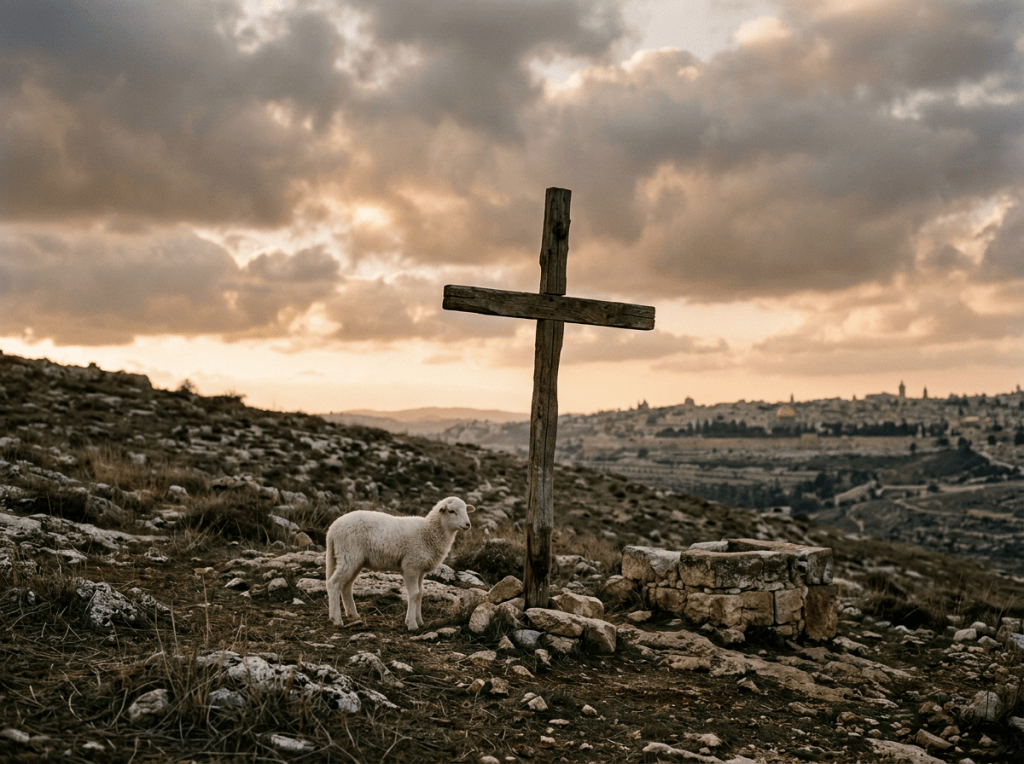
There are words from the cross that almost force silence.
This is one of them.
Jesus is hanging between life and death. The sky has gone dark. His body is broken. His enemies are mocking Him. His disciples have scattered.
And then He cries out: “My God, my God, why have you forsaken me?”
Even knowing that Jesus is drawing from Psalm 22 doesn’t make the moment weightless.
The words are still spoken from the cross. The suffering is still real. The darkness is still real. The death approaching is still real. Something terrible is happening.
We pause there.
We should.
The cross isn’t sentimental.
It isn’t merely a beautiful symbol of love.
It’s judgment.
It’s sacrifice.
It’s suffering.
It’s the place where sin is being dealt with seriously enough that the Son of God hangs bleeding beneath its weight.
Most Christians understand that much.
Then we read something like this:
Exodus 34:6–7 (6)The Lord passed before him and proclaimed, “The Lord, the Lord, a God merciful and gracious, slow to anger, and abounding in steadfast love and faithfulness, (7)keeping steadfast love for thousands, forgiving iniquity and transgression and sin, but who will by no means clear the guilty, visiting the iniquity of the fathers on the children and the children’s children, to the third and the fourth generation.”(ESV)
And we like that part. We should.
This is God describing Himself.
Merciful. Gracious. Slow to anger. Abounding in steadfast love. Faithful. Forgiving iniquity, transgression, and sin.
Those words are beautiful.
Then the sentence continues. “…but who will by no means clear the guilty…”
And somehow that part receives less attention.
Pause.
The same God who says He is merciful says He won’t simply declare guilt meaningless.
The same God who forgives sin says guilt is real.
The same God who abounds in steadfast love refuses to pretend evil never happened.
That creates tension.
How can God forgive the guilty while refusing to clear the guilty?
How can mercy be real without justice becoming fake?
How can God remain righteous while forgiving unrighteous people?
Those questions should bother us. Not because Scripture is confused. Because we often are.
We frequently want mercy to mean that consequences disappear.
We want forgiveness to mean the offense no longer matters.
We want grace to mean nobody has to answer for what happened.
We want love to mean judgment is somehow unloving.
Exodus 34 doesn’t allow that. God doesn’t describe Himself as merciful instead of just.
He’s both. That’s harder.
Mercy without justice isn’t mercy. It’s denial.
If someone destroys another person’s life and God simply says, “It doesn’t matter,” that isn’t compassion.
It’s indifference toward the person who was harmed.
If evil can simply be waved away, then evil was never truly taken seriously. If guilt means nothing, then righteousness means very little either.
God doesn’t solve the problem of sin by pretending there’s no problem.
That’s why the cross should make us pause.
The cross is where we see how seriously God takes both mercy and justice.
Jesus doesn’t die because sin was trivial.
He dies because it wasn’t.
The cross tells us that forgiveness is costly. Someone bears the weight. Someone absorbs the judgment. Someone stands where the guilty should stand.
That’s why “Father, forgive them” can be spoken from a cross instead of from a place where evil has simply been ignored.
Grace doesn’t erase justice.
Grace satisfies what justice requires in a way the guilty could never accomplish for themselves.
That’s part of what makes the cry of Jesus so difficult to hear. “My God, my God, why have you forsaken me?”
We pause because we can feel that something enormous is happening.
But perhaps Exodus 34 should’ve prepared us for it.
God had already told us who He is.
Merciful.
Gracious.
Slow to anger.
Abounding in steadfast love.
Forgiving sin.
And unwilling to pretend guilt is nothing.
The cross holds those truths together.
We often try to separate them.
Some people want a God of mercy with no judgment. Others want a God of judgment with very little mercy.
Scripture gives us neither.
The God of Scripture is holy enough to judge sin and merciful enough to provide the sacrifice.
That should change the way we understand grace.
Grace isn’t God lowering the standard until we can reach it. Grace is God doing what we couldn’t do.
Grace doesn’t say guilt is imaginary. Grace says guilt has been answered.
Grace doesn’t call evil good. Grace provides forgiveness without requiring God to lie about what happened.
That matters beyond theology.
It matters in how we forgive.
It matters in how we repent.
It matters in how we deal with harm.
Forgiveness doesn’t require us to pretend there was no wound.
Mercy doesn’t require us to call evil acceptable.
Reconciliation doesn’t require truth to disappear.
God doesn’t model mercy through denial.
He models mercy through truth, justice, sacrifice, and restoration.
That’s far more demanding.
It means I can’t call bitterness justice.
But it also means I don’t have to call injustice harmless.
It means I can forgive someone while still telling the truth about what happened.
It means repentance can be real because guilt can be named without becoming the final word.
It means mercy is strong enough to look directly at sin. The cross proves that.
We pause at Jesus’ cry because the suffering is impossible to ignore.
Perhaps we should pause at Exodus 34 for the same reason.
Because long before Calvary, God had already told us something difficult about Himself.
He forgives. And He doesn’t pretend guilt is nothing.
Both are true.
The cross is where we see what it cost for both to remain true.
So read Exodus 34 again.
Don’t stop at merciful.
Don’t stop at gracious.
Don’t stop at steadfast love.
Keep reading. “Who will by no means clear the guilty.”
Then look back toward the cross. “My God, my God, why have you forsaken me?”
Mercy is beautiful.
But it was never cheap.
Pause there.






Leave a Reply