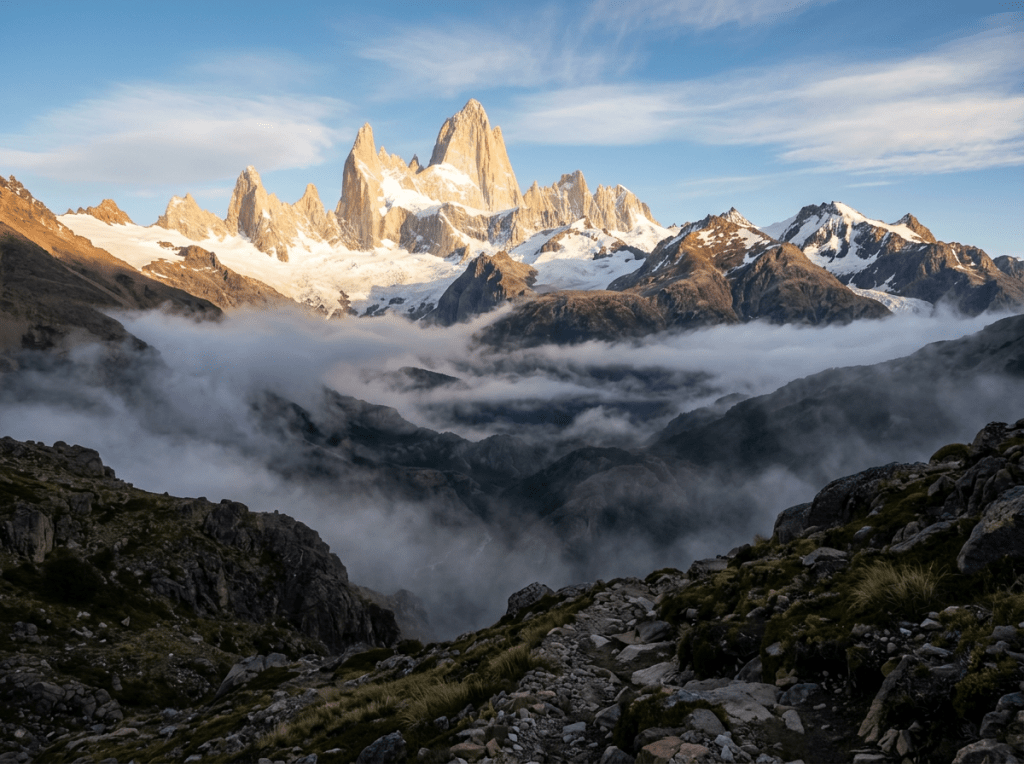
1 Kings 20:28 And a man of God came near and said to the king of Israel, “Thus says the Lord, ‘Because the Syrians have said, “The Lord is a god of the hills but he is not a god of the valleys,” therefore I will give all this great multitude into your hand, and you shall know that I am the Lord.’”(ESV)
Most of us would choose the mountain if we were given the choice.
Mountains offer distance from the noise below. They give us room to breathe, clearer vision, and a wider view of what surrounds us. In Scripture, mountains often became places of worship, revelation, covenant, and unmistakable encounters with God.
Valleys feel different.
The view is limited. The walls seem closer. The path ahead can disappear around the next turn. Valleys are often associated with battles, shadows, difficult decisions, and seasons we would rather escape.
Because of that, we can begin to assume that the mountain represents God’s presence while the valley represents His absence. When life is clear and our faith feels strong, we believe God is near. When life becomes confusing, painful, or uncertain, we wonder where He went.
But God isn’t the God of the mountain alone.
He doesn’t wait at the summit for us to climb high enough to reach Him. He’s also present on the narrow road, in the shadow, during the battle, and in the places where we can’t see what lies ahead.
The terrain may change how clearly we can see, but it doesn’t change where God is.
A mountaintop may help us recognize what He’s been doing. A valley may require us to trust Him before we understand it. One may fill us with wonder. The other may teach us to keep walking when wonder feels far away.
We shouldn’t judge God’s presence by the elevation of our circumstances.
The God who meets us on the mountain is still God when the path descends. He doesn’t become less faithful because the view becomes less clear.
Tomorrow, we will look more closely at what the mountain allows us to see—and why seeing clearly isn’t the same as being prepared for what comes next.



Leave a Reply