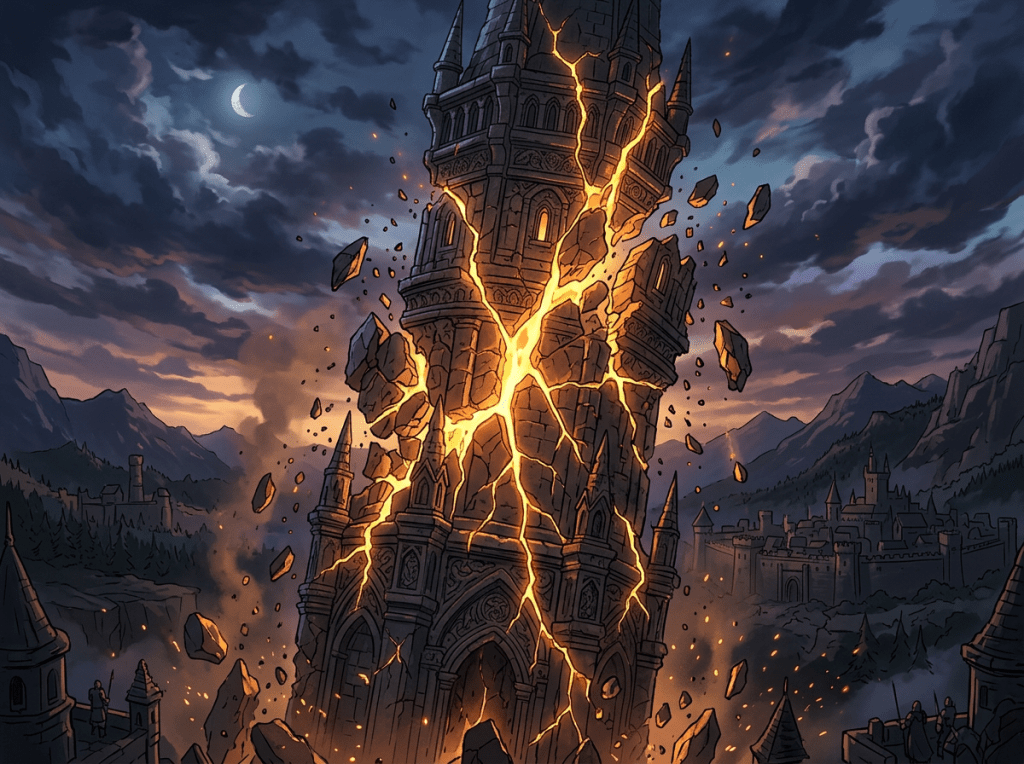
(Part 1 of 2)
⚓ Floatie: The Tower Wasn’t the Whole Problem
Genesis 11:4 Then they said, “Come, let us build ourselves a city and a tower with its top in the heavens, and let us make a name for ourselves, lest we be dispersed over the face of the whole earth.”(ESV)
Most of us were taught Babel as a story about pride. That isn’t wrong. It just isn’t enough.
The usual version is simple: mankind became arrogant, tried to build a tower up to heaven, and God confused their languages. So the lesson becomes, “Don’t be proud.”
That’s true, but it’s too small for the text.
Babel wasn’t just about people building too high. It was about people refusing to go where God had already told them to go.
Genesis 1:28 And God blessed them. And God said to them, “Be fruitful and multiply and fill the earth and subdue it, and have dominion over the fish of the sea and over the birds of the heavens and over every living thing that moves on the earth.”(ESV)
Genesis 9:1 And God blessed Noah and his sons and said to them, “Be fruitful and multiply and fill the earth.(ESV)
The command didn’t change after Eden. It didn’t change after the flood. God told Adam and Eve to fill the earth. God told Noah and his sons to fill the earth.
Then the people came to Shinar and said, in effect, “Let’s build a city so we won’t be scattered.” That final phrase is the confession.
They weren’t confused about the mission. They were resisting it.
God said, “Fill the earth.” Mankind said, “Let’s stay here.”
God said, “Spread out.” Mankind said, “Let’s build something strong enough to keep us together.”
So Babel wasn’t just a construction project. It was a refusal.
The tower matters, but the city matters too. The city held them together. The tower gave that gathering a sacred center. The name gave them identity. Babel was mankind trying to build a world where obedience was no longer necessary because the system was strong enough to protect itself.
That’s why the phrase “with its top in the heavens” shouldn’t be flattened into “a really tall building.”
The ancient world wouldn’t have heard that as simple engineering language. They lived in a world where temples, towers, mountains, kings, cities, crops, weather, war, and worship were all tangled together. A tower like this wasn’t just a landmark. It was sacred architecture.
It was a place where mankind tried to establish a meeting point between heaven and earth.
Man built below. The god was expected to come down above.
The people gave sacrifices, rituals, honor, and offerings. In return, the god was expected to provide protection, fertility, crops, stability, and favor.
It was religion built like a contract.
Man starts the project.
Man builds the structure.
Man sets the location.
Man creates the ritual center.
Then man expects heaven to respond.
That’s not surrender. That’s management.
✒️ Forge: The Sacred Center of Rebellion
Babel was mankind trying to bring divine power down into a system mankind controlled.
That’s what makes the story so much more serious than “people tried to build a tall tower.” If height were the issue, every mountain would be an act of rebellion. If architecture were the issue, every city would be suspect. If cooperation were the issue, every shared project would be dangerous.
But that isn’t the point.
The problem wasn’t that they built. The problem was what they were building and why.
They built a city to resist being sent.
They built a tower to create a sacred center.
They built a name to preserve themselves.
Babel was mankind trying to combine unity, language, technology, worship, and ambition into one system strong enough to resist the will of God while still sounding religious.
That’s where the story becomes uncomfortable.
Because Babel doesn’t need to look wicked on the surface. Babel can look organized. Babel can look impressive. Babel can look unified. Babel can look spiritual. Babel can use the language of worship while quietly rejecting the command of God.
The people didn’t say, “Let us rebel against the LORD.”
They said, “Let us build.”
That’s part of the danger.
Rebellion rarely introduces itself honestly. It usually comes dressed as wisdom, safety, unity, progress, legacy, or survival.
“Let us build a city.” That sounds practical.
“Let us build a tower.” That sounds ambitious.
“Let us make a name for ourselves.” That sounds visionary.
“Lest we be dispersed.” That sounds responsible.
But underneath all of it was one shared refusal: We won’t go where God told us to go.
And then comes one of the sharpest lines in the story.
Genesis 11:5 And the Lord came down to see the city and the tower, which the children of man had built.(ESV)
They built a tower “with its top in the heavens,” but the LORD had to come down to see it.
That line isn’t there because God lacked information. It’s there because the story is humiliating the tower.
From the ground, Babel looked like mankind’s greatest achievement. From heaven, it was something God stooped down to inspect.
Mankind said, “Look how high we have built.” God came down and exposed how small it really was.
The tower didn’t summon Him. Their rituals didn’t control Him. Their sacred architecture didn’t obligate Him. Their unity didn’t impress Him. Their name didn’t endure before Him.
He came down as Judge.
⚒️ Anvil: When Rebellion Learns to Sound Sacred
This is where Babel stops being ancient history and starts becoming diagnostic.
Babel isn’t gone. Babel is what happens when people build systems to avoid obedience while calling the system faithful.
A church can build Babel.
A ministry can build Babel.
A family can build Babel.
A career can build Babel.
A platform can build Babel.
A nation can build Babel.
Even a life full of religious language can still become Babel if the goal is to make a name, preserve control, and avoid going where God has commanded.
That’s why this story can’t be reduced to pride alone. Pride is in there, but pride isn’t acting alone. Fear is there too. Control is there. False worship is there. Institutional self-preservation is there. Rebellion dressed in religious architecture is there.
The people wanted a name because they wanted permanence.
They wanted a city because they wanted security.
They wanted a tower because they wanted sacred legitimacy.
They wanted unity because they feared scattering.
But scattering was the mission.
That’s the part we have to feel.
They were afraid of the very thing God had commanded. That happens more often than we want to admit.
God may command movement, but we build stability.
God may command obedience, but we build explanation.
God may command surrender, but we build systems.
God may command repentance, but we build reputation.
God may command us to go, but we build a city and call staying wisdom.
Babel is the human instinct to build something impressive enough that we no longer have to obey.
And the most dangerous version of Babel isn’t the one that openly mocks God. The most dangerous version is the one that borrows the shape of worship while keeping mankind in control.
That’s what sacred rebellion does.
It doesn’t deny heaven. It tries to manage heaven.
It doesn’t deny divine power. It tries to bring divine power down on human terms.
It doesn’t deny worship. It turns worship into a transaction.
It doesn’t deny the need for a name. It tries to make one without waiting for God to give it.
🔥 Ember: The Name We Tried to Make
The phrase that exposes Babel isn’t only “tower with its top in the heavens.” It is this: “Let us make a name for ourselves.”
Name.
In Hebrew, the word is shem.
A name is more than a label. A name is identity. Reputation. Memory. Honor. Legacy. Permanence.
To make a name is to say, “We will decide what we are. We will decide how we are remembered. We will decide where our security comes from. We will decide what gives us meaning. We won’t wait for God to define us.”
That’s Babel.
Babel isn’t merely the tower man built. Babel is the name man tried to make. And that should press on us.
What name are we trying to make?
What reputation are we protecting?
What system are we building so we don’t have to obey?
What sacred language are we using to cover a refusal?
What have we called wisdom that is really fear?
What have we called unity that is really disobedience?
What have we called stability that is really resistance?
What have we called legacy that is really self-preservation?
The people of Babel didn’t just build upward. They built inward. They turned away from the earth God commanded them to fill and gathered around a name God hadn’t given.
And God came down.
Not because He had been summoned.
Not because the tower reached Him.
Not because the system worked.
He came down because mankind had learned how to make rebellion look sacred.
🌿 Covenant Triumph: The Sentence God Will Not Leave Unanswered
Genesis 11:8-9 (8)So the Lord dispersed them from there over the face of all the earth, and they left off building the city. (9)Therefore its name was called Babel, because there the Lord confused the language of all the earth. And from there the Lord dispersed them over the face of all the earth.(ESV)
God scattered what man tried to preserve.
He confused the language they had used to unify rebellion. He stopped the city they had built to resist the mission. He judged the tower they had raised as a false meeting place between heaven and earth.
The story names the place Babel because confusion became its memorial.
That’s what man’s self-made name became.
Confusion.
The name they tried to make became the place where their speech broke apart. The unity they tried to preserve became the place where they could no longer understand one another. The city they built to avoid scattering became the reason they were scattered.
That’s the warning.
God won’t bless a name built in rebellion.
God won’t honor worship used as leverage.
God won’t preserve unity that exists to avoid obedience.
God won’t allow mankind to build a sacred center where heaven is treated like something to manage.
Babel ends with scattering, confusion, and an unfinished city.
But the story isn’t finished. There’s one word still hanging in the air.
Shem.
The people of Babel tried to make a shem for themselves.
And God won’t leave that sentence unanswered.
[⚓ Floatie] [✒️ Forge] [⚒️ Anvil] [🔥 Ember] [🌿 Covenant Triumph]
This post follows the Forge Baseline Rule—layered truth for the discerning remnant.






Leave a comment