
(Part 9 of 9)
John 5:39–40 (39)You search the Scriptures because you think that in them you have eternal life; and it is they that bear witness about me, (40)yet you refuse to come to me that you may have life.(ESV)
Imagine standing in front of Jesus Christ. Not hearing about Him. Not reading about Him. Standing directly in front of Him.
Imagine knowing the Scriptures. Studying them. Memorizing them. Teaching them. Devoting your life to understanding what God has revealed. And then imagine looking directly at the One those Scriptures testify about…and failing to recognize Him.
That’s the confrontation Jesus brought to some of the religious leaders of His day.
They searched the Scriptures because they believed that in them they had eternal life. But Jesus told them those very Scriptures bore witness about Him. And they refused to come to Him.
They knew the words. They missed the One the words were pointing toward. That’s a terrifying possibility.
We can become so convinced that we understand what we’re looking at that we stop seeing what’s actually in front of us.
The Stories We Thought We Knew
Over the course of this series, we’ve revisited some familiar biblical accounts.
We went into Joseph’s prison. But instead of rushing toward Pharaoh’s palace, we stopped to notice two other prisoners. Joseph was suffering. He’d been betrayed, falsely accused, and imprisoned. Yet he noticed that two other men were troubled. He asked what was wrong. He listened. And he helped them understand their dreams. We usually remember those men because one of them eventually mentioned Joseph to Pharaoh. But what if the lesson wasn’t simply about the connection that eventually changed Joseph’s circumstances? What if we also needed to recognize the importance of noticing someone else’s suffering while we’re dealing with our own?
We went into David’s cave. But instead of concentrating exclusively on the fugitive who would become king, we looked at the hundreds of distressed, indebted, and discontented men who gathered around him. David wasn’t simply waiting for a throne. He was already leading people. His decisions affected them. His convictions placed limits on what they were permitted to do. And his refusal to kill Saul meant that the hardship of those following him would continue. We remember the king. But there were hundreds of other lives unfolding alongside his.
The People We Almost Walked Past
We followed Ruth into a field. We knew Boaz would eventually become her husband. But before there was a wedding, there was a widow who needed food. There was a foreign woman working in an unfamiliar place. There was a landowner whose decisions affected whether she could work safely. And there were workers whose treatment of her mattered. Boaz didn’t need to know that Ruth would eventually become his wife before treating her with dignity. Her worth wasn’t determined by what she would someday become to him. She was already worthy of protection and respect.
Then we stood beside Esther. We knew how her story would end. But she didn’t have that certainty when Mordecai asked her to approach the king. She understood the danger. She knew the law. She knew that her position didn’t guarantee her safety. And she had to decide whether she would act. We remember the deliverance. But before the deliverance, there was a woman deciding whether her own security mattered more than the lives of people who needed her help.
The Work Nobody Celebrated
We stood on Mount Carmel. We remembered the fire. We remembered the rain. But between Elijah’s prayer and the approaching storm, there was an unnamed servant repeatedly looking toward the sea. He didn’t produce the rain. He didn’t control the clouds. He simply looked and reported what he saw. Nothing. Nothing. And more nothing. Until something changed. His responsibility wasn’t to manufacture the outcome. It was to carry out his assignment faithfully and report truthfully.
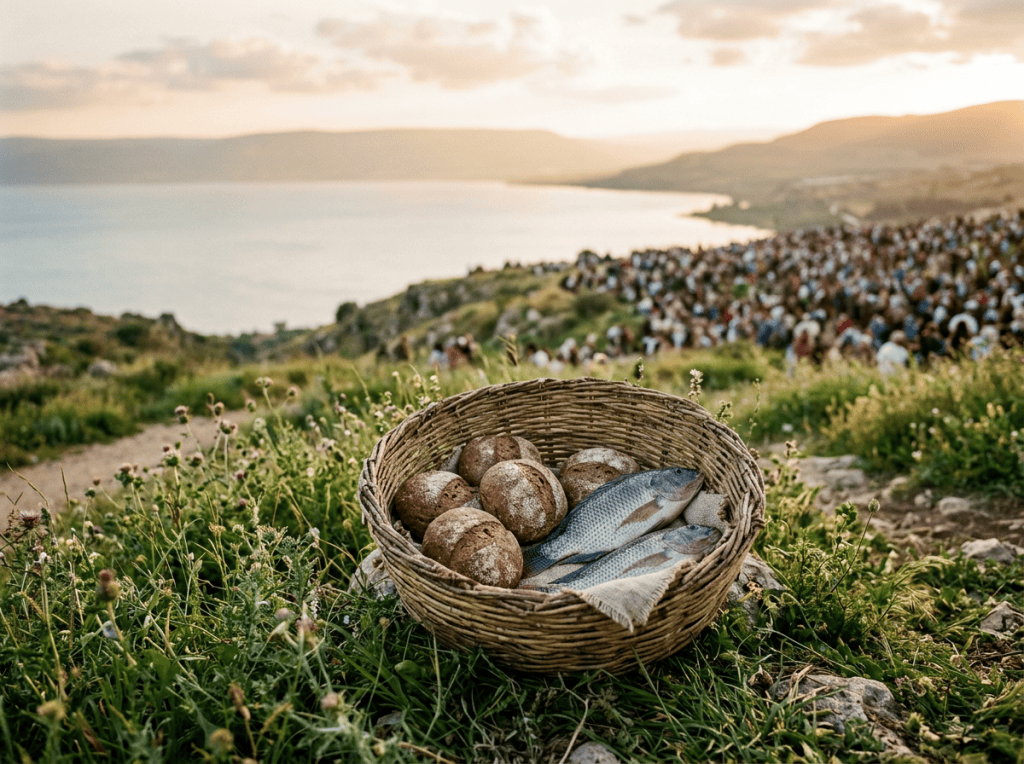
Then we stood among thousands of hungry people. We remembered the miracle of the loaves and fish. But we also noticed Andrew. He recognized that the available food wasn’t enough. He wasn’t wrong. Five loaves and two fish couldn’t ordinarily feed that crowd. But he still brought the information to Jesus. And somewhere in that crowd was a boy whose name Scripture never records. We remember the miracle. But perhaps we should also remember how easily we dismiss people and contributions when they don’t appear sufficient to solve the problem in front of us.
Before the Rooster Crowed
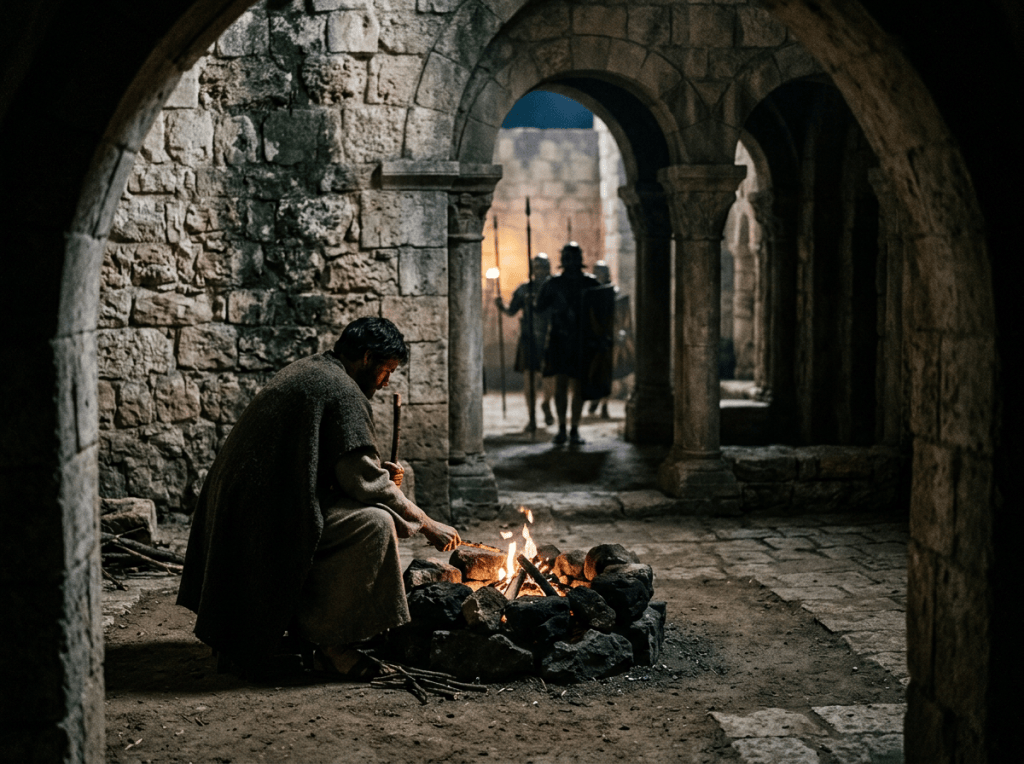
Then we followed Peter into the courtyard. We knew what was coming. Three denials. A rooster. A look from Jesus. Bitter tears. But Peter’s failure wasn’t simply a single moment of weakness. There’d been warnings. There’d been confident promises. There’d been exhaustion, sorrow, and opportunities to pray. There’d been a sword drawn in the garden and a frightened disciple following at a distance. Peter sincerely believed he would remain faithful. But sincerity wasn’t enough. We remember the failure because we know how devastating it was. Yet the decisions leading toward it are where we find warnings that might help us recognize our own vulnerability before we make the same mistake.
What Did We Miss?
Now I want to ask a different question.
How many times have we read these stories?
How many sermons have we heard about Joseph?
How many lessons have we learned from David?
How many times have we celebrated Ruth’s loyalty, Esther’s courage, Elijah’s faith, the feeding of the five thousand, or Peter’s restoration?
And how many times have we passed over the people and circumstances surrounding those familiar moments?
Not because the details were hidden. Not because Scripture failed to mention them. But because we already knew what we were looking for.
We knew the lesson before we opened the passage. We knew the ending before we started reading. And sometimes we were so focused on finding what we expected that we overlooked what was actually there.
That should concern us. Because the Bible isn’t the only place where we do this.
We Do This to People
Think about the people in your life. How many have you already decided you understand?
You know their personality. You know their habits. You know how they usually respond. You know what they believe. You know what they’re likely to say before they say it. And because you know them so well, you sometimes stop paying attention.
You hear their words through the filter of what you expect them to mean. You interpret their behavior according to what they’ve done before. You assume you understand their motives because you’ve seen similar behavior in the past.
But what if something has changed?
What if the person you think you know is struggling with something you haven’t noticed?
What if the behavior you’ve already explained away is connected to something you don’t understand?
What if you’re so familiar with the person standing in front of you that you’ve stopped seeing them clearly?
Joseph noticed that two men looked troubled. Would we?
Boaz recognized that Ruth needed protection. Would we?
Mordecai recognized that Esther possessed an opportunity to help. Would we?
Andrew noticed a boy carrying food. Would we?
Or would we be too occupied with the story we’ve already decided is happening?
The Danger of Being Certain
There’s a difference between knowing something and assuming we know everything that matters. Experience is valuable. Knowledge is valuable. Understanding Scripture is essential. But familiarity can become dangerous when it convinces us that we no longer need to examine what we’re seeing.
The religious leaders Jesus confronted weren’t criticized because they studied Scripture. They were confronted because the Scriptures they studied testified about Christ, and they refused to come to Him. Their knowledge hadn’t produced the response the testimony demanded. That’s a warning we should take seriously.
We can know the right words and still fail to respond to the truth in front of us. We can recognize the right principles and still overlook the people those principles require us to love. We can explain compassion while ignoring someone who needs it. We can teach integrity while making excuses for our own compromises. We can preach humility while refusing to consider that our understanding might be incomplete. And we can become so comfortable explaining what everyone else should learn from Scripture that we stop allowing Scripture to confront us.
Read What Is There
This isn’t an invitation to invent hidden meanings. Every detail in Scripture doesn’t contain a secret message waiting to be discovered.
We shouldn’t manufacture motives, invent conversations, or force ordinary circumstances into elaborate spiritual symbolism.
Sometimes the text doesn’t tell us what someone was thinking. Sometimes we don’t know why a particular event happened. Sometimes the most faithful thing we can say is, “Scripture doesn’t tell us.” But we should be equally careful not to ignore what Scripture does tell us.
The context matters. The questions matter. The people matter. The circumstances matter. And the difference between what the text says and what we’ve always assumed it means matters.
We should approach Scripture with enough humility to allow it to challenge even our most familiar interpretations. Not because every familiar interpretation is wrong. But because our understanding is never beyond correction.
The Story Happening Around You
Now consider something. You’re surrounded by stories you don’t fully understand. The person sitting beside you in church has a story. The coworker who frustrates you has a story. The cashier who seems distracted has a story. Your spouse has a story. Your children have stories. And those stories continue unfolding even when you aren’t paying attention.
You may know a great deal about those people. You may have known some of them for decades. But you still don’t know everything happening inside their lives.
You don’t know every burden they’re carrying. You don’t know every fear they’re confronting. You don’t know every question they’re afraid to ask. And you don’t always recognize how your own decisions affect what happens next.
That’s where this series stops being an exercise in reading biblical narratives and becomes a challenge to the way we live. Because the same habits that cause us to overlook details in Scripture can cause us to overlook people in our lives.
We focus on the outcome. We concentrate on our own responsibilities. We decide what matters. And we miss what’s happening right beside us.
Don’t Miss the Middle
We began this series with the Good Samaritan. A lawyer asked Jesus who his neighbor was. Jesus answered with a story about a wounded man, two religious figures who passed him by, and a Samaritan who stopped to help. The lawyer wanted to know where the boundaries of his responsibility ended. Jesus challenged him to consider what it meant to become a neighbor through mercy. And then Jesus told him to go and do likewise.
That’s where I want to leave us.
Not with another familiar story to admire. Not with another lesson to file away. But with a question.
What are we walking past because we’re too focused on where we’re going?
Who needs us to notice?
Who needs us to listen?
Who needs us to speak?
Who needs us to act?
What responsibility have we overlooked because it doesn’t appear important enough, or we don’t’ feel qualified to handle?
What warning have we dismissed because we’re too confident in ourselves?
What truth have we failed to recognize because it doesn’t fit the explanation we’ve already accepted?
We can’t know everything. We can’t see every need. We can’t carry every burden. But we can become more attentive. We can become more willing to listen. We can examine our assumptions. We can recognize the limits of our understanding. And we can stop treating the people around us as supporting characters in a story that belongs only to us.
The Bible is filled with people whose lives mattered long before we understood why they were included in the story.
The same is true of the people standing around us. We may never know the full significance of a conversation, a decision, an act of compassion, or a moment of restraint. But we don’t need to know the ending before we recognize our responsibility in the present.
So the next time you open your Bible, pay attention to the parts you usually skip. And the next time you look at someone you’ve known for years, remember that there may still be something about their story you haven’t understood. Because sometimes the most important thing we’ve overlooked isn’t a detail in an ancient account.
Sometimes it’s a person standing right in front of us.
And sometimes the question isn’t whether God has given us enough information to understand the whole story.
It’s whether we’re paying attention to the part He’s already placed in front of us.




Leave a Reply