
(Part 3 of 8)
⚓ Floatie: Control Begins Where Trust Ends
1 Samuel 13:12 I said, ‘Now the Philistines will come down against me at Gilgal, and I have not sought the favor of the Lord.’ So I forced myself, and offered the burnt offering.(ESV)
Control always enters the room when trust walks out. Fear exposes where we feel unsafe. Control is the strategy we use to make ourselves safe again. Control is not random. Control is the most common substitute for trust in all of Scripture.
✒️ Forge: The Anatomy of Control
1. Control Begins as a Survival Reflex
After the Fall, every human instinct was rewired around self-preservation:
- hide (Genesis 3:8),
- shift blame (Genesis 3:12–13),
- gather information (Genesis 3:7),
- secure an advantage (Genesis 3:5).
These are the roots of control — not rebellion at first, but self-protection in a suddenly dangerous world.
It is not sinful to feel the impulse to protect yourself. It becomes sinful when the impulse overrules obedience.
2. Control Becomes Sin When It Replaces Trust
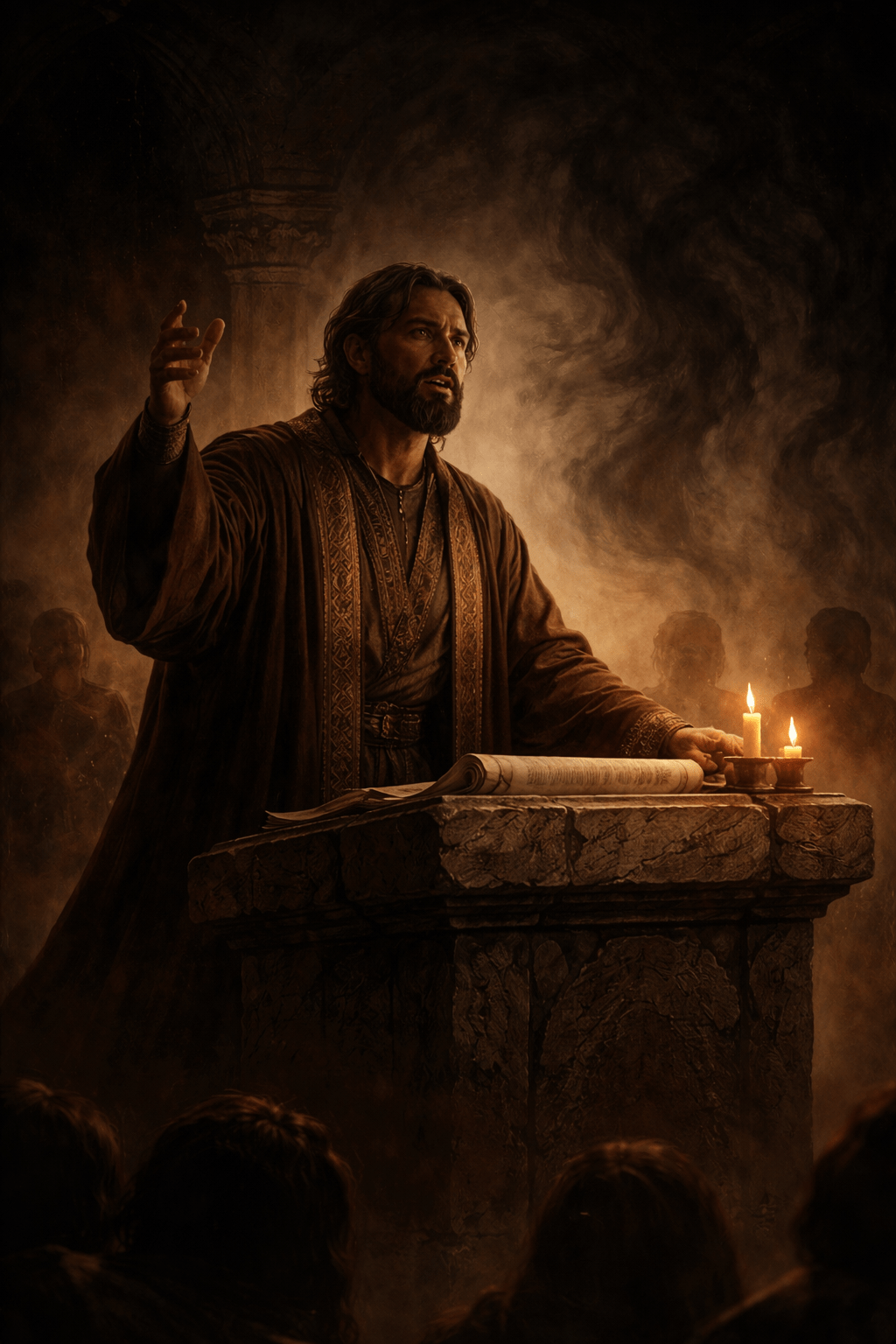
Saul is the first king of Israel and the first man in Scripture to demonstrate the full anatomy of control.
Fear of the unknown (Part 2) leads to self-reliance:
1 Samuel 13:11–12 (11)Samuel said, “What have you done?” And Saul said, “When I saw that the people were scattering from me, and that you did not come within the days appointed, and that the Philistines had mustered at Michmash, (12)I said, ‘Now the Philistines will come down against me at Gilgal, and I have not sought the favor of the Lord.’ I forced myself, and offered the burnt offering.”(ESV)
Saul’s logic is familiar:
- God seems late.
- Pressure is mounting.
- People are watching.
- Outcomes look bad.
- Something must be done.
“It’s up to me now.” This is control — obedience vetoed by fear.
3. Control Always Preserves Self Before It Obeys God
The first human act after sin was hiding, not repentance:
Genesis 3:10 And he said, “I heard the sound of you in the garden, and I was afraid, because I was naked, and I hid myself.”(ESV)
Hiding is a form of control. It says: “I will protect myself from consequences and exposure.”
Other expressions include:
- Perfectionism (“If I do everything right, nothing can go wrong.”)
- Micromanagement (“If I oversee every detail, I won’t be hurt.”)
- Withholding emotions (“If no one sees my need, they can’t reject me.”)
- Overplanning (“If I anticipate everything, nothing can blindside me.”)
- Refusing delegation (“No one else can be trusted.”)
- Relational distance (“Control protects me from intimacy.”)
Every form of control is an attempt to rewrite reality so we never have to trust God.
4. When Control Works, It Becomes a Functional God
This is the most dangerous part.
Control often works — temporarily.
- It stabilizes chaos.
- It creates predictability.
- It reduces uncertainty.
- It earns human approval.
- It avoids emotional risk.
This is why control is addictive. But it is also why God tears it down. Because control becomes a rival deity.
Jesus confronts this directly:
Matthew 16:25 For whoever would save his life will lose it, but whoever loses his life for my sake will find it.(ESV)
You cannot cling to control and follow Christ. The two are mutually exclusive.
5. Control Pretends to Be Responsibility — But It’s Actually Distrust
Many believers confuse control with diligence. But biblical diligence is obedience to God’s command. Control is obedience to your fear.
The difference is simple:
- Responsibility acts within God’s will.
- Control acts apart from God’s will.
Proverbs exposes this:
Proverbs 16:9 The heart of man plans his way, but the Lord establishes his steps.(ESV)
Planning is good. Demanding control is not.
⚒️ Anvil: What You Control Reveals What You Do Not Trust God With
If you want to locate your deepest distrust, ask: “What must always go my way for me to feel secure?”
Where you demand control, you reveal:
- your greatest fear,
- your deepest insecurity,
- your most fragile identity,
- your smallest view of God.
Control is not about circumstances — control is about protecting the self you do not believe God will protect. This is why God will confront it, resist it, and dismantle it in every believer He intends to mature.
🔥 Ember: Control Breaks You Before It Breaks the Situation
Control always promises relief. It always delivers collapse.
Because control:
- isolates you,
- exhausts you,
- blinds you to God’s provision,
- poisons relationships,
- sabotages obedience,
- and inflates fear instead of resolving it.
You do not become safe by controlling life. You become safe by surrendering to the One who controls life. And here is the deepest truth: The moment you feel the need to control is the moment you forgot you are held.
🌿 Covenant Triumph: God Does Not Ask You To Hold Everything Together — He Holds You
God does not demand that you master outcomes. God does not command you to secure your own future. God does not expect you to manage every variable.
His covenant promise is the opposite:
Isaiah 46:4 even to your old age I am he, and to gray hairs I will carry you. I have made, and I will bear; I will carry and will save.(ESV)
Control collapses under weight. God does not.
Psalm 55:22 Cast your burden on the Lord, and he will sustain you; he will never permit the righteous to be moved.(ESV)
The covenant triumph of this message is simple: You were never asked to hold your life together. You were asked to trust the God who holds you together.
Control ends where covenant begins.
The Practice of Obedience: Releasing the Grip
For this message, obedience requires you to release control in one specific area and let God reclaim the space your fear has dominated.
1. Physical Act: Leave One Thing Uncontrolled
Choose one area where you normally tighten your grip:
- your schedule
- your household routine
- your inbox
- your spending
- your environment
- your planning
- your metrics
- your daily structure
Leave one of them imperfect for a day. Do not fix it. Say aloud: “My security is not in my control.”
2. Relational Act: Admit Your Control to Someone Affected By It
This is the hardest part. Tell one person who has felt your control: “I realize I have been trying to control this area. I’m choosing to release it.”
Do not justify it. Do not explain it. Name it plainly. This act breaks the secrecy that fuels control.
3. Spiritual Act: Confess the Fear Behind the Control
Pray this honestly: “Lord, reveal the fear underneath my control. Show me the place where I do not trust You.”
Write down what He reveals.
[⚓ Floatie] [✒️ Forge] [⚒️ Anvil] [🔥 Ember] [🌿 Covenant Triumph]
This post follows the Forge Baseline Rule—layered truth for the discerning remnant.



 Walking With Christ
Leave a reply to cleaners4seniors Cancel reply