(Part 16 of 17)
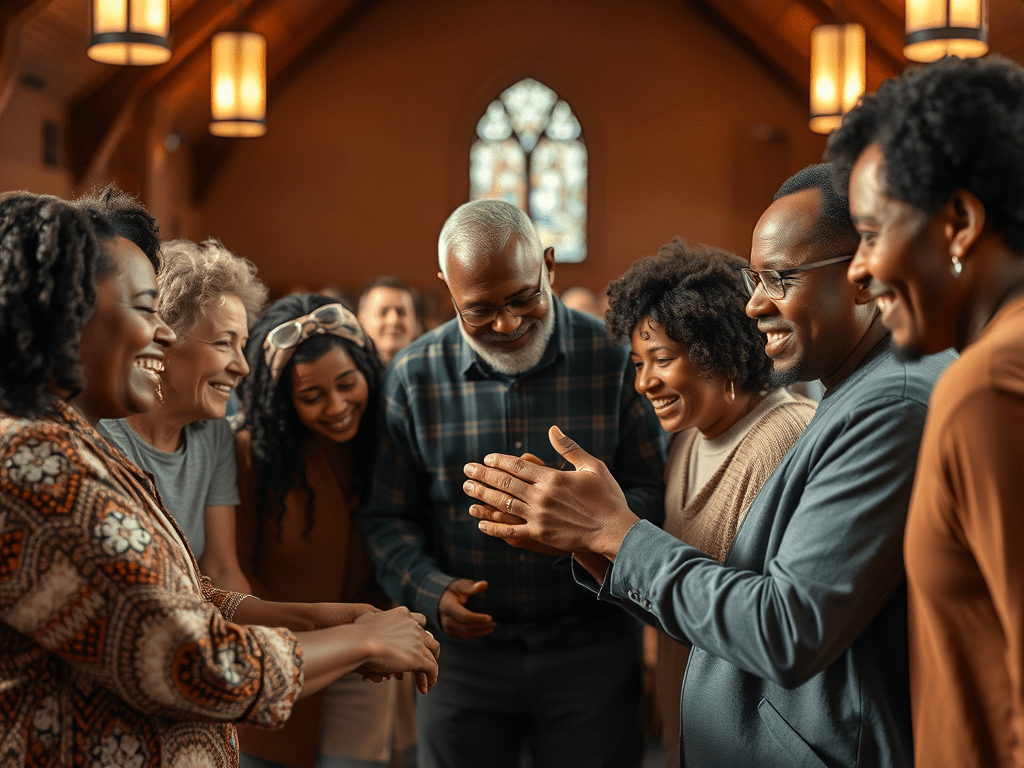
⚓ Floatie: Healing Isn’t Finished Until It Touches Community
John 13:35 By this all people will know that you are my disciples, if you have love for one another.(ESV)
Notice what Jesus didn’t say:
- Not “if you perform miracles.”
- Not “if you speak boldly.”
- Not “if you have theological accuracy.”
- Not “if you attend every service.”
- Not “if you avoid sin.”
He said: “if you have love.” A durable soul’s internal healing is only complete when it becomes external fruit — specifically, how you treat the church family around you.
Everything in Durable Souls so far has pointed inward, clearing the battlefield, rebuilding the architecture, restoring rest. Now we pivot outward: the healed believer inside the Body.
✒️ Forge: The Three Ways Wholeness Transforms Community
When the soul becomes unified, three things always change in the way the believer interacts with others:
- Love becomes intentional rather than impulsive.
- Leadership becomes stewardship rather than control.
- Church fellowship becomes covenant rather than consumption.
Let’s walk through each one.
1. Love Becomes Intentional Instead of Impulsive
Before healing:
Love is often:
- reactive,
- performative,
- guilt-driven,
- need-based,
- fear-driven,
- inconsistent,
- self-protective.
People “love” in order to:
- avoid rejection,
- avoid conflict,
- feel needed,
- feel spiritual,
- keep peace artificially,
- earn belonging.
This is not biblical love. This is emotional survival.
After healing:
Love becomes:
- deliberate,
- stable,
- fearless,
- self-aware,
- wise,
- strong,
- consistent.
A durable soul loves without:
- losing itself,
- projecting wounds,
- hunting for affirmation,
- rescuing dysfunction,
- enabling sin,
- fearing abandonment.
Love becomes a choice the soul can actually sustain. This is the “as I have loved you” love Jesus commanded.
2. Leadership Becomes Stewardship, Not Control
Before healing:
Spiritual leadership (formal or informal) is often:
- emotionally reactive,
- overconfident or underconfident,
- boundaryless,
- controlling,
- insecure,
- afraid of conflict,
- addicted to affirmation,
- susceptible to manipulation,
- threatened by gifted people.
This is why so much spiritual abuse exists. Fractured people in leadership behave from wounds.
After healing:
Leadership becomes:
- calm,
- discerning,
- measured,
- humble,
- courageous,
- patient,
- protective,
- transparent.
The durable soul leads from:
- clarity instead of ego,
- conviction instead of fear,
- discernment instead of insecurity,
- compassion instead of fragility.
They shepherd others because they are no longer fighting their own internal war. This is what Christ meant by “whoever would be great among you must be your servant.”
3. Church Becomes Covenant Instead of Consumption
Before healing:
Most modern believers interact with church as:
- content to consume,
- music to feel,
- sermons to evaluate,
- services to attend,
- programs to choose,
- leaders to critique or idolize.
Community becomes a spiritual shopping mall.
This mindset creates:
- church hopping,
- spiritual stagnation,
- shallow friendships,
- consumer Christianity,
- emotional volatility,
- fragmented discipleship.
After healing:
Church becomes:
- family,
- covenant,
- mutual responsibility,
- shared growth,
- relational safety,
- patient accountability,
- a place to pour out,
- a place to be sharpened.
Attendance becomes presence. Presence becomes connection. Connection becomes service. Service becomes love. The durable soul stops asking: “What does this church offer me?” and starts asking: “What does God want to build in this community through me?”
This is the New Testament church.
⚒️ Anvil: What Community Looks Like for the Durable Soul
When a unified soul enters a fractured community, these practical shifts become visible:
1. They don’t need the church to be perfect.
They aren’t looking for a flawless pastor, flawless theology, flawless programs. They are looking for truth, presence, and alignment. And they bring maturity into imperfect spaces.
2. They handle conflict redemptively.
Not avoiding. Not escalating. Not gossiping. Not withdrawing. They walk conflict to reconciliation — with compassion and strength in equal measure.
3. They see through manipulation instantly.
Their discernment is too sharp. Their mind is too clear. Their soul is too integrated. False teaching, emotional coercion, celebrity dynamics, and cultic behaviors stand out like flashing alarms. They protect others from what once trapped them.
4. They build trust slowly and honestly.
Not rushing into intimacy. Not withholding affection. But discerning, stable, healthy connection that strengthens both sides.
5. They give generously — but wisely.
Their compassion isn’t naive. Their generosity isn’t self-erasing. Their service isn’t codependent. Their love isn’t gullible. They bless without being exploited.
6. They carry peace into anxious rooms.
Just as in Durable Souls Part 11, the durable soul changes the atmosphere of the Body. They become stabilizing forces in small groups, eldership conversations, prayer gatherings, and community relationships. The church becomes healthier simply because they are there.
7. They reproduce health.
Others start healing simply by being around them. Durability is contagious. Healing propagates through example. Wisdom multiplies through proximity. The durable soul becomes a quiet revival inside any community they inhabit.
🔥 Ember: My Witness to Wholeness Inside Community
I have experienced community as a fractured soul and as a unified one. The difference is not subtle.
Before healing:
- every sermon was filtered through shame,
- every conflict felt unsafe,
- every relationship felt unstable,
- every ministry responsibility felt overwhelming,
- every leader felt threatening or disappointing,
- every correction felt condemning,
- every vulnerability felt risky,
- every worship moment felt fragile.
After healing:
- sermons clarified instead of stung,
- conflict became growth instead of fear,
- leadership became partnership instead of threat,
- relationships became rooted instead of volatile,
- ministry became sustainable instead of draining,
- vulnerability became fellowship instead of exposure,
- presence became home instead of performance.
I became the same person internally in every community setting externally. This is the fruit of a durable soul.
🌿 Covenant Triumph: Wholeness Makes the Church Whole
The Body of Christ does not need perfect people. It needs unified people.
People who:
- discern wisely,
- love steadily,
- serve humbly,
- lead gently,
- protect boldly,
- forgive honestly,
- repent quickly,
- stand firmly.
Durable souls repair churches because they no longer bring fragmentation into the Body. They bring integration. Healing becomes communal. Durability becomes contagious. Wholeness becomes catalytic.
This is why Christ heals at the soul-level — because His kingdom is built on healthy people, not merely saved ones.
The final message of the subseries — Durable Souls Part 17: The End of the Fracture — A Call to Live as a Whole Person in a Broken Age — will tie the entire arc together, function as its capstone, and prepare the transition into the main Practical Christianity line.
[⚓ Floatie] [✒️ Forge] [⚒️ Anvil] [🔥 Ember] [🌿 Covenant Triumph]
This post follows the Forge Baseline Rule—layered truth for the discerning remnant.




 Walking With Christ
Leave a reply to Don Cancel reply