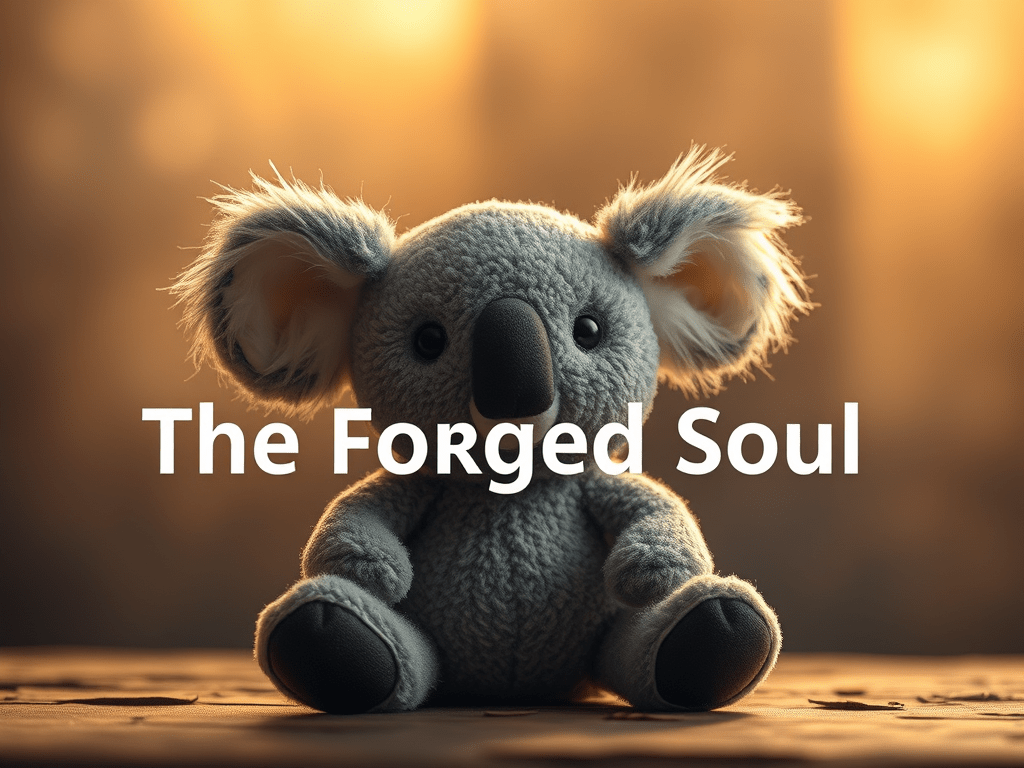
Prologue Introduction
Part One of Practical Christianity asked a simple question: What does Scripture say about the Christian life—faith, forgiveness, identity, prayer, endurance—and how do these truths shape the believer from the inside out? Every message in that first section was designed to build a foundation: not a list of doctrines to memorize, but a way of thinking, living, and evaluating the world that rests entirely on the character of Christ. Those early messages were about preparing the heart.
Part Two turns the lens outward.
Now we ask a harder question: How does a Christian walk through a world shaped by trauma, anxiety, politics, sexuality, money, technology, and cultural confusion—and still remain faithful to Christ? This shift matters because the Bible was never meant to be studied in isolation or theory. It was meant to confront the real fractures of our age. Where Part One focused on biblical truths that require practice, Part Two focuses on real-world issues that require a biblical backbone. You will feel the difference immediately: the stakes rise, the topics get heavier, and the disguises fall away.
That is why The Forged Soul stands at the doorway of this new section.
Before we examine the world, we must tell the truth about the people walking into it. We must name what trauma builds, what suffering shapes, what survival demands—and how Christ meets us even in the places where our language runs out. This message is not an appendix to the first half or an introduction to the second. It is the bridge between the two, the hinge, the turning point. Without this pivot, the rest of Part Two would feel detached and disjointed.
But with it, everything that follows becomes clear.
⚓ Floatie: The Boy, the Bear, and the God Who Stayed
Psalm 27:10 For my father and my mother have forsaken me, but the Lord will take me in.(ESV)
When I was a kid, I didn’t have a comfort blanket. What I had was a small stuffed koala named Pete—gray, soft, unremarkable, but absolutely vital. When my home split, when the adults in my life couldn’t hold their own worlds together—much less mine—Pete became the one steady thing in the middle of chaos. He came with me everywhere. Then he stayed on my bed when I left for school. Later, he stayed in my bag when I was homeless. He sat on my dresser when I lived with my dad. He moved with me into my marriage, into my adulthood, into the house where he still lives today.
I didn’t know it then, but Pete wasn’t about comfort. He was about presence. He was about not being alone. He was about surviving the nights when fear tasted like metal and grief tasted like bile. I didn’t know it then, but God was already there—not in the bear, but in the boy who refused to let go of the last thing he trusted.
Some people grow up with guardian angel stories. I grew up with a koala named Pete.
But looking back with adult eyes and redeemed memory, I can see the truth: A hand was on my life long before I knew His name.
✒️ Forge: How Trauma Teaches a Child to Survive Without Teaching Them How to Live
Trauma doesn’t teach children how to cope. It teaches them how to endure.
Pete wasn’t just a toy. He was an anchor point—a tether that kept the world from feeling bottomless.
When a child can’t rely on:
- parents,
- consistency,
- affection,
- safety,
…the child will cling to anything that doesn’t disappear.
That’s not weakness. That’s survival engineering. It’s the soul’s way of saying, “I will not die here.”
And when children survive long trauma without guidance, they learn things adults never intend to teach:
- Presence = safety
- Absence = danger
- Emotion = a luxury
- Imagination = a weapon
- Pattern recognition = armor
- Truth = oxygen
- Masks = detectable
- And vulnerability = something to avoid at all costs
The world calls this dysfunctional. But God calls it resilient.
Psalm 34:18 The Lord is near to the brokenhearted and saves the crushed in spirit.(ESV)
I didn’t know it then, but the God who would one day call me was already strengthening the scaffolding of a child who refused to break.
⚒️ Anvil: What Remains When Everything Human Is Stripped Away
This is the part most people never talk about—not because it’s dramatic, but because it’s honest.
If trauma lasts long enough…
If the world collapses hard enough…
If hunger bites deep enough—physically, emotionally, spiritually—you discover a version of yourself most people never meet.
Not a monster. Not evil. Not possessed. Just the core, the engine. The raw, unfiltered, unadorned human will.
It is:
- cold because warmth requires safety
- focused because distraction costs survival
- emotionless because emotion burns energy
- relentless because giving up isn’t an option
- perceptive because ignorance is fatal
- honest because lies waste time
Most people never reach that state. Most people never need to. Most people fear it because they’ve never stood where everything unnecessary is burned away.
But those who have survived long-term trauma know this truth:
When everything else is stripped away, what remains is not evil.
What remains is you—the part God built from bedrock.
The danger isn’t in seeing your core. The danger is not knowing the difference between your core and the shadow that tries to replace it.
Ephesians 6:12 For we do not wrestle against flesh and blood, but against the rulers, against the authorities, against the cosmic powers over this present darkness, against the spiritual forces of evil in the heavenly places.(ESV)
There is a malevolent force that waits for the stripped-down moment—the spiritual parasite, the entity of untruth, the whisper that says: “Let me take over. You’ve suffered enough. Let me decide for you.”
That’s where people fall. But I didn’t.
And if you’ve survived similar things, neither did you. Because the core God built—the one forged in childhood nights, hunger, abandonment, and silence—is stronger than the shadow that wants to devour it.
🔥 Ember: The Return—Choosing Humanity After You’ve Seen the Depths
Survival mode isn’t living. It’s enduring. The miracle isn’t that I discovered my core. The miracle is that I came back from it.
Back into:
- relationship
- covenant
- conscience
- compassion
- chosen goodness
- chosen restraint
- chosen truth
Goodness that is chosen is the only goodness that matters.
Anyone can be kind when the world is kind. But only those who have stood at the bottom of themselves can choose kindness when the world gives them no reason to. Only those who have stood in the shadow return with the ability to say: “I know what waits in the dark. I refuse to let it replace me.”
This is where Christ enters—not as a comfort, but as a Commander. Not as a therapist, but as a Redeemer who meets you in the basement of your soul and leads you back upstairs.
Trauma survivors don’t need clichés. We need resurrection.
🌿 Covenant Triumph: Pete Stayed—But I Grew
Pete still sits in my house. Not because I need him anymore, but because he is part of the story.
I don’t need a stuffed koala now.
I don’t need to check that he’s on my bed.
I don’t need the anchor of childhood coping.
Because my wife stands where Pete once stood—not as a comfort blanket, but as covenant.
Because Christ stands where fear once lived—not as an idea, but as presence.
Because the boy who clung to a bear is gone.
But the man forged from those years now reaches back to tell others:
You can survive.
You can endure.
You can descend into the depths and still come home.
You can be stripped to your core and still return with something holy intact.
Pete taught me presence. Trauma taught me truth. Christ taught me resurrection.
And if you’ve lived through the kind of darkness I have—if you’ve felt alone long enough to taste it—hear me clearly:
You are not alone now.
You never were.
And you can come back from the depths.
I did.
[⚓ Floatie] [✒️ Forge] [⚒️ Anvil] [🔥 Ember] [🌿 Covenant Triumph]
This post follows the Forge Baseline Rule—layered truth for the discerning remnant.






 Walking With Christ
Leave a reply to RW – Disciple of Yahshua Cancel reply