⚓ Floatie: Prison with Pharaoh’s Officials
Genesis 40:2–3 (2)And Pharaoh was angry with his two officers, the chief cupbearer and the chief baker, (3)and he put them in custody in the house of the captain of the guard, in the prison where Joseph was confined.(ESV)
Joseph was innocent. Yet he found himself in prison between two offenders—one restored, one condemned.
✒️ Forge: Offense and Sin
We don’t know what the cupbearer and baker did. Maybe it was serious. Maybe Pharaoh had a stomachache. Maybe it was nothing at all. That’s the point—Pharaoh defined offense. In his court, anything that displeased him was sin.
That’s what sin is: falling short of the ruler’s standard. Pharaoh defined offense in Egypt. God defines sin in eternity. Human justice is often arbitrary. Divine justice is absolute.
⚒️ Anvil: The Innocent in the Middle
Joseph stood in the middle, interpreting their fate. One man was lifted up, the other cut down.
Do you see the parallel? At Calvary, two thieves hung beside Jesus. We don’t know their exact crimes either. They were guilty by Rome’s standard, but Rome’s justice was arbitrary—just as Pharaoh’s was. What matters is that the innocent one stood in the middle.
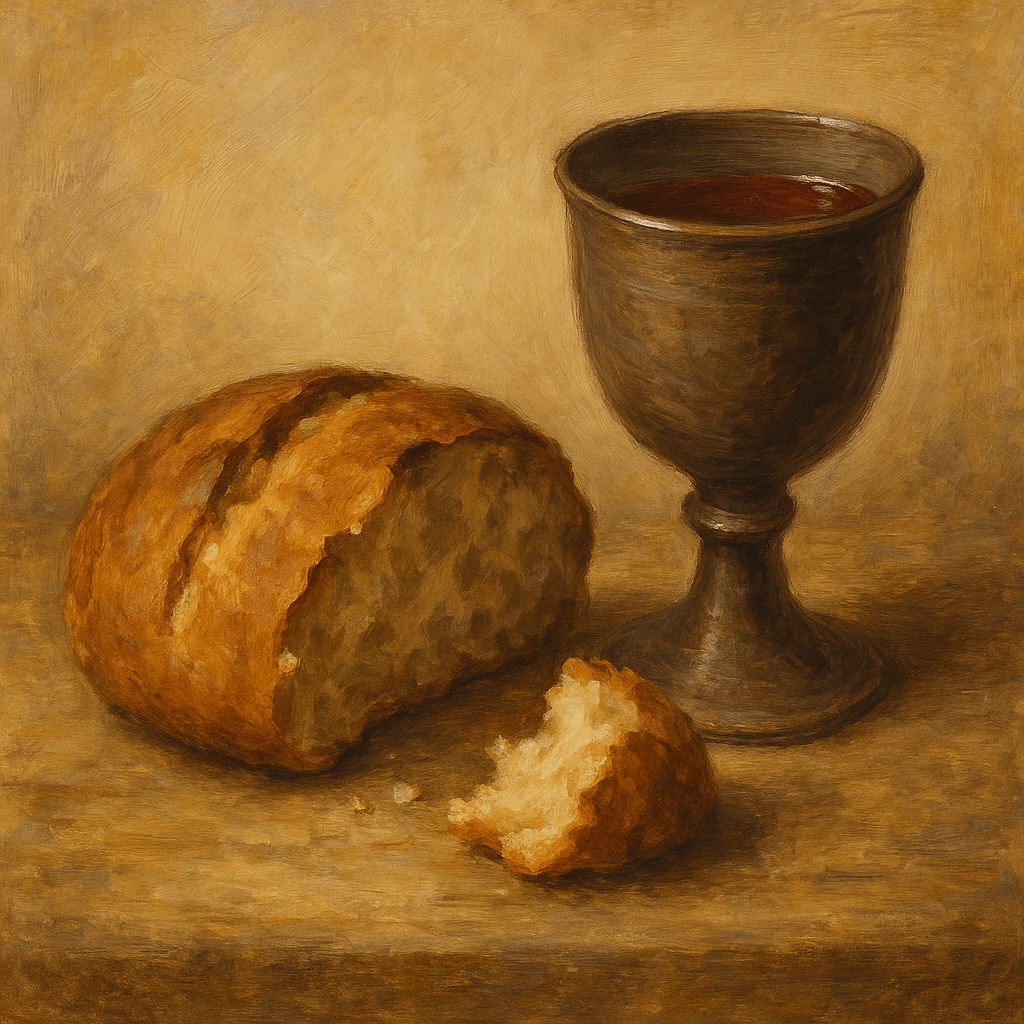
- The baker’s bread was broken; he was executed.
- The cupbearer’s cup was lifted; he was restored.
- One thief mocked Jesus and was lost.
- One thief appealed to Jesus and was promised paradise.
Different centuries, different rulers—but the same pattern: two guilty, opposite fates, an innocent mediator in the middle.
🔥 Ember: Bread Broken, Cup Lifted
Bread and wine echo through the story of redemption. Melchizedek offered bread and wine to Abram in the Valley of the Kings. Jesus offered bread and wine at the Last Supper, His body broken and His blood poured out.
In Pharaoh’s prison, bread was broken and wine was lifted. At Calvary’s cross, one thief perished and one was restored. In both stories, the innocent in the middle bore the weight of judgment and the hinge of mercy.
🌿 Covenant Triumph: Lifted from the Pit
Genesis 41:14 Then Pharaoh sent and called Joseph, and they quickly brought him out of the pit.(ESV)
Joseph was lifted out of the pit to stand before Pharaoh, just as Jesus was lifted out of the grave to stand before the Father. Bread and wine—the baker and cupbearer—were not random characters. They were prophetic echoes of the covenant itself.
The innocent man in the middle became the filter of judgment, the interpreter of destinies, the mediator between wrath and grace.
[⚓ Floatie] [✒️ Forge] [⚒️ Anvil] [🔥 Ember] [🌿 Covenant Triumph]
This post follows the Forge Baseline Rule—layered truth for the discerning remnant.
Reflection Questions
- Why do you think Scripture leaves the cupbearer, baker, and the thieves unnamed, and their crimes vague?
- How does this shift your focus away from “what they did” and onto “who stood in the middle”?
- The baker’s bread was broken, the cupbearer’s wine was lifted. At the cross, one thief mocked, the other pleaded. Which side of that binary does your life reflect today?
- How does Joseph’s rise from the pit to Pharaoh foreshadow Jesus’ rise from the grave to the Father?






 Walking With Christ
Leave a comment