-

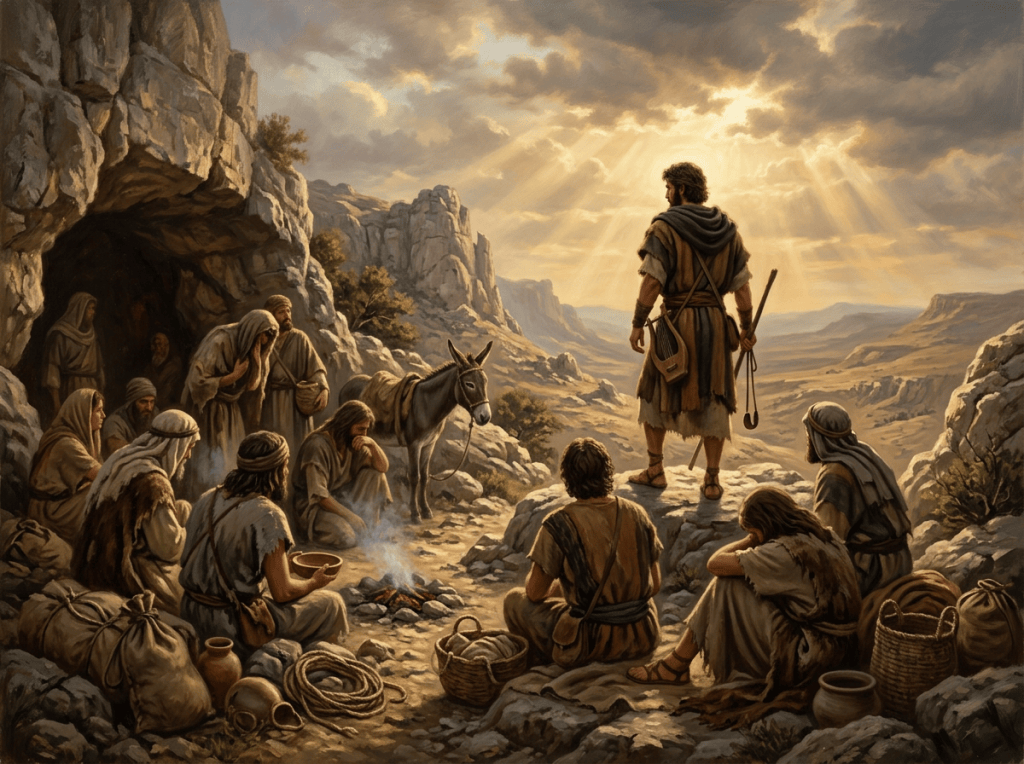
In John 6, Jesus highlights the difference between physical and spiritual nourishment after feeding the five thousand. Many followed Him for food rather than understanding His deeper message as the bread of life. This reflects a persistent human tendency, seen in both ancient and modern contexts, toward self-interest and materialism,…
2–3 minutesContinue reading →: Who Stayed? -
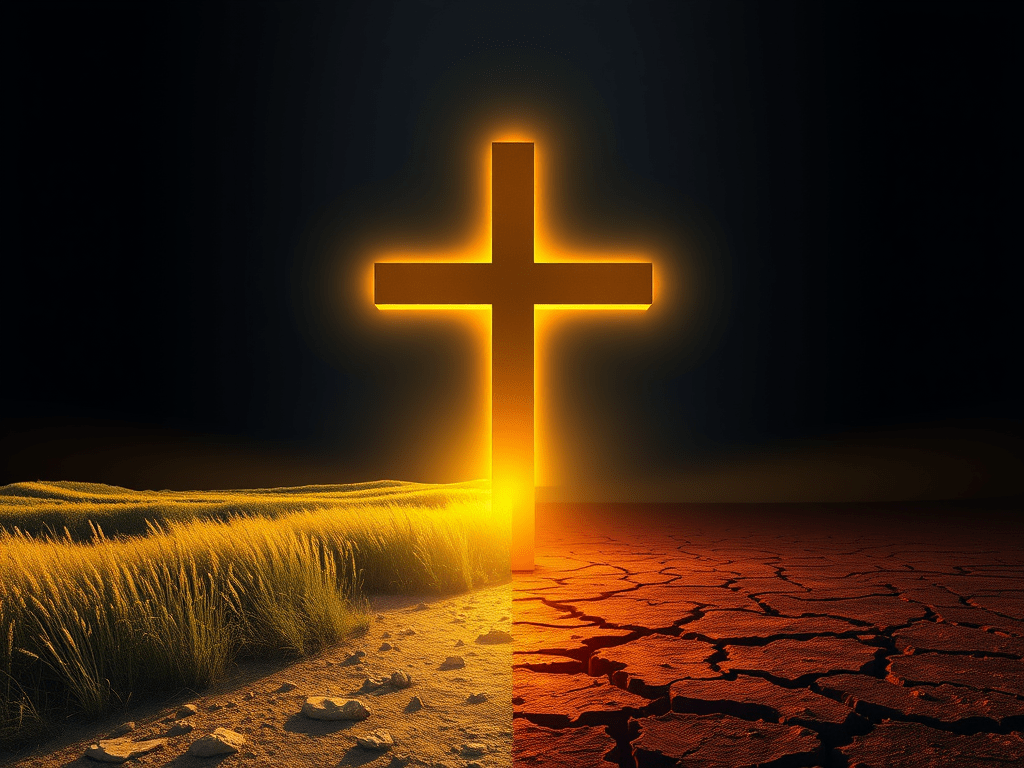
The content discusses the significance of the word “hallowed” in the Lord’s Prayer, highlighting its relation to God’s nature as holy and perfect. It emphasizes the interconnectedness of God’s qualities and contrasts the fulfilling “hallowed” with the emptiness of “hollow.” Ultimately, it poses a choice between spiritual completeness and emptiness.
2–3 minutesContinue reading →: The Lord’s Prayer -

In Jeremiah 2:12-13, God laments that His people have abandoned Him, creating broken cisterns that cannot hold water. This symbolizes self-inflicted emptiness and disrepair. Without submission to the Holy Spirit, individuals invite negativity and destruction. The author emphasizes the importance of surrendering to God’s will to achieve spiritual fulfillment and…
2–3 minutesContinue reading →: Broken Cisterns -

In John 12:27, Jesus grapples with His troubled soul, embracing His inevitable death for humanity’s salvation. His purpose reflects the importance of each individual’s unique mission, crafted by God. Life’s challenges prepare us for our roles, reminding us that we are meant to fulfill our designated paths, despite difficulties.
1–2 minutesContinue reading →: A Single Purpose -

The content explores how the meanings of biblical terms like “peace,” “hope,” and “meek” have changed over time. It emphasizes that original definitions convey wholeness, confident expectation, and strength under control, respectively. Understanding these original contexts is vital for grasping the true messages of the scriptures.
1–2 minutesContinue reading →: What’s In a Word? -

The passage reflects concerns about false teachings in Christianity, highlighting that many prefer comforting messages over difficult truths. It warns against teachers who appeal to emotions for personal gain, likening them to “emotional drug pushers.” The author emphasizes the importance of seeking genuine truth as taught in the Bible.
2–3 minutesContinue reading →: Settled Truth? -

In Matthew 7, the metaphor of trees and their fruits illustrates the concept of discernment. Healthy trees produce good fruit, while diseased ones yield bad fruit, which can spread if untreated. Just as unhealthy trees may need removal to protect the orchard, individuals must address sin to safeguard their spiritual…
1–2 minutesContinue reading →: Diseased Fruit -

In John 15:16, Jesus emphasizes that He chose His disciples with a purpose, reminding us that our existence is intentional. We are called to produce lasting “fruit” through love, which has eternal significance. Our goal should be to discover and fulfill this divine purpose throughout our lives.
1–2 minutesContinue reading →: Learning To Fish -

The passage emphasizes the nature of lies as tools used by Satan to obscure truth and create confusion. It highlights that many who spread falsehoods may genuinely believe them, rather than knowingly deceiving others. The text encourages individuals to wear the armor of God to navigate through deception and find…
1–2 minutesContinue reading →: The Truth in the Lie -

The content discusses the apparent conflict between God’s goodness and the existence of evil. It argues that God is patient and desires everyone to repent, highlighting that humans have free will to choose love. Consequently, decisions lead to consequences, emphasizing that God does not send people to hell; they choose…
1–2 minutesContinue reading →: Why Does God Allow…
1 Corinthians (116) 1 Corinthians 13 (24) 1 John (39) 1 John 4 (21) 1 Kings (29) 1 Peter (38) 1 Samuel (42) 2 Corinthians (100) 2 Corinthians 5 (27) 2 Timothy (41) Acts (82) Colossians (50) Colossians 3 (20) Deuteronomy (49) Ecclesiastes (52) Ecclesiastes 3 (21) Ephesians (89) Ephesians 2 (25) Ephesians 4 (21) Ephesians 5 (22) Ephesians 6 (22) Exodus (73) Ezekiel (32) Faith (21) Galatians (79) Galatians 5 (30) Galatians 6 (26) Genesis (188) Genesis 1 (29) Genesis 2 (58) Genesis 3 (74) Hebrews (127) Hebrews 4 (27) Hebrews 11 (23) Hebrews 12 (25) Isaiah (138) James (111) James 1 (61) James 4 (33) Jeremiah (55) John (221) John 1 (20) John 8 (24) John 14 (33) John 15 (29) Joshua (20) Luke (170) Mark (64) Matthew (276) Matthew 5 (24) Matthew 6 (35) Matthew 7 (46) Matthew 26 (21) Numbers (25) Philippians (82) Philippians 2 (26) Philippians 4 (33) Proverbs (123) Psalm (185) Psalm 23 (25) Psalm 139 (20) Revelation (72) Romans (185) Romans 5 (33) Romans 8 (53) Romans 12 (40)