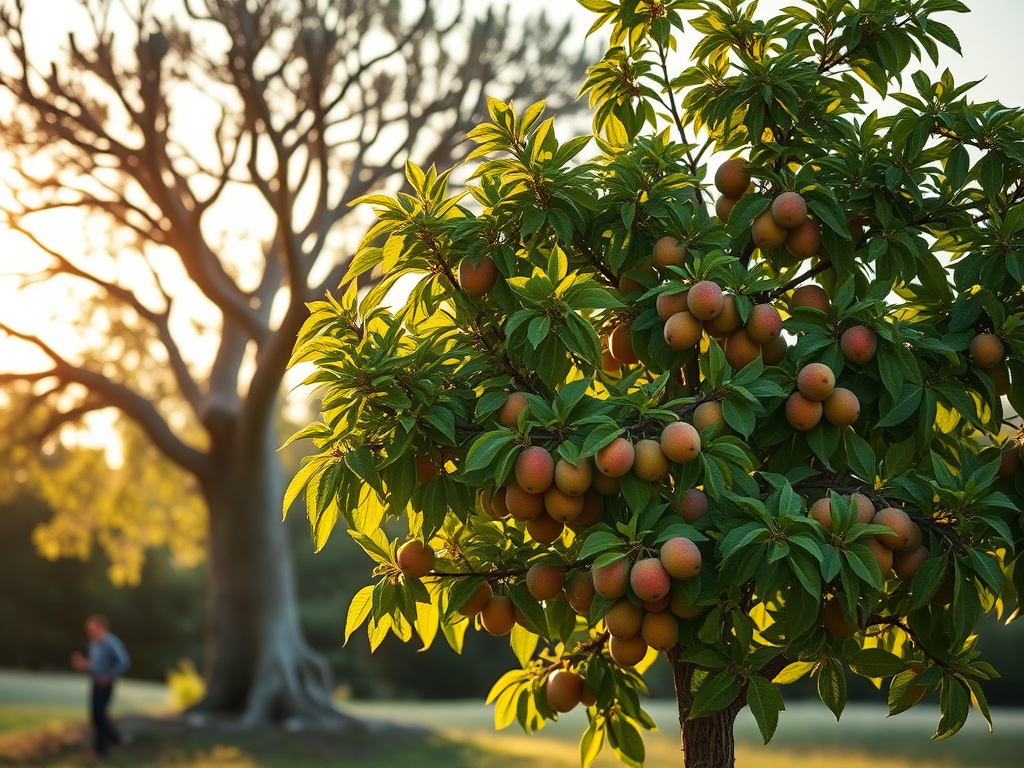
⚓ Floatie: The Healthy Root and the Withering Leaf
Proverbs 16:18 Pride goes before destruction, and a haughty spirit before a fall.(ESV)
Most sermons stop there—as though pride itself is the rot. But pride isn’t evil by design. It’s the natural satisfaction that comes from seeing good fruit grow in the field God gave you to tend. Even God took delight in His work: “And God saw everything that he had made, and behold, it was very good. And there was evening and there was morning, the sixth day.”(Genesis 1:31) That’s divine pride—joy rooted in purpose, not ego.
The danger begins when that pride dries up the soil that once nourished it—when delight in God’s work becomes ownership of it. Pride was created as a mirror; sin turns it into a spotlight.
✒️ Forge: Touching the Fruit
Genesis 3:3 but God said, ‘You shall not eat of the fruit of the tree that is in the midst of the garden, neither shall you touch it, lest you die.’”(ESV)
Notice that last phrase—“neither shall you touch it.” God never said that. Adam added it. It was a fence built out of fear: “If we never touch the fruit, we’ll never risk eating it.” The motive was safety, but the effect was distortion. Once the serpent saw the difference between what God said and what man added, deception became easy.
That’s what happens when churches teach that pride itself is sin. They blur the line between command and caution. They add fences where God planted freedom. When people feel joy over something good—family, work, endurance—and don’t instantly drop dead, they assume Scripture exaggerated the danger. Overcorrection leads straight back to rebellion.
God designed pride to be handled, not hidden. Adam and Eve could have admired the forbidden fruit. They could have studied it, named it, or even used it for shade. The only command was not to consume it. Likewise, we can hold pride in our hands—feel its weight, appreciate its purpose—but the moment we take it in as nourishment for our ego, we begin to die inside.
Healthy pride says, “Look what God allowed me to do.”
Sinful pride says, “Look what I did without God.”
⚒️ Anvil: Handling the Gift Without Eating It
1 Corinthians 4:7 For who sees anything different in you? What do you have that you did not receive? If then you received it, why do you boast as if you did not receive it?(ESV)
The boundary between holy pride and sinful pride lies in ownership. When we take credit for what was meant to be a reflection of grace, we start to feed on the fruit instead of thanking God for the tree. The moment confidence becomes independence, the drought begins.
Here’s how to test the soil:
- Direction of Gratitude: Does your pride make you thank God or forget Him?
- Scope of Vision: Does it invite others to celebrate or demand that they applaud you?
- Tone of the Heart: Does it lead you to serve more or to be served more?
- Memory of Grace: Do you remember who planted, watered, and grew the harvest?
If pride points upward, it irrigates. If it points inward, it scorches.
Healthy pride gives you strength to stand tall without needing others to bow. It’s what lets a parent beam over a child’s victory, a craftsman over a finished work, or a believer over progress hard won through suffering. That pride doesn’t steal glory—it echoes it.
🔥 Ember: The Taste That Teaches Discernment
There’s a moment every believer faces: when God allows you to touch something beautiful and asks, “Will you eat it or offer it back?” It might be recognition, success, influence, or simply endurance after years of pain. The temptation is always the same—taste the praise, drink the glory, keep it for yourself. But the Spirit whispers: “It’s good because I made it so.”
Every healthy kind of pride contains this choice. When we handle it rightly, it deepens our gratitude. When we consume it selfishly, it starves our soul. Pride, in this sense, is both fruit and test.
🌿 Covenant Triumph: Redeemed Delight
Romans 15:17 In Christ Jesus, then, I have reason to be proud of my work for God.(ESV)
Paul’s words reclaim pride from shame. He isn’t boasting; he’s rejoicing in what Christ has done through him. This is what redeemed pride looks like—shared joy between Creator and creation. It’s the kind of pride that grows where humility keeps the soil soft.
So take pride—real pride—in what reflects God’s goodness: in your family, your endurance, your obedience, your repentance. Just remember who planted the seed. The moment you stop giving Him credit, the rain stops falling. Pride is not the drought. Forgetting the Source is.
[⚓ Floatie] [✒️ Forge] [⚒️ Anvil] [🔥 Ember] [🌿 Covenant Triumph]
This post follows the Forge Baseline Rule—layered truth for the discerning remnant.




 Walking With Christ
Leave a comment