
⚓ Floatie: Beginning in Scripture
Hosea 2:14 Therefore, behold, I will allure her, and bring her into the wilderness, and speak tenderly to her.(ESV)
Mark 1:12 The Spirit immediately drove him out into the wilderness.(ESV)
Song of Solomon 8:5 Who is that coming up from the wilderness, leaning on her beloved? Under the apple tree I awakened you. There your mother was in labor with you; there she who bore you was in labor.(ESV)
Wilderness is not merely geography. It is a divine classroom where God strips, tests, speaks, and re-forms. We usually recognize it only in hindsight. Scripture invites us not only to endure the wilderness but to choose it when our souls grow dull, distracted, or divided.
✒️ Forge: What the Wilderness Is (and Isn’t)
1) Wilderness is posture, not place. You can be surrounded by family, comfort, and routine—and still be in a wilderness of soul (Psalm 63 title; Revelation 12:6; Galatians 1:17). The mark is not sand and silence but dependence, stripping, and testing (Deuteronomy 8:2–3).
2) Wilderness is purposeful, not random. Israel’s years were not wasted time. Elijah’s cave was not a dead end. Jesus’ forty days were not a detour. God sends, permits, or leverages wilderness to surface loyalties and forge trust (Exodus 16; 1 Kings 19; Mark 1:12–13).
3) Wilderness is disclosure. What we “cannot live without” owns us. Wilderness separates us from our little gods and asks whether God Himself is enough (Deuteronomy 8:3; Matthew 4:4).
4) Wilderness is invitation. “I will allure her… into the wilderness” is the voice of a Lover, not a warden (Hosea 2:14–15). God draws us to speak tenderly, re-betroth, and give vineyards in the very valley we feared.
5) Wilderness is hidden work. Scripture often compresses it into a line: “I went away into Arabia” (Galatians 1:17). But that hidden time was not wasted—it was where Paul’s theology was forged, where he wrestled with the Scriptures he thought he knew, and where the persecutor was re-made into the apostle. Arabia was Paul’s desert seminary, where every old framework shattered and Christ became the new center.
6) Wilderness can be chosen. Not all wilderness is punishment or panic. Jesus taught voluntary practices that create wilderness conditions amid normal life—fasting, secrecy, solitude, silence, and Scripture meditation (Matthew 6:1–18; Mark 1:35; Luke 5:16). These are tools to re-center our loves.
⚒️ Anvil: How to Enter the Wilderness on Purpose
A Rule of Wilderness (Seven Practices):
- Fast something that owns you. Food, media, purchases, noise, praise. Stop feeding what competes with God. Let the cravings expose where your trust leaks (Matthew 6:16–18; 1 Corinthians 6:12).
- Choose silence and secrecy. Pray without performance. Give without announcement. Seek God where there is no applause (Matthew 6:1–6). Wilderness is where motives are refined.
- Open the daily manna pace. Ask: “What is today’s bread?” Refuse hoarding, future-anxiety, and control (Exodus 16:4; Matthew 6:11, 34). Dependence, not efficiency, is the point. Israel tried to stockpile manna and found it rotted by morning. God forced them to learn that bread is not just about calories—it is about trust.
- Answer temptation with Scripture, not willpower. Prepare a small arsenal of memorized texts for your common assaults. Speak them aloud to your own heart (Matthew 4:1–11; Psalm 119:11).
- Embrace obscurity. Stop curating your image. Do unseen faithfulness on purpose. God loves to plant mighty oaks in hidden soil (Galatians 1:17–18; Isaiah 61:3).
- Stay until He speaks. Don’t sprint for exits at the first discomfort. Elijah found God not in wind, quake, or fire, but in a low whisper that came after the storm (1 Kings 19:11–13).
- Exit leaning, not striding. The Song asks, “Who is that coming up from the wilderness, leaning on her beloved?” The test of wilderness is not toughness but dependence (Song of Solomon 8:5; Deuteronomy 8:16).
Discernment: Are you already in the wilderness?
- You feel crowded but strangely alone. Activities multiply, intimacy thins.
- Your appetites are loud, but none actually satisfy.
- Prayer feels like gravel in the mouth.
- You keep reaching for the same levers of control.
- Old identities are falling off, and the new one hasn’t formed yet.
If that’s you, you don’t need a desert. You need to acknowledge where you are—and accept the invitation.
Counterfeits to avoid:
- Self-imposed exile that is really pride, bitterness, or passive aggression.
- Ascetic theatrics designed to be seen by others.
- Isolation that cuts you off from correction and care. Wilderness is with God, not away from His people (Hebrews 3:12–13).
🔥 Ember: My Witness
I have been lost in the wilderness without ever leaving home. Surrounded by people, yet starved of Presence. I usually name it only after I have come out, blinking in the light, wondering how long I had been wandering on autopilot. This time, I am not waiting to stumble into it. I choose the wilderness. I choose to be stripped of the things that own me. I choose to be led where my props cannot follow. I choose to hunger for the Word until my cravings change. I choose the whisper over the wind. If the test is loyalty and trust, let the desert do its work until I come up leaning. If my idols have to die, let them die here in the dust.
🌿 Covenant Triumph: Why the Wilderness Ends in Hope
Revelation 12:6 and the woman fled into the wilderness, where she has a place prepared by God, in which she is to be nourished for 1,260 days.(ESV)
Isaiah 40:3 A voice cries: “In the wilderness prepare the way of the LORD; make straight in the desert a highway for our God.(ESV)
Deuteronomy 8:16 who fed you in the wilderness with manna that your fathers did not know, that he might humble you and test you, to do you good in the end.(ESV)
God prepares places in hard spaces. He leads in by love, sustains by hidden provision, and brings out leaning on the Beloved. The wilderness is not where faith goes to die. It is where idols go to die, and where covenant love learns to stand—and then to lean.
Supporting Scriptures (for study and teaching):
- Deuteronomy 8:2–3, 15–16; Deuteronomy 32:10
- Exodus 13:17–18; 16:4–5, 31–35
- 1 Kings 19:1–18
- Psalm 63 (title), Psalm 107:4–7
- Isaiah 40:3; Hosea 2:14–15
- Song of Solomon 8:5
- Matthew 4:1–11; Matthew 6:1–18
- Mark 1:12–13, 35; Luke 5:16
- John 6:31–35
- Galatians 1:17–18
- Hebrews 3:7–19; 4:1–11
- Revelation 12:6, 14
[⚓ Floatie] [✒️ Forge] [⚒️ Anvil] [🔥 Ember] [🌿 Covenant Triumph]
This post follows the Forge Baseline Rule—layered truth for the discerning remnant.

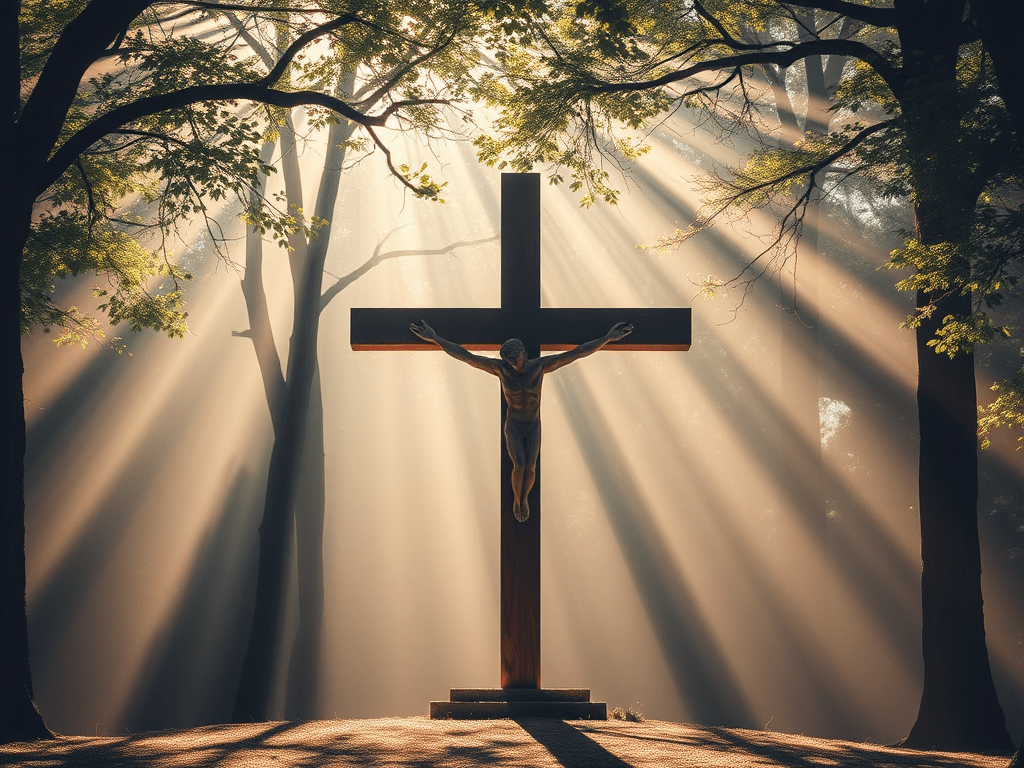



 Walking With Christ
Leave a comment