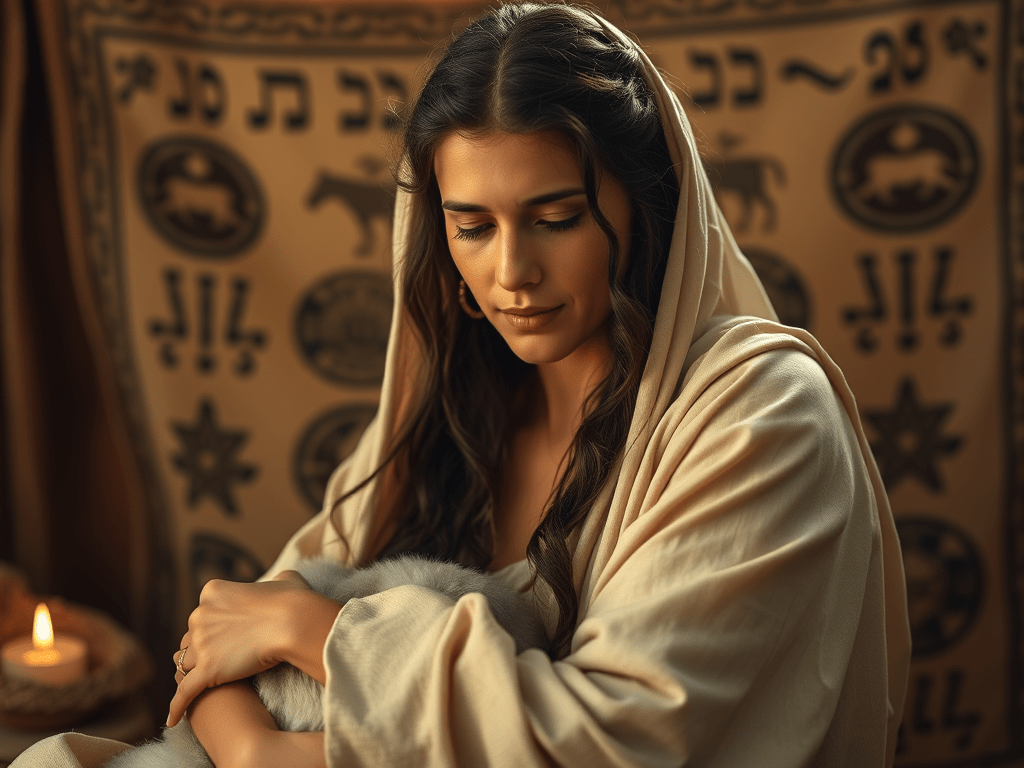
Part 2 of 5. Trying to show all twelve tribes in one message would be huge.
Isaiah 49:1 Listen to me, O coastlands, and give attention, you peoples from afar. The Lord called me from the womb, from the body of my mother he named my name.(ESV)
Ecclesiastes 7:1 A good name is better than precious ointment, and the day of death than the day of birth.(ESV)
Genesis 49:1–2 (1)Then Jacob called his sons and said, “Gather yourselves together, that I may tell you what shall happen to you in days to come. (2)Assemble and listen, O sons of Jacob, listen to Israel your father.”(ESV)
Names are more than labels. In the world of Scripture, they are declarations—sometimes of pain, sometimes of hope, sometimes of what God will do before anyone else can see it. Every child born to Jacob was wrapped in the emotional climate of his household: rivalry, longing, bitterness, manipulation, heartbreak, and, rarely, joy. But when their mothers named them, they weren’t just marking a moment—they were speaking into the future.
God called them from the womb (Isaiah 49:1), and their names—spoken through human mouths—carried divine fingerprints. Each son would become a tribe. Each tribe, a legacy. And every legacy would echo through history until either God sealed it with redemption or judgment silenced its voice.
As Ecclesiastes reminds us, “A good name is better than precious ointment”—but that worth is not measured at birth. It is revealed in death, in legacy, in how a life echoes beyond the grave. Jacob understood this when he gathered his sons and spoke of what was to come—not what had been (Genesis 49:1–2). The names given in tents would later be read in stone—on the high priest’s breastplate, on tribal banners, and on the gates of the New Jerusalem.
This is the story of those names.
This is the story of the legacy they wrote.
🧱 Judah – יְהוּדָה – “Praise”
👩👦 Mother: Leah
📍 Birth Order: Fourth Son
Genesis 29:35 And she conceived again and bore a son, and said, “This time I will praise the Lord.” Therefore she called his name Judah. Then she ceased bearing.(ESV)
💔 Emotional Origin
Everything changes here. This is not a name spoken to Jacob. It is not a plea for love or recognition. It is not about rivalry, leverage, or vindication. This is the first name Leah gives that is directed solely to God.
“This time I will praise the Lord.”
There’s no condition. No complaint. No transaction. Just praise.
This is not resignation—it is liberation. Leah is done striving. And in that surrender, she speaks one of the most powerful names in all of redemptive history.
🪞 Name Meaning
Judah comes from yadah (יָדָה – “to praise, to give thanks, to confess”).
Literally: “Praise” or “Thanksgiving.”
It is the first name in the family that reflects adoration instead of agony. Leah doesn’t gain Jacob’s love, but she discovers God’s sufficiency—and names her son after that discovery.
🔮 Prophetic Echoes
Judah becomes the most pivotal tribe in the entire nation of Israel.
- Genesis 49:8–10 – Jacob’s blessing over Judah is unique: “Your brothers shall praise you… The scepter shall not depart from Judah… until Shiloh comes.”
- He is promised rulership, authority, and Messianic fulfillment.
- Judah becomes:
- The tribe of David, Israel’s greatest king
- The line through which the Messiah comes
- The tribal banner of the lion—a symbol of strength, royalty, and divine kingship (Revelation 5:5)
Judah leads the camp during the wilderness journey (Numbers 2:9). He leads first in battle (Judges 1:2).
And when the kingdom divides after Solomon, it is Judah—not Ephraim—who preserves the Davidic line, the temple, and the true worship of Yahweh.
In exile, it is Judah who returns. Not Reuben. Not Simeon.
This is why the people are called Jews—from Judah—even today.
📚 Reflection
Judah is not just a name—it is a throne. Born from surrender, it became the name by which all nations are blessed. The son named “Praise” became the tribe of the Lion, the root of David, and the King of Kings. Legacy begins when striving ends. The one who gave up the fight for love became the one through whom God poured His greatest love into the world.
🧱 Dan – דָּן – “Judge”
👩👦 Mother: Bilhah (Rachel’s servant)
📍 Birth Order: Fifth Son (First of Bilhah)
Genesis 30:6 Then Rachel said, “God has judged me, and has also heard my voice and given me a son.” Therefore she called his name Dan.(ESV)
💔 Emotional Origin
Rachel was barren. Her sister had four sons. Her servants were not yet in play. Her desperation was growing—and in that desperation, she gave her maidservant Bilhah to Jacob, saying: “That I too may have children through her.” (Genesis 30:3)
When Bilhah gives birth to Dan, Rachel doesn’t speak of joy or blessing. She speaks of legal standing—a verdict.
“God has judged me.”
This is not praise. It’s courtroom language. Rachel sees Dan’s birth as a kind of vindication—a divine ruling in her favor against her sister. The name doesn’t celebrate the child. It asserts her claim to something she couldn’t produce herself.
🪞 Name Meaning
Dan comes from din/dan (דִּין – “to judge, to execute judgment”).
Literally: “Judge.”
Implied: “God has ruled in my favor.”
It is the most legalistic of the names so far. Not relational. Not emotional. It’s transactional, the language of competition rather than covenant.
🔮 Prophetic Echoes
Dan’s legacy is as complex and shadowed as his name.
- Genesis 49:16–17 – Jacob’s deathbed blessing is cryptic and ominous: (16)“Dan shall judge his people as one of the tribes of Israel. (17)Dan shall be a serpent in the way, a viper by the path, that bites the horse’s heels so that his rider falls backward.” This is a dark metaphor. Dan is promised judicial authority, but compared to a serpent—a deceptive and dangerous force.
- Judges 18 – The tribe of Dan cannot conquer its allotted territory. Instead, they migrate north and steal land, using idolatry as their religious framework.
- Dan becomes the first tribe to institutionalize idol worship in Israel (Judges 18:30–31).
- Their reputation becomes so tainted that in Revelation 7, Dan is the only tribe completely omitted from the list of those sealed.
Dan, the tribe of judgment, becomes the tribe most associated with apostasy and spiritual deception.
📚 Reflection
Dan’s name carried a sense of divine ruling, but no divine relationship. Rachel didn’t want a son. She wanted a verdict. And what begins in legalism often ends in deception. Judgment without intimacy leads to idolatry. Dan judged Israel—but failed to judge itself. The tribe born to prove a point becomes the tribe that vanishes from the final registry of God’s faithful.
🧱 Naphtali – נַפְתָּלִי – “My Wrestling”
👩👦 Mother: Bilhah (Rachel’s servant)
📍 Birth Order: Sixth Son (Second of Bilhah)
Genesis 30:8 Then Rachel said, “With mighty wrestlings I have wrestled with my sister and have prevailed.” So she called his name Naphtali.(ESV)
💔 Emotional Origin
Rachel doesn’t even pretend this child is about God. This isn’t surrender or gratitude—it’s competition. Naphtali is born not as a symbol of blessing, but as a victory marker in a domestic war.
“I have wrestled with my sister and prevailed.”
This isn’t figurative. The Hebrew “naphtulim” means twisted struggle—a violent, emotional grappling.
Rachel wasn’t raising a son—she was raising a scoreboard.
Leah had stopped bearing children. Rachel, through Bilhah, is now 2-for-2. She names this child Wrestling, not because she wrestled with God (like Jacob would), but because she fought Leah for superiority—and thinks she won.
🪞 Name Meaning
Naphtali comes from pathal (פָּתַל – “to twist, to struggle”) and the intensive noun form naphtulim (נַפְתּוּלִים – “wrestlings”).
Literally: “My Wrestling.”
This is pure strife language. It describes inner and outer turmoil, emotional warfare, and constant striving.
🔮 Prophetic Echoes
Naphtali’s later history is quiet—almost invisible—but the echoes of conflict and contradiction remain:
- Naphtali settles in the northernmost part of Israel, near the Sea of Galilee.
- This makes them one of the first tribes conquered when Assyria invades (2 Kings 15:29).
- Their territory becomes known as “Galilee of the Gentiles“—a spiritually mixed, often despised region.
But here’s the redemption arc:
Isaiah 9:1–2 speaks directly of Naphtali’s land:
“In the former time he brought into contempt the land of Zebulun and the land of Naphtali,
but in the latter time he has made glorious the way of the sea…
The people who walked in darkness have seen a great light…”
- This is fulfilled in Matthew 4:13–16, where Jesus begins His public ministry in Naphtali’s territory.
The tribe born out of struggle and rivalry becomes the first to see the light of Christ.
📚 Reflection
Naphtali’s name is a monument to relational chaos, born from a woman who saw family as a battlefield. And yet—God redeems even that. The land of wrestling became the land of revelation. What began in human striving became the soil for divine mercy.
[⚓ Floatie] [✒️ Forge] [⚒️ Anvil] [🔥 Ember] [🌿 Covenant Triumph]
This post follows the Forge Baseline Rule—layered truth for the discerning remnant.



 Walking With Christ
Leave a comment