
Luke 6:16 and Judas the son of James, and Judas Iscariot, who became a traitor.(ESV)
⚓ Floatie: The Man from Kerioth — A Familiar Name, A Deeper Wound
Judas Iscariot. The betrayer. The name is infamous—but what if we told the story again with older eyes? What if we traced not just what Judas did, but where he came from? What if the betrayal wasn’t just a tragedy—it was a prophetic echo?
His name means “man of Kerioth.” Kerioth, a town listed in Joshua 15:25, belonged to the tribal inheritance of Judah. If Judas Iscariot came from Kerioth—as his name suggests—then he may have been from the very tribe that carried both royalty and betrayal in its bloodline.
✒️ Forge: Joseph, the Beloved Son — Sold by His Brother Judah
Genesis 37:26–27 (26)Then Judah said to his brothers, “What profit is it if we kill our brother and conceal his blood? (27)Come, let us sell him to the Ishmaelites, and let not our hand be upon him, for he is our brother, our own flesh.” And his brothers listened to him.(ESV)
Judah, son of Jacob, offered a way to avoid bloodshed—but at a price. He didn’t protect Joseph. He sold him.
Joseph, the favored son clothed in a special robe, was handed over by his own brothers. And not just any brother—Judah was the one who proposed the transaction. He sold him to Ishmaelites, descendants of Abraham through Hagar—outsiders to the covenant but still of the bloodline.
Joseph was taken to Egypt, stripped of his status, and presumed dead. But he wasn’t destroyed. He was positioned.
⚒️ Anvil: Jesus, the Greater Joseph — Sold Again by a Man of Judah
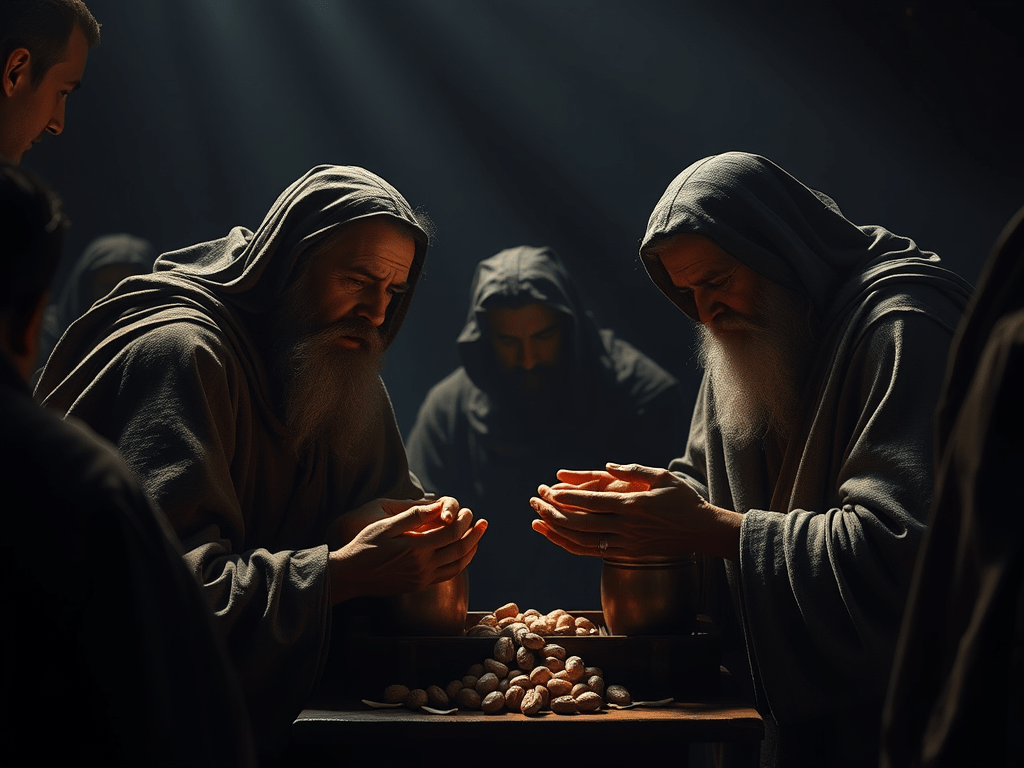
Matthew 26:14–15 (14)Then one of the twelve, whose name was Judas Iscariot, went to the chief priests (15)and said, “What will you give me if I deliver him over to you?” And they paid him thirty pieces of silver.(ESV)
Judas, likely of the tribe of Judah, sells out the beloved Son of God.
- Joseph wore a robe; Jesus wore a seamless tunic.
- Joseph was handed to foreigners; Jesus to the religious elite.
- Joseph was betrayed by Judah; Jesus by Judas—a Greek transliteration of the same name.
And the price?
- Genesis 37:28 — Joseph was sold for twenty shekels of silver, the price of a young slave in that era.
- Exodus 21:32 — The Mosaic Law fixes the price of an adult male slave at thirty shekels.
- Matthew 26:15 — Jesus was betrayed for thirty pieces of silver—the full legal price.
Both were treated as property. Both were sold by their “own.” And both were elevated—one to Pharaoh’s right hand, the other to the right hand of the Father.
🔥 Ember: Echoes of a Tribal Pattern
Judas Iscariot wasn’t just a man with a cursed name—he was walking out a prophetic shadow. A man from the tribe of Judah once sold Joseph. A man of the same name—and likely the same tribe—sold Jesus.
But Judah’s story didn’t end in betrayal. He was redeemed through an act of self-sacrifice.
Genesis 44:33 Now therefore, please let your servant remain instead of the boy as a servant to my lord, and let the boy go back with his brothers.(ESV)
Judah offered himself for Benjamin. He who once betrayed now interceded.
What Judas Iscariot could have done—he didn’t. Instead of intercession, he chose despair.
🌿 Covenant Triumph: A Better Betrayal, A Greater Redemption
Revelation 5:5 And one of the elders said to me, “Weep no more; behold, the Lion of the tribe of Judah, the Root of David, has conquered, so that he can open the scroll and its seven seals.”(ESV)
Jesus is not just the betrayed—He is the Redeemer of betrayers.
He comes from the line of Judah. He is the Lion who overcomes. The Son who was sold, but not defeated.
The Savior who was betrayed, but not broken. He is greater than Joseph, greater than Judah, and greater than Judas.
And because of Him, even the worst betrayals can be woven into the tapestry of redemption.
The shadow of Judah lingers in Judas—but the light of Christ redeems the name.
Names fall. Stories break. But grace rewrites everything.
[⚓ Floatie] [✒️ Forge] [⚒️ Anvil] [🔥 Ember] [🌿 Covenant Triumph]
This post follows the Forge Baseline Rule—layered truth for the discerning remnant.




 Walking With Christ
Leave a comment