
2 Samuel 15:23 And all the land wept aloud as all the people passed by, and the king crossed the brook Kidron, and all the people passed on toward the wilderness.(ESV)
There’s a valley just east of Jerusalem. It’s dark in the morning. Cold in the evening. Quiet, but never empty. It lies between a city named for peace and a mountain filled with the dead.
No monuments tell its story, but kings have walked through it. One came bringing blessing. One fled in betrayal. One crossed it to die.
And the first time a man dined there, two kings stood watching.
1. A Valley Between Two Shadows
This valley cuts between two ancient places:
To the west, Jerusalem — once known as Salem, the City of Peace. To the east, the Mount of Olives — a hillside of tombs, prophecy, and the crushing of olives into oil.
In the morning, the Mount of Olives casts a long shadow westward over the valley. In the evening, Jerusalem returns the favor, casting its own shadow eastward.
This valley sees peace by day and death by night. It is caught between two powers—and it remembers the footsteps of every soul who has passed through it in fear, in faith, or in betrayal.
The name of the valley is Kidron, derived from the Hebrew word qadar, meaning dark, murky, gloomy.
It is, in every meaningful sense, the valley of the shadow.
2. The First Table
Genesis 14 tells the story. Abram had just rescued his nephew Lot, along with the people of Sodom, from a coalition of raiding kings.
Returning from battle, Abram is met in the Valley of Shaveh — the King’s Valley. Tradition and geography place this in the upper Kidron Valley.
There, two kings approach him:
- Bera, king of Sodom, offering the spoils of war
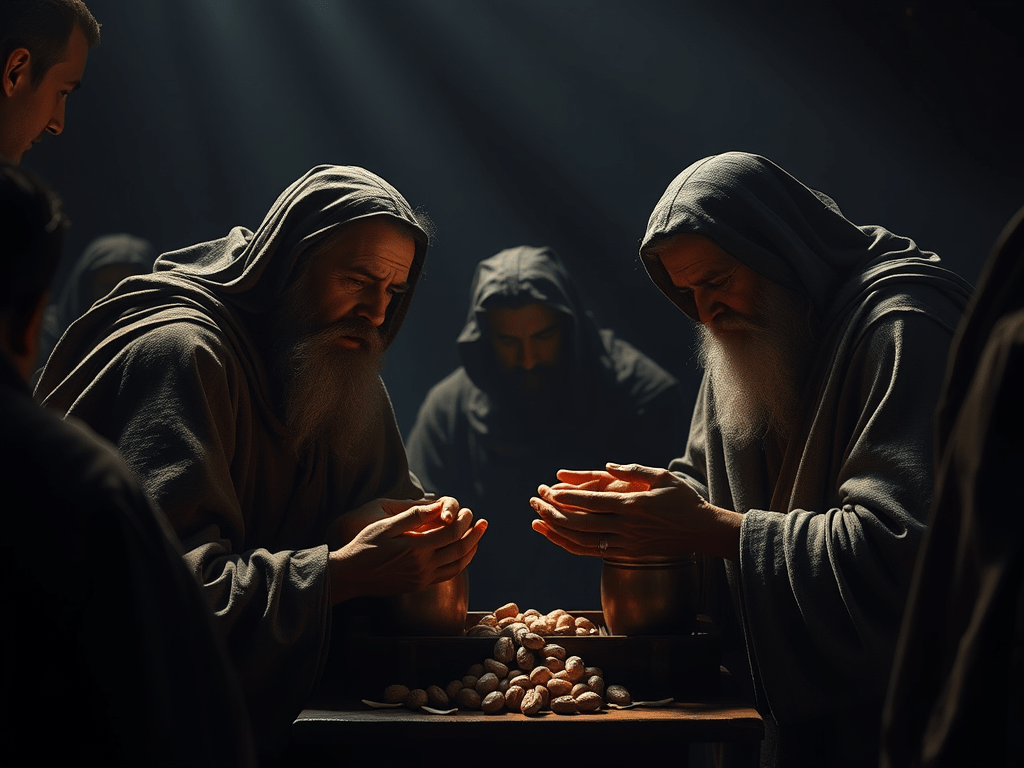
- Melchizedek, king of Salem, offering bread and wine
Abram rejects Bera’s offer, but accepts Melchizedek’s gift. He eats. He is blessed. A covenant is honored.
Bread and wine. A valley between judgment and peace. Two kings. One table.
Sound familiar?
3. The Fleeing King
Generations later, another king walks this same valley. His name is David, and he is fleeing for his life. His own son, Absalom, has betrayed him. The City of Peace has turned against its anointed.
2 Samuel 15 says David crossed the Kidron, barefoot and weeping. He walks away from the throne he once held, through the valley where kings once dined.
He walks through the valley of the shadow.
And he does not walk alone.
4. The Psalm Everyone Knows, but Few Understand
Now pause.
Think about the lines you know by heart:
“Even though I walk through the valley of the shadow of death, I will fear no evil.”
That’s not abstract. That’s not poetic flourish. That’s David’s own story, spoken after walking that exact route.
He’s not imagining a metaphor. He’s testifying to a God who walks with him between peace and death, through Kidron, where he once saw the table set before Abram.
5. The Table Reappears
“You prepare a table before me in the presence of my enemies.”
That’s not just encouragement. That’s history.
Abram’s table was set in the valley, with the king of Sodom standing by. David walked that same valley under threat of betrayal.
And one night, under the weight of divine sorrow, Jesus crossed that same valley after sharing bread and wine with His disciples.
The table hadn’t moved. Only the names had changed.
6. A Shadow and a Choice
The Kidron Valley is real. So are the shadows.
One is cast by a mountain of death. One by a city of peace.
And in between them, a table waits.
Bread. Wine. A choice between two kings.
You don’t get to skip the valley. You just get to decide which king you eat with.
Psalm 23:1-6 The Lord is my shepherd; I shall not want. (2)He makes me lie down in green pastures. He leads me beside still waters. (3)He restores my soul.
He leads me in paths of righteousness for his name’s sake. (4)Even though I walk through the valley of the shadow of death, I will fear no evil, for you are with me; your rod and your staff, they comfort me. (5)You prepare a table before me in the presence of my enemies; you anoint my head with oil; my cup overflows. (6)Surely goodness and mercy shall follow me all the days of my life, and I shall dwell in the house of the Lord forever.(ESV)
[End of Part One]
Part Two will explore the meaning of bread and wine—the yeast, the crushing, the fire, and the fermentation. And why understanding the table’s elements is the key to understanding covenant itself.



 Walking With Christ
Leave a comment