I would argue that a person could study just about any small portion of the bible for their entire life and still not wrestle even a significant portion of the full understanding that section contains. I would further argue that many portions of the bible, even though only a small portion of the overall bible story, contain or encapsulate the entirety of the bible.
Jericho.
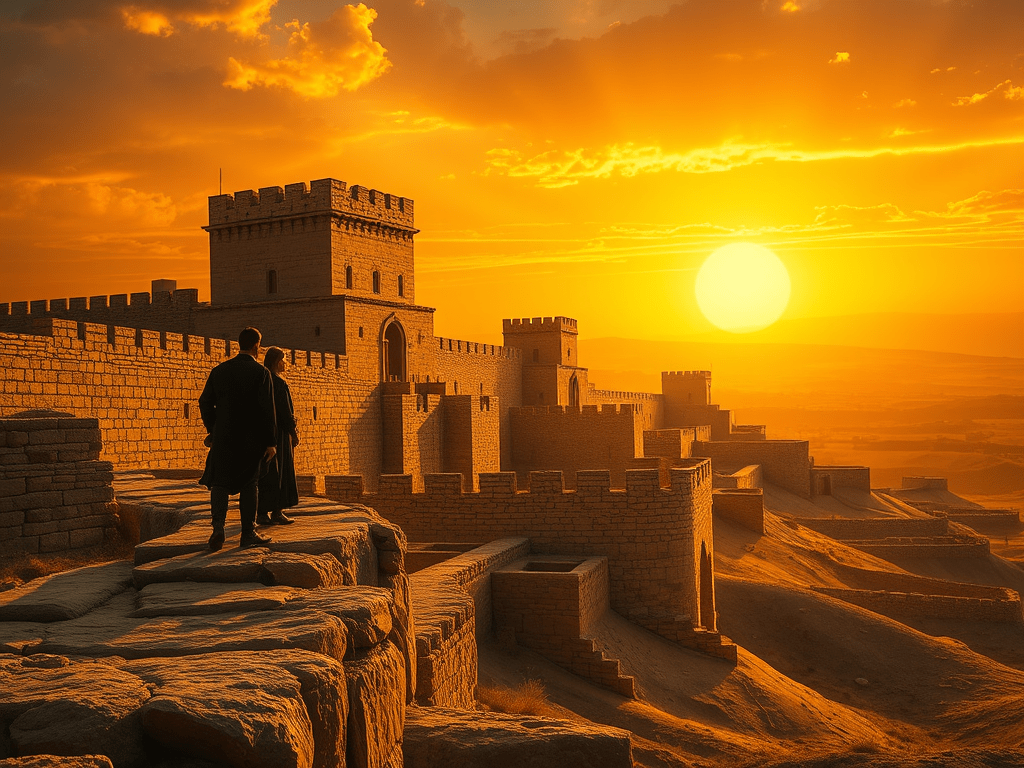
Just that word, that name, should evoke a few thoughts from anyone who has studied the bible for any length of time. For context, Jericho was the first major city that the children of Israel encountered when crossing the Jordan river. The location was in a prime spot to protect every city beyond it. It was known to be impregnable. The walls and the way the city was built had withstood invaders for most of human history. We might not be able to conclusively prove that Jericho had never been breached, but it was certainly what the Israelites believed. In order to take the promised land, the Hebrew people would have to start with Jericho. They couldn’t pass it by because then they would be risking having the armies of Jericho fall in behind them and attack them from the rear when they had already engaged another enemy to their front. No, that was far too dangerous to risk it.
What else do we know about Jericho and the battle that took place?
The battle of Jericho was delayed for forty years (I previously said it was two years, I misspoke) from the time that the spies were sent in to survey the land and when the battle actually took place. We know that the only two spies from the original twelve who ever returned to the promised land were Joshua, who would eventually lead them, and Caleb, who was said to have a different spirit in Numbers 14:24. We know that Joshua, the leader of Israel at the time of the battle and one of the original twelve spies, was originally called Hoshea. Personally, I’m looking into the differences between these two men. One was said to have a different spirit while the other was given a new name. The culture of the time had certain expectations surrounding names and renaming someone would often signify the change in purpose or a new calling for that person.
We also know about the importance of this first battle. Joshua sent two spies in to look for weaknesses and scout defenses. They were hidden by a prostitute named Rahab. Rahab, let me say it again, the prostitute, is a direct ancestor of King David and thus Jesus, which goes to show the grace of God as well as possibly being a foreshadowing of the truly inclusive nature of the ministry of Jesus. She wasn’t even part of the tribes until after the battle of Jericho. She obviously was accepted in and became a rather important figure to us today despite being a person that the Pharisees would run from. This first battle would largely determine how the rest of the fight for the promised land would go. It was a huge test for the children of Israel, but not in the way that they expected.
The way the city was ultimately defeated was arguably the most unconventional battle plan in the entire bible. That includes having the enemy fight themselves like we see in 2 Chronicles 20. The plan was simply to have the army (Joshua 6:3 – “all the men of war”) walk around the city in silence for seven days. Complete silence from the entire nation of Israel for seven days until the last, long blast of the trumpet on the seventh day. Notice here that only the army marched with the ark of the covenant, but everyone was quiet until it was time for the entire nation to shout a victory shout. It was unconventional because it was a battle that was won with no weapons. It was faith and obedience that placed them in a position to see God work.
It wasn’t until after the walls fell that Joshua sent people to collect Rahab and her family.
There we have it. The interesting nugget in this study. The last tie. The children of Israel delayed their blessing by forty years, in some cases missed it completely, because they believed one lie from the enemy, but the ancestor of Jesus who hid the spies in Jericho just before the battle may not have even been alive when the spies first came to Jericho. We can delay our blessings but we can’t delay God’s plans. God knew that He could take the captives out of Egypt but the captives would not allow Him to take the Egypt out of the captives. God knew that the spiritual healing needed by the children of Israel would take more than one generation. God knew that the battle for the promised land would require fresh faith that had not been tainted by the cultural shame of captivity for so many generations. He knew that the fears of the older generation would prevent them from being obedient in the face of overwhelming foes. He knew that this same fear would not allow for the unity needed in the future. At the battle of Jericho, the entire nation of Israel acted as one under the command of God, in direct contrast to the other times when they were divided or disobedient, despite not understanding the commands. They remained silent and disciplined until the Lord fulfilled His promise to deliver Jericho to them.
There are so many more lessons just from this battle and this section of the bible, but that’s where I want to leave it for today. The previous generation had just enough faith to get them across the Red Sea and into the wilderness. God knew this would be the case. Our own family lines will see the same ebb and flow of individual faith, but this is still not a surprise to the creator of everything. We can’t know those small moments that will prove to be vital to the future. We can’t know the true impact of a short season of obedience and how that will affect the future of our family lines for generations to come. He does. He will use it all for the good of the kingdom.
Romans 8:28 And we know that for those who love God all things work together for good, for those who are called according to his purpose.(ESV)
Rahab was called to a purpose even though she had lived a life of fear knowing that the land she lived on was promised to the children of Israel. Rahab even says in Joshua 2:11 that their hearts melted in fear when they all heard the stories about this roving cloud of destruction called the children of Israel. They knew the power of God because of the Red Sea crossing and the other battles that had taken place before they ever crossed the river. Rahab let her fear of the Lord embolden her to help the spies and ask for favor when the battle eventually happened. She could not have known that her actions would put her blood directly in line with the future messiah of the world. Her motivations were obviously stated. She wanted to protect her family. How could she know that doing so would eventually lead to the birth of the messiah for all?
If only we could all be as bold as Rahab, no?
Hello,
Who am I?

I’ve walked a path I didn’t ask for, guided by a God I can’t ignore. I don’t wear titles well—writer, teacher, leader—they fit like borrowed armor. But I know this: I’ve bled truth onto a page, challenged what I was told to swallow, and led only because I refused to follow where I couldn’t see Christ.
I don’t see greatness in the mirror. I see someone ordinary, shaped by pain and made resilient through it. I’m not above anyone. I’m not below anyone. I’m just trying to live what I believe and document the war inside so others know they aren’t alone.
If you’re looking for polished answers, you won’t find them here.
But if you’re looking for honesty, tension, paradox, and a relentless pursuit of truth,
you’re in the right place.
If you’re unsure of what path to follow or disillusioned with the world today and are willing to walk with me along this path I follow, you’ll never be alone. Everyone is welcome and invited to participate as much as they feel comfortable with.
Now, welcome home. I’m Don.
Let’s connect
Join the journey!
Stay updated with our latest posts by joining our newsletter.
 Walking With Christ
Leave a comment